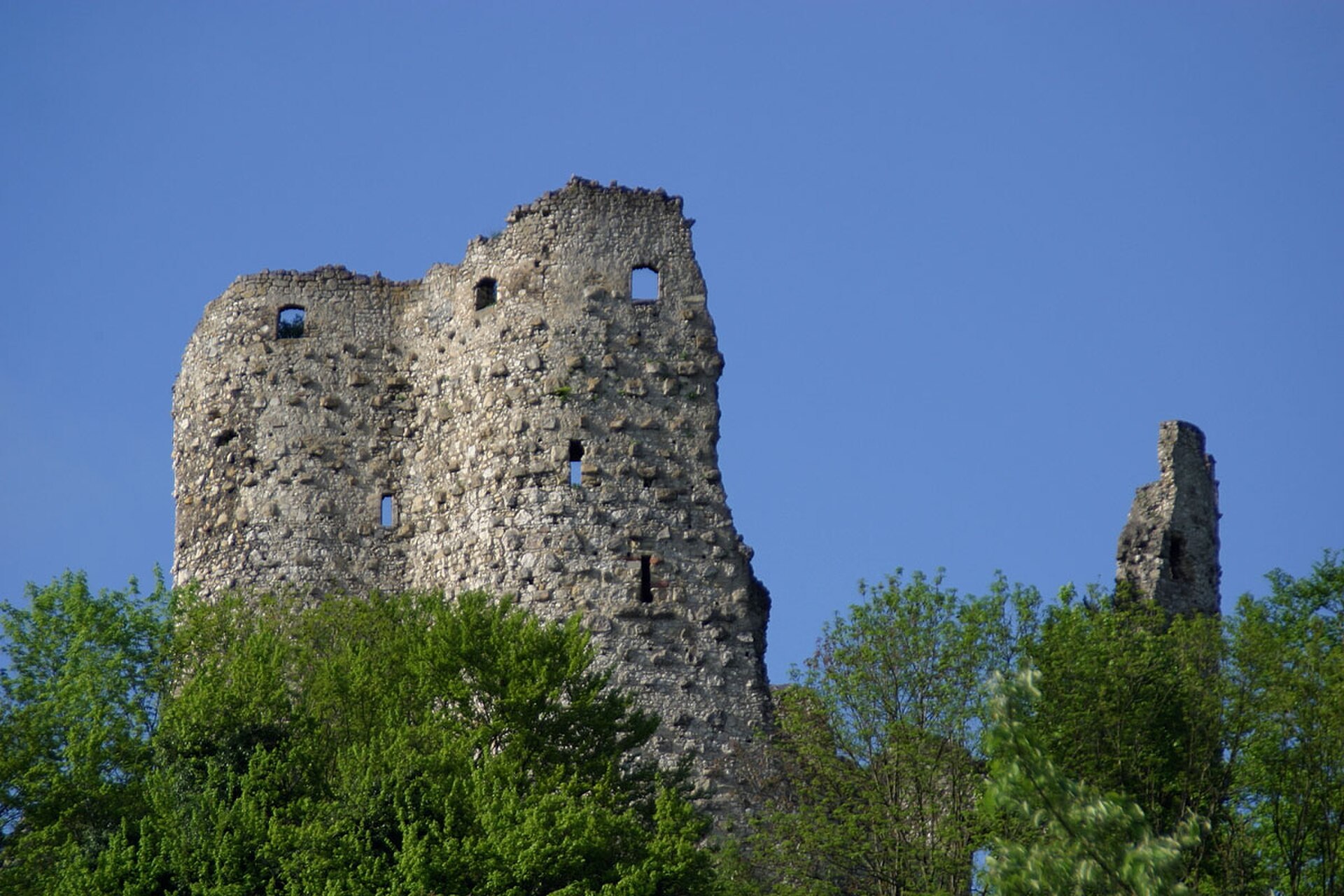
Ruine Pfeffingen

Pfeffingen canton de Bâle-Campagne Suisse

Ruine Pfeffingen

Pfeffingen Castle (German: Ruine Pfeffingen) is a castle in the municipality of Pfeffingen of the canton of Basel-Land in Switzerland.

Époque
XIIᵉ siècle (1135)
Style
château de hauteur sur éperon, tour d'habitation, mur-écu
Préparer la visite
Photo : Roland Zumbühl · CC BY-SA 3.0 Proposer votre photo

En un regard

Le château en bref

Pfeffingen Castle (German: Ruine Pfeffingen) is a castle in the municipality of Pfeffingen of the canton of Basel-Land in Switzerland. It is a Swiss heritage site of national significance. Pfeffingen Castle is one of the largest castle ruins in the Basel-Land canton. The area around Aesch and Pfeffingen was originally home to a Franconian royal court. However, no remains have persisted since this time. In 1135 Notker von Pfeffingen was mentioned for the first time, which was probably a reference to Count von Saugers. At the end of the 12th century, the Pfeffingen castle fell to the Count of Thierstein. In 1212 a family of Schaffner von Pfeffingen, who lived in the castle, was mentioned for the first time. In the mid-13th century the castle was comprehensively rebuilt. At this time, the curtain wall and the large residential tower were built. In 1335, the Bishop of Basel besieged the castle without success. In 1356, the Basel Earthquake damaged Pfeffingen castle. When the Counts of Thierstein-Pfeffingen tried to expand their rule, it led into conflict with the city of Basel, whereupon the Basel army successfully besieged the castle in 1376 and burned it down. The castle was restored after this. In the 15th century Pfeffingen was conquered several times in wars between Austrian Habsburgs and Swiss armies (during the Old Zürich War). In 1520, the Mayor of Basel Jakob Meyer zum Hasen raided the castle with about two hundred men.

Époque de construction
XIIᵉ siècle (1135)
Localisation
Pfeffingen, canton de Bâle-Campagne
Usage actuel
Ruine propriété du canton de Bâle-Campagne, ouverte au public

Récit

Une histoire à travers les siècles

Le récit

L’histoire de Ruine Pfeffingen

La ruine de Pfeffingen domine la localité du même nom (BL). Au XIe siècle, le château apparaît comme fief des comtes de Saugern-Pfeffingen, ses fondateurs présumés.

Lire la suiteRéduire

À la fin du XIIe siècle, les comtes de Thierstein l'acquièrent par mariage et l'agrandissent. Le séisme de Bâle de 1356 l'endommage. Entre 1380 et 1399 environ, de grands travaux créent la tour d'habitation, le mur-écu et la tour des Sorcières. À la mort du comte Heinrich, dernier Thierstein, en 1519, le château passe à l'évêque de Bâle ; dès 1522 il est siège du bailli épiscopal, et la « Neue Behausung » est construite en 1571. Le bailli part pour Aesch en 1702, le château est abandonné en 1748, mis aux enchères pour démolition en 1761, et le canton acquiert la ruine en 1941.
L’architecture

Ce qu’il faut observer

Château sur éperon rocheux protégé au sud par la pente et ailleurs par un fossé. La tour d'habitation, haute d'environ 22 m, abritait salle d'apparat, chapelle et appartements seigneuriaux. La basse-cour nord accueille la Neue Behausung de 1571 ; la cour ouest, abritée par un mur-écu, contenait les bâtiments agricoles ; un long zwinger au sud-ouest comprend la tour des Sorcières.

Informations pratiques

Préparer sa visite

Conditions de visite non renseignées

Nous n’avons pas encore d’information vérifiée sur l’ouverture au public. Renseignez-vous auprès du site officiel ou de la mairie avant de vous déplacer.

Vous l’avez visité ?

Partagez vos photos

Après relecture, votre photo illustrera cette fiche, créditée à votre nom. Haute définition bienvenue, jusqu’à 40 Mo.

Propriétaires et gestionnaires

Vous gérez Ruine Pfeffingen ?

Horaires, tarifs et réservation manquent encore sur cette fiche. Transmettez-les et mettez le château en avant auprès des visiteurs qui préparent leur venue.