
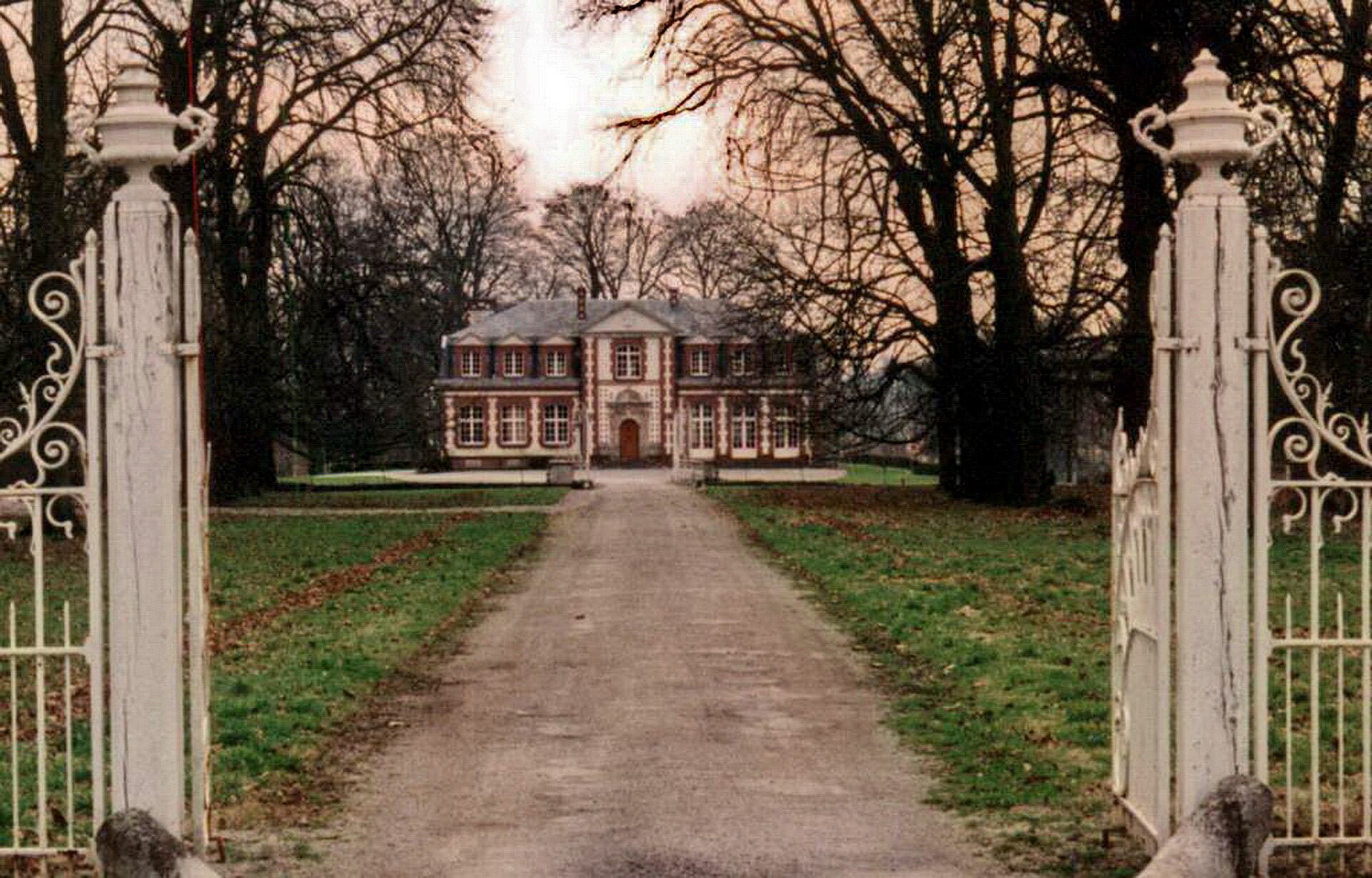
罗yon城堡

Wait — the name "Royon" should be kept in the established form. In Chinese, is there an established form for Château de Royon? Not known to me as established; I must not invent a name. Transliterating a Latin-script name isn't required; the rule says use established form when it exists, otherwise transliteration applies for non-Latin scripts. For a Latin-script target like Chinese, Chinese is non-Latin, so transliterate in standard manner: Royon → 鲁瓦永 (Lu Wayong). Rather than invent, transliteration is acceptable. Use 鲁瓦永城堡.

Segment 2: "situé, dans le département de PAS-DE-CALAIS" — keep "PAS-DE-CALAIS" as is (names of departments; could be kept in Latin since it's a proper name; translate to 加来海峡省 is the established Chinese form). Established form exists: Pas-de-Calais = 加来海峡省. Use that.

"dont l'histoire remonte." — incomplete sentence in source; preserve incompleteness: "其历史可追溯至" would add content? It's truncated; keep as "其历史可追溯至。"? That adds a period-like ending but no info. Better to render literally with a trailing cut: "其历史可以追溯到" without object—mirrors source's incompleteness. Source ends "remonte." — translate "其历史可追溯至" then 。 Fine.

Royon Pas-de-Calais

罗yon城堡 Wait — the name "Royon" should be kept in the established form. In Chinese, is there an established form for Château de Royon? Not known to me as established; I must not invent a name. Transliterating a Latin-script name isn't required; the rule says use established form when it exists, otherwise transliteration applies for non-Latin scripts. For a Latin-script target like Chinese, Chinese is non-Latin, so transliterate in standard manner: Royon → 鲁瓦永 (Lu Wayong). Rather than invent, transliteration is acceptable. Use 鲁瓦永城堡. Segment 2: "situé, dans le département de PAS-DE-CALAIS" — keep "PAS-DE-CALAIS" as is (names of departments; could be kept in Latin since it's a proper name; translate to 加来海峡省 is the established Chinese form). Established form exists: Pas-de-Calais = 加来海峡省. Use that. "dont l'histoire remonte." — incomplete sentence in source; preserve incompleteness: "其历史可追溯至" would add content? It's truncated; keep as "其历史可追溯至。"? That adds a period-like ending but no info. Better to render literally with a trailing cut: "其历史可以追溯到" without object—mirrors source's incompleteness. Source ends "remonte." — translate "其历史可追溯至" then 。 Fine.

鲁瓦永城堡位于加来海峡省,是一处城堡遗址,其历史可追溯至。该建筑的位置与其防御功能,体现了此类建筑在控制与组织领土方面所发挥的作用。这座建筑是当地城堡类遗产以及其所在地区历史演变的见证。

Époque
1944
Style
Louis XV
Préparer la visite

En un regard

Le château en bref

鲁瓦永城堡位于加来海峡省,是一处城堡遗址,其历史可追溯至。该建筑的位置与其防御功能,体现了此类建筑在控制与组织领土方面所发挥的作用。这座建筑是当地城堡类遗产以及其所在地区历史演变的见证。

Époque de construction
1944
Style architectural
Louis XV
Localisation
Royon, PAS-DE-CALAIS
État
Restauré

Récit

Une histoire à travers les siècles

Le récit

L’histoire de 罗yon城堡 Wait — the name "Royon" should be kept in the established form. In Chinese, is there an established form for Château de Royon? Not known to me as established; I must not invent a name. Transliterating a Latin-script name isn't required; the rule says use established form when it exists, otherwise transliteration applies for non-Latin scripts. For a Latin-script target like Chinese, Chinese is non-Latin, so transliterate in standard manner: Royon → 鲁瓦永 (Lu Wayong). Rather than invent, transliteration is acceptable. Use 鲁瓦永城堡. Segment 2: "situé, dans le département de PAS-DE-CALAIS" — keep "PAS-DE-CALAIS" as is (names of departments; could be kept in Latin since it's a proper name; translate to 加来海峡省 is the established Chinese form). Established form exists: Pas-de-Calais = 加来海峡省. Use that. "dont l'histoire remonte." — incomplete sentence in source; preserve incompleteness: "其历史可追溯至" would add content? It's truncated; keep as "其历史可追溯至。"? That adds a period-like ending but no info. Better to render literally with a trailing cut: "其历史可以追溯到" without object—mirrors source's incompleteness. Source ends "remonte." — translate "其历史可追溯至" then 。 Fine.

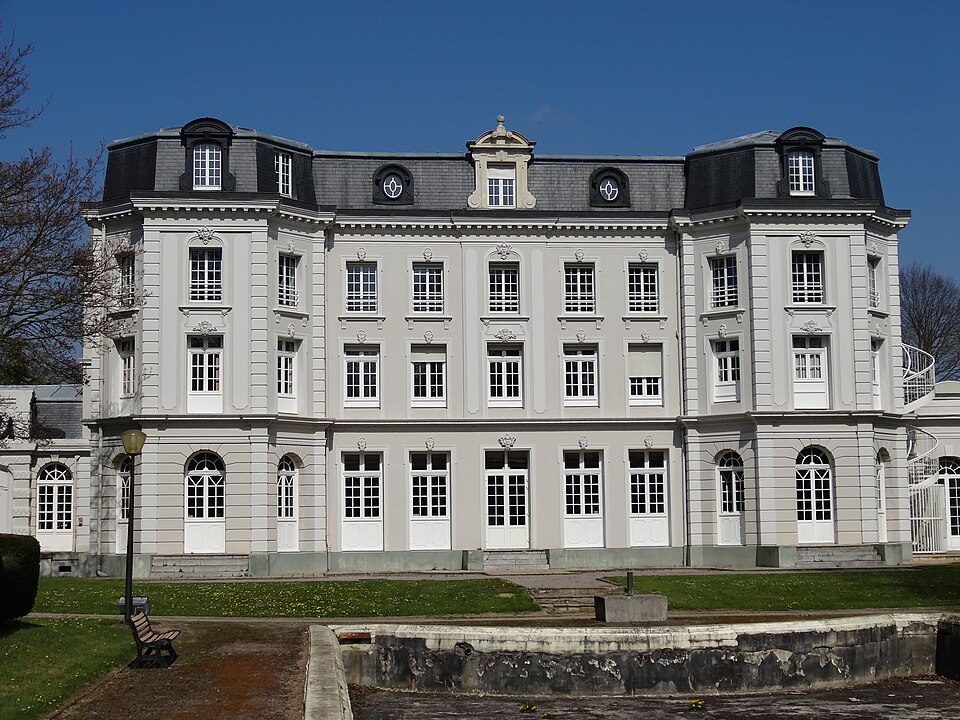
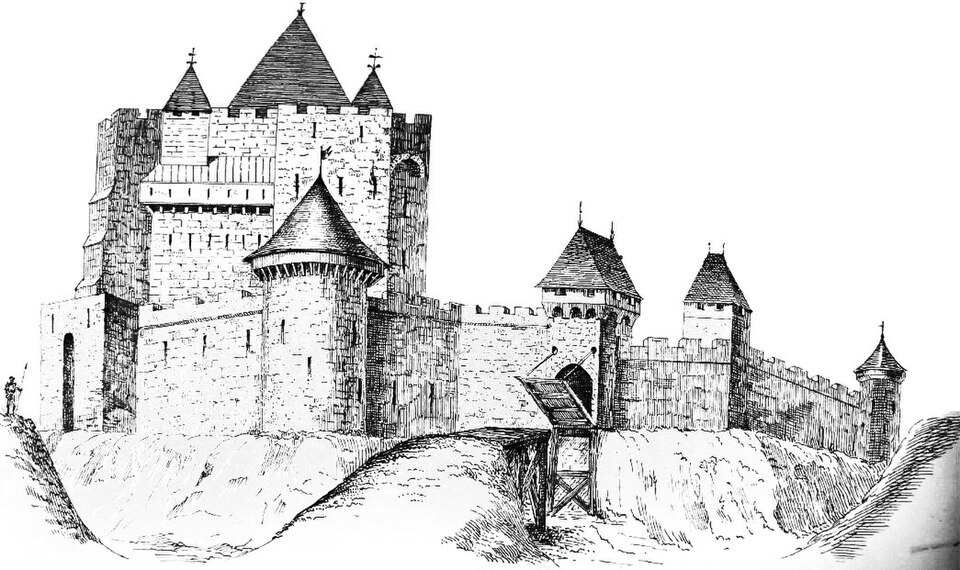
Le château d'origine a été détruit en 1944 pendant la Seconde Guerre mondiale puis reconstruit vers 1960. Avant sa destruction, l'édifice était de style Louis XV. Son parc est inventorié à la base Mérimée (IA62001081).
Chronologie

Les étapes de construction

Les campagnes documentées qui ont façonné le monument, période par période.

Époque contemporaine

  1. 1944

    Reconstruction

    Destruction en 1944, reconstruction vers 1960.

Informations pratiques

Préparer sa visite

Conditions de visite non renseignées

Nous n’avons pas encore d’information vérifiée sur l’ouverture au public. Renseignez-vous auprès du site officiel ou de la mairie avant de vous déplacer.

Vous l’avez visité ?

Partagez vos photos

Après relecture, votre photo illustrera cette fiche, créditée à votre nom. Haute définition bienvenue, jusqu’à 40 Mo.

Propriétaires et gestionnaires

Vous gérez 罗yon城堡 Wait — the name "Royon" should be kept in the established form. In Chinese, is there an established form for Château de Royon? Not known to me as established; I must not invent a name. Transliterating a Latin-script name isn't required; the rule says use established form when it exists, otherwise transliteration applies for non-Latin scripts. For a Latin-script target like Chinese, Chinese is non-Latin, so transliterate in standard manner: Royon → 鲁瓦永 (Lu Wayong). Rather than invent, transliteration is acceptable. Use 鲁瓦永城堡. Segment 2: "situé, dans le département de PAS-DE-CALAIS" — keep "PAS-DE-CALAIS" as is (names of departments; could be kept in Latin since it's a proper name; translate to 加来海峡省 is the established Chinese form). Established form exists: Pas-de-Calais = 加来海峡省. Use that. "dont l'histoire remonte." — incomplete sentence in source; preserve incompleteness: "其历史可追溯至" would add content? It's truncated; keep as "其历史可追溯至。"? That adds a period-like ending but no info. Better to render literally with a trailing cut: "其历史可以追溯到" without object—mirrors source's incompleteness. Source ends "remonte." — translate "其历史可追溯至" then 。 Fine. ?

Horaires, tarifs et réservation manquent encore sur cette fiche. Transmettez-les et mettez le château en avant auprès des visiteurs qui préparent leur venue.

附近

Découvrir les alentours

查看所有城堡 →

同一地区的其他城堡

Patrimoine à proximité