Le récit
L’histoire de 碧ישה... Wait, I must be careful. Let me produce the proper Chinese translation. Château Pichon-Longueville: established Chinese name? Commonly "碧尚男爵酒庄" (Château Pichon Baron) and "碧尚女爵酒庄" (Pichon Comtesse). For Pichon-Longueville, the usual Chinese is "碧尚龙维尔酒庄"? Not certain. Rule: use established form when it exists; otherwise don't invent. Safer to keep the Latin name for the château, perhaps with the French name. Keep "Château Pichon-Longueville" as is. Segment 2: "Château Pichon-Longueville(又称 Château Pichon Baron,以免与 Château Pichon Longueville Comtesse de Lalande 相混淆)是一座位于吉隆德省波雅克的葡萄园庄园,占地73公顷。其葡萄酒属波雅克产区级(appellation pauillac),在1855年波尔多葡萄酒官方分级中被列为二级名庄(deuxième grand cru)。" Careful: "deuxième grand cru" in 1855 classification means "Deuxième Cru Classé" — translate as 二级名庄 is fine. Keep the exact "classé deuxième grand cru" → "被列为波尔多1855年官方分级的二级名庄". Keep "Gironde" → 吉伦特省 (established). Pauillac → 波亚克 (common Chinese: 波雅克). Use 波雅克. Output the tags with translations, no markdown.
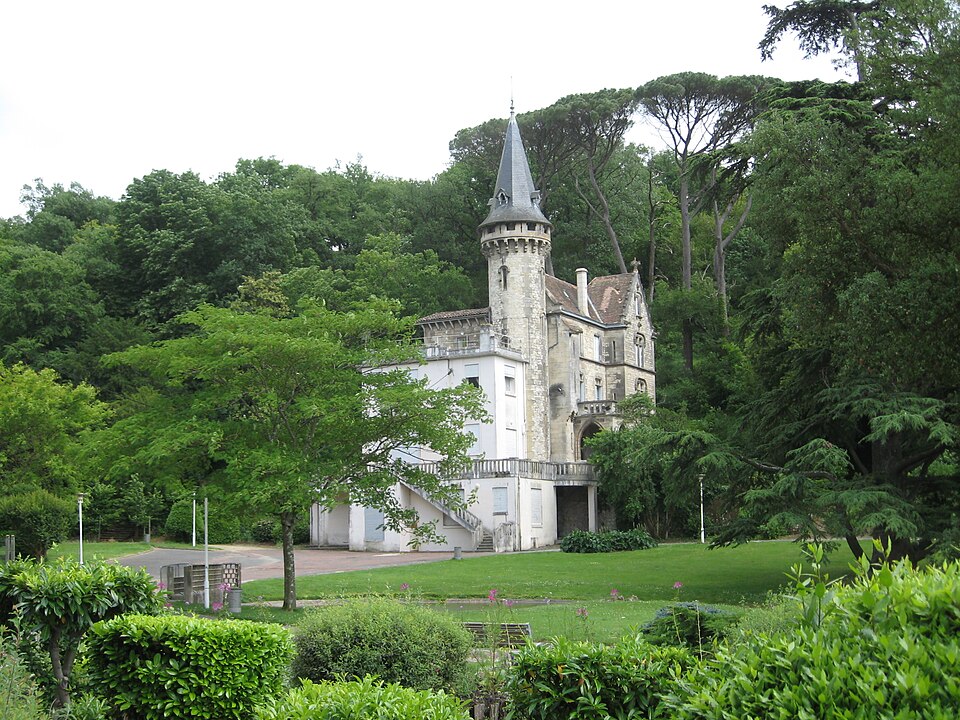
Issu de la division du domaine originel en 1850 entre le baron Raoul de Pichon-Longueville et ses trois sœurs (qui fondent Pichon Comtesse de Lalande), le château actuel est édifié en 1851 par le baron Raoul. Classé second grand cru en 1855, le domaine est acquis par AXA Millésimes en 1987, qui modernise les installations et ajoute un chai souterrain en 2008.