
Legends and ghost stories in French castles
10 haunted castles in France and their legends
Ten French castles where history has fuelled ghostly legends: documented crimes, tragic sieges and state prisons, from Vincennes to the Pyrenees.
Editorial journal · Carte des Châteaux ·
A castle doesn’t need to invent much to become a place of legend: several centuries of history, a few very real crimes and state prisons are enough. In France, a dozen castles have accumulated over time tales of white ladies, ghosts and nocturnal apparitions, most often rooted in attested historical events. Here are ten of them, from the Paris region to the Pyrenees, with what we know of their history and the legends they harbour.
01
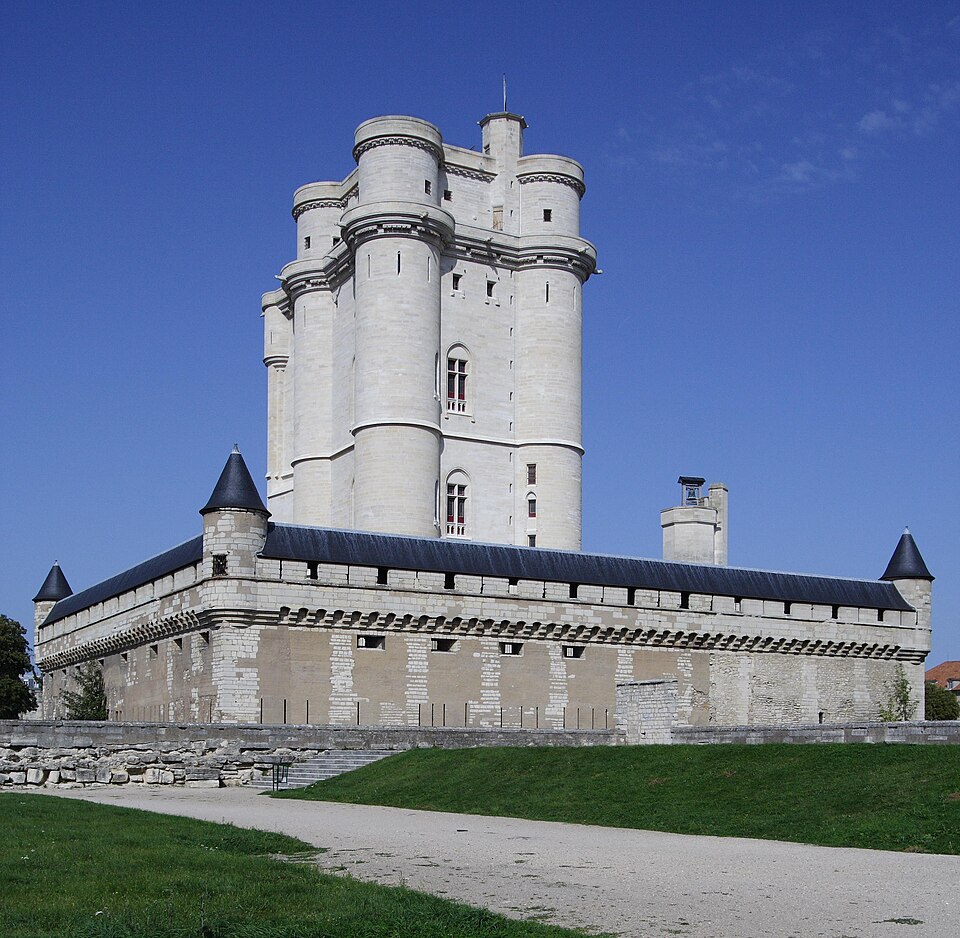
Château de Vincennes: the death of a king and centuries of imprisonment
Château de Vincennes needs no embellishment to fuel its reputation: its history is enough. It was in the keep, on 31 August 1422, that England’s King Henry V died, exhausted after the sieges of Dreux and Meaux during the Hundred Years’ War. Unable to preserve his body for repatriation to England, it was dismembered and boiled on site—a macabre funerary practice of the time intended only to send the bones back home. From the 16th century onwards, the keep became a state prison reserved for high-born detainees. Nicolas Fouquet, Louis XIV’s Superintendent of Finances, was imprisoned here after his arrest in September 1661, before being transferred to the fortress of Pinerolo. The Comte de Mirabeau stayed here in the 1770s, as did the Marquis de Sade. This dual legacy—of a macabre royal death and a long history of incarceration—explains Vincennes’ heavy reputation today, presented as the largest surviving royal fortress in France.
02
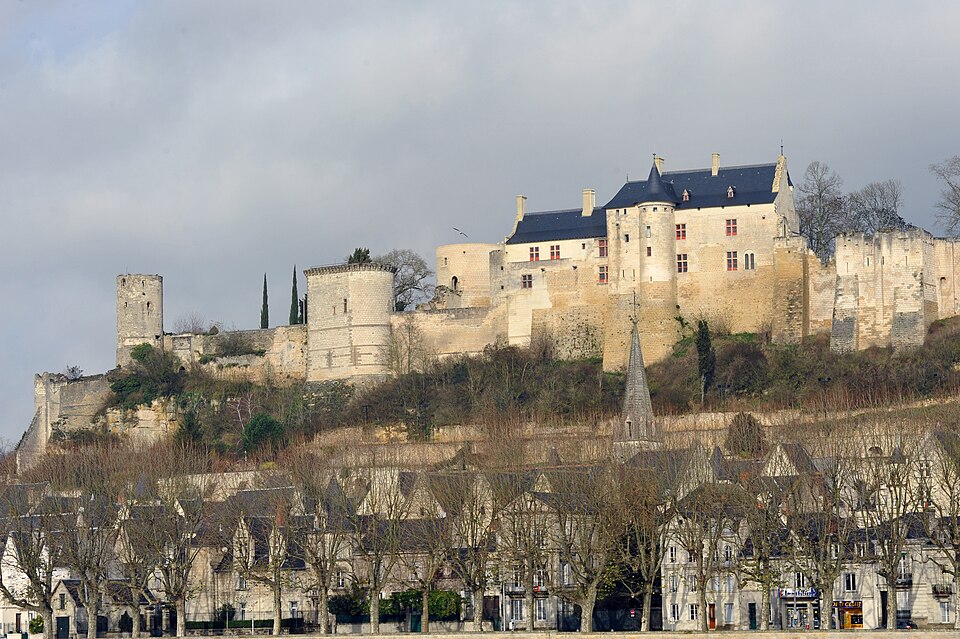
Château de Chinon: the prison of the Templars and the curse of the accursed kings
The royal fortress of Chinon, which comprises three castles on the same rocky spur, hosted one of the darkest episodes of medieval France. In June 1308, Jacques de Molay, the last Grand Master of the Knights Templar, was imprisoned here following the general arrest of the Templars ordered by Philip the Fair. Papal envoys arrived in August to take his testimony. The trial dragged on for years and concluded on 18 March 1314 with Jacques de Molay’s burning at the stake in Paris. According to legend, later popularised by chroniclers and novelists like Maurice Druon, he is said to have cursed the king and the pope, vowing they would appear before God’s tribunal within a year: Pope Clement V died the following month, and Philip the Fair before the year was out. Historians now consider this curse a later literary dramatisation, but the imprisonment of the Templars in Chinon is, however, well documented.
03
Château d’Amboise: the hanged men of the 1560 conspiracy
In March 1560, Château d’Amboise housed the court of the young King Francis II when a group of Protestant gentlemen attempted to abduct him to free him from the influence of the Guise family. The conspiracy, uncovered in advance, came to nothing: the captured conspirators were mostly hanged from the castle’s balustrades, in full view of the court watching from the windows and balconies. The bodies remained on display for several weeks, as the town’s gallows were insufficient. This episode, known as the Conspiracy of Amboise, marks the true beginning of the French Wars of Religion. Today, the surviving towers and terraces of the castle—largely destroyed after the Revolution—retain the memory of this royal residence and its darkest episode.
.JPG)
04
Château de Blois: the assassination of the Duke of Guise
On 23 December 1588, in the royal apartments of Château de Blois, the Duke Henri de Guise was summoned by King Henry III for a council. As he entered the antechamber, he was surrounded by the Quarante-Cinq, the king’s personal guard, and stabbed to death. His brother, Cardinal Louis de Lorraine, was murdered the following day in an adjoining room. Both bodies were then burned, and their ashes scattered in the Loire, to prevent their graves from becoming pilgrimage sites for the Catholic League. The royal castle of Blois, a favoured residence of the French kings during the Renaissance, preserves the memory of this episode in its apartments, restored in the 19th century. It is one of the few places in France where the exact location of such a major political assassination can be pinpointed.
.JPG)
05
Château de Brissac: the Green Lady and the 1477 crime
Château de Brissac, France’s tallest castle with its seven storeys, owes its best-known legend to a tragic, judicially documented fact. Charlotte de Brézé, an illegitimate daughter of King Charles VII and Agnès Sorel, married Jacques de Brézé, lord of the castle, in 1462. On the night of 31 May to 1 June 1477, he discovered his wife’s infidelity and killed her and her lover in a bedroom of the castle. The subsequent trial left its mark in the archives: the crime is therefore no mere invention. It is from this episode that the legend of the Green Lady was born—a ghost clad in green, said to have been glimpsed by visitors and staff in the castle’s upper floors across the generations.
06
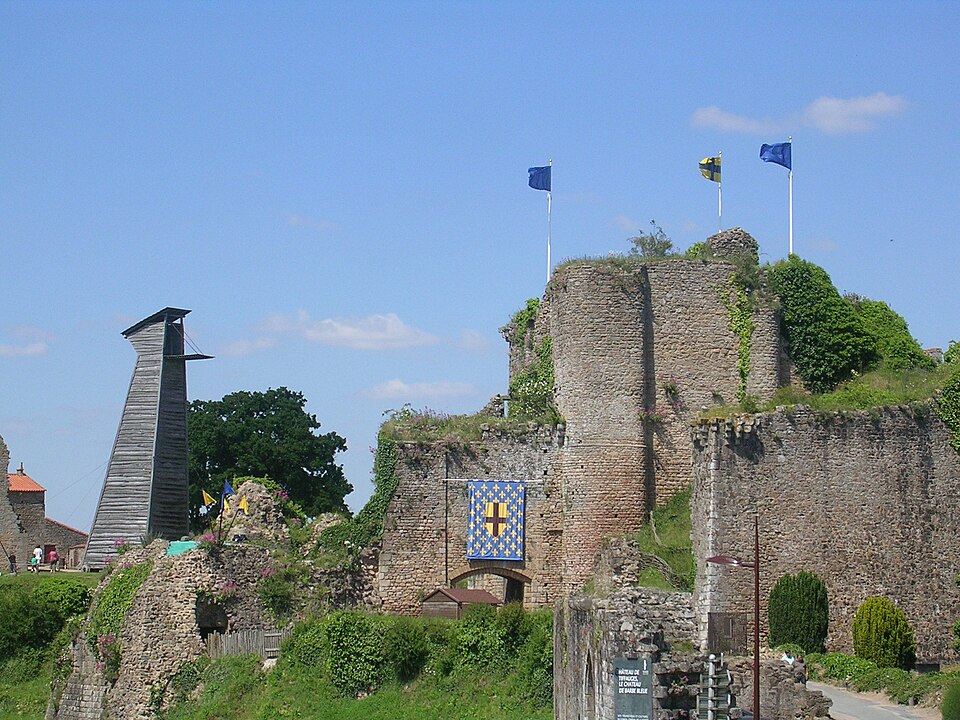
Château de Tiffauges: the fortress of Bluebeard
The ruins of Château de Tiffauges in Vendée are associated with one of the darkest figures of the Middle Ages: Gilles de Rais, Marshal of France and comrade-in-arms of Joan of Arc, who lived here and was tried here in 1440 for a series of crimes against children. The site is sometimes called the Château de Bluebeard, a nickname that clung to him and is said, according to a widely held theory, to have inspired Charles Perrault’s fairy tale. Unlike most of the sites on this list, Tiffauges owes its reputation not to a specific ghost legend, but to the weight of a real trial, whose scale and nature have left a lasting mark on the local imagination.
07
Château de Trécesson: the bride buried alive
On the edge of the Brocéliande forest, Château de Trécesson, with its reddish schist walls reflected in its pond, carries the region’s most famous legend: that of the Trécesson bride, who over time became the White Lady. According to the tale, first recorded in writing in 1824, a poacher hiding in the park claimed to have seen a young woman in a wedding dress, accused of dishonouring her family, buried alive by masked men. No historical document confirms this story, which is said to date back to the 18th century. Yet it remains deeply rooted in local tradition, regularly featured in novels and stories for the past two centuries.
08
Château de Combourg: the black cat and Chateaubriand’s wooden leg
It was at Château de Combourg that François-René de Chateaubriand spent part of his solitary childhood, between the ages of eight and eighteen. In his *Memoirs from Beyond the Grave*, he recounts how the castle’s inhabitants were convinced that a former count of Combourg with a wooden leg—who had died three centuries earlier—appeared on certain nights in the grand staircase of the turret, accompanied by a black cat. Local tradition identifies this ghost as Comte Malo-Auguste de Coëtquen, who lost a leg at the Battle of Malplaquet in 1709 and died in 1727. Long after the writer’s death, restoration work uncovered the mummified remains of a black cat, walled up in a staircase—a protective practice against bad luck attested in other old buildings. The remains are now on display in Chateaubriand’s former bedroom.
09
Château de Montségur: the pyre of the Cathars
Perched more than 1,200 metres above sea level, Château de Montségur was the last refuge of the Cathars during the Albigensian Crusade. After a siege lasting nearly ten months, the fortress surrendered on 16 March 1244. More than two hundred men and women who refused to renounce their faith were burned alive at the foot of the castle, in a place still called today *Prat dels Cremats*, the Field of the Burned. From this episode arose the legend of the White Lady of Montségur, associated with Esclarmonde, the lord’s daughter who died on the pyre: she is said to return to mourn the Cathars and warn locals of impending doom. The castle visited today, rebuilt in the second half of the 13th century, is not that of the siege, but the site of the pyre, below, remains a place of remembrance for many visitors.
010
Château de Miolans: the Bastille of the Alps
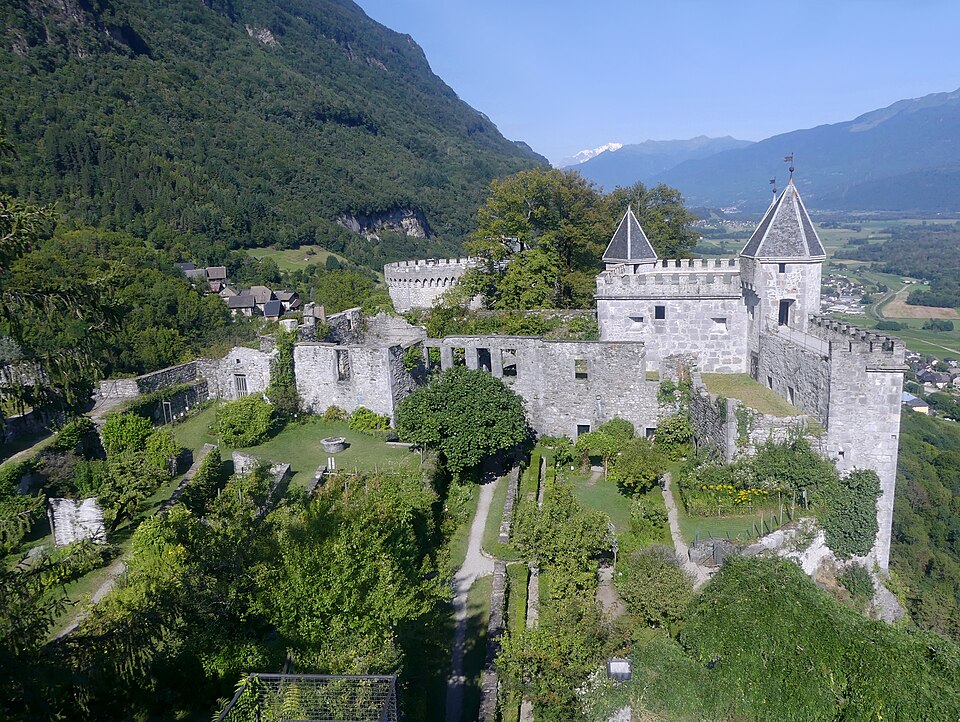
Château de Miolans looms over the Combe de Savoie from a rocky spur. Converted into a state prison in 1564, it remained so until the French Revolution and became one of the most feared places of detention in the States of Savoy, earning the nickname the Savoyard Bastille. Its twelve cells, spread between the keep and the Saint-Pierre tower, bear names that alone sum up the conditions of imprisonment: Hell, Purgatory, Hope, Paradise. Among the hundred or so prisoners held here, the most famous is the Marquis de Sade, incarcerated from December 1772 before escaping on 30 April 1773. Today open to visitors, the castle preserves its dungeons and the graffiti left by its prisoners, lending it an atmosphere few French castles can rival.
011
Frequently asked questions
Do these legends of haunted castles have any basis in fact? It depends on the site. Some, like the crime of the Green Lady at Brissac or the assassination of the Duke of Guise at Blois, are documented in judicial or historical archives. Others, like the bride of Trécesson, are local legends whose first written trace is late and unsupported by any document. In all cases, they form part of France’s oral and literary heritage and should be presented as such. Can all these castles be visited? Most are open to the public, at least in part: Vincennes, Chinon, Amboise, Blois, Brissac, Trécesson, Combourg and Miolans offer guided tours. Château de Tiffauges is visited as a ruin site, and Montségur is reached by a hike up to the fortress, with free access to the pyre site below. Are there other haunted castles in France outside this list? Many other French castles claim ghostly legends, often local and poorly documented. This selection focuses on sites where attested history and legendary tales clearly intertwine, rather than an exhaustive list that would be impossible to compile. What is the best time to visit a castle renowned for being haunted? There is no particular season recommended for such visits: opening hours and access conditions depend on each monument, whether it is managed by the *Centre des monuments nationaux*, a private owner or a local authority.
012
Before you go
These ten castles share one common trait: their legends did not emerge from nothing. A real crime, a documented siege, a long history of state imprisonment are usually enough to explain why a place becomes associated with an apparition or a spirit. Whether you visit these sites for their architecture, their history or their tales, they offer a different way to explore France’s heritage, between verified facts and traditions passed down through the generations.
The route on the map
Ten haunted castles to discover in France
Ten castles linked to a legend or a significant historical event, from Île-de-France to the Alps via Brittany and the Pyrenees.
Markers follow the suggested visiting order. Select a castle to open its page.
Sources