
History of Blandy-les-Tours Castle
Blandy-les-Tours: from a border fortress to a forgotten farm, then to a museum
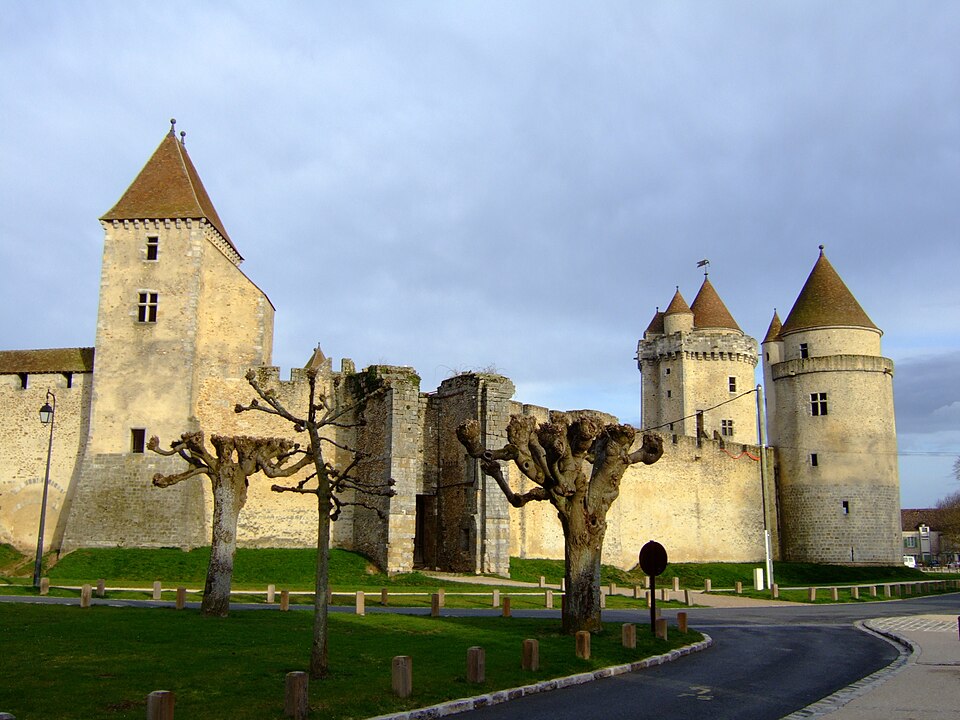
Built from 1220 by the viscounts of Melun to monitor the border with the Count of Champagne, Blandy-les-Tours Castle endured the Hundred Years' War before becoming a simple farm, then was saved from ruin in the 20th century.
Editorial journal · Carte des Châteaux ·
Just thirty kilometres from Vaux-le-Vicomte, Blandy-les-Tours Castle is one of the few well-preserved witnesses to medieval military architecture in Île-de-France. A royal stronghold that became a simple farm, then a classified ruin, it did not regain its current state until after a lengthy restoration completed in 2007.
01
A forward post facing the Count of Champagne
The earliest traces of the castle date back to 1220, when viscounts Guillaume II and Adam III of Melun—descendants of Adam II, a comrade-in-arms of Philippe Auguste at Bouvines—built the first fortified manor. The county of Melun, where Blandy is located, belonged to the royal domain but bordered the county of Champagne: the fortress thus served both as an expression of royal power and as a surveillance post facing this powerful neighbour.
02
From alliance with the Tancarvilles to the Hundred Years' War
In the early 14th century, the viscounts of Melun allied themselves with the Norman family of Tancarville, and the castle underwent major expansion work: the curtain walls and towers were heightened, a large residential wing was built, two new towers were erected—including the archives tower—and a new keep. During the Hundred Years' War (1337–1453), a new keep reflecting advances in military architecture was added, turning Blandy into a true fortress. Once the county of Champagne was incorporated into the royal domain in 1314 and the conflict ended, the building gradually lost its military purpose to become a seigneurial residence.
03
The Marshal of Villars transforms the castle into a farm
In 1707, Marshal Claude-Louis-Hector de Villars, owner of the neighbouring Vaux-le-Vicomte, purchased the county of Melun and the lordship of Blandy. He relocated the chapels to Vaux-le-Vicomte and abandoned the old castle, which became an agricultural estate known as the 'Ferme des Tours'. Deprived of its roofs, it no longer resembled a fortress, which paradoxically spared it the revolutionary destructions of 1789.
04
From forgotten ruin to departmental restoration
In the 19th century, local scholars and the Commission des monuments historiques revived interest in the site. The Count of Choiseul-Praslin, the owner, agreed to sell it to the commune of Blandy in 1883; the castle was listed as a historic monument in 1889, yet remained in a critical state. A restoration project was not drawn up until 1986, and it was the purchase for a symbolic franc by the Seine-et-Marne Departmental Council in 1992 that finally enabled its realisation, led by the chief architect of historic monuments Jacques Moulin, culminating in the site's reopening in 2007.