
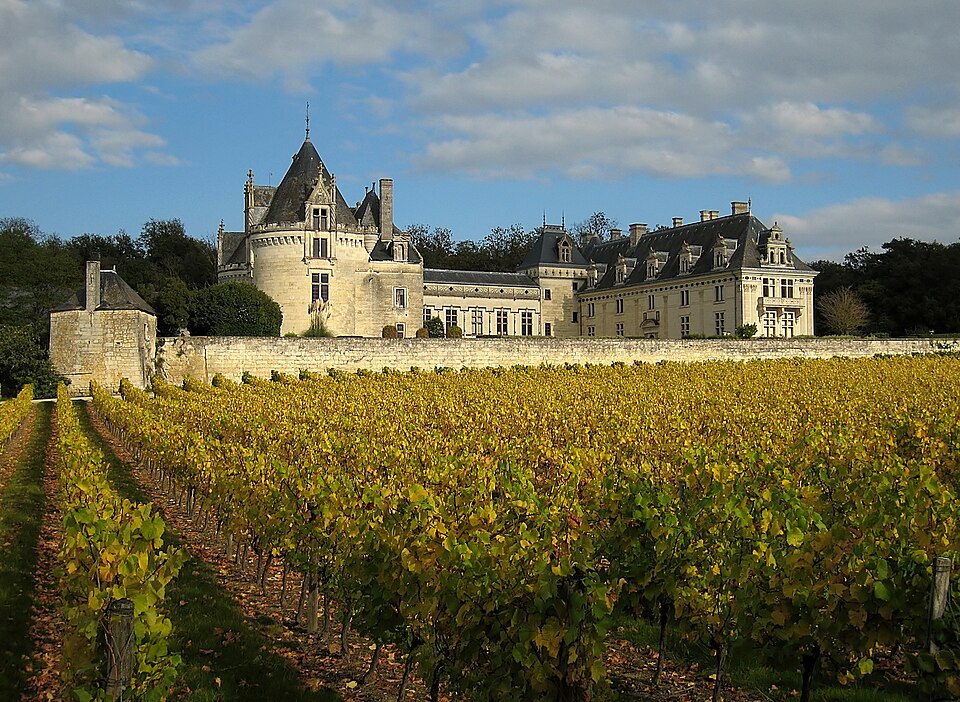
The underground network of Château de Brézé, in Anjou
Château de Brézé: Europe’s largest underground fortress, in Anjou
Beneath Château de Brézé in Anjou lies a troglodytic network stretching nearly 4 km through tuffeau rock: a vaulted bakery, stables, a silk-worm farm, and dry moats up to 18 metres deep—among Europe’s deepest.
Editorial journal · Carte des Châteaux ·
Beneath the Renaissance salons of Château de Brézé, ten kilometres from Saumur, a staircase descends into the soft tuffeau rock. Nine metres below begins a world few castle visitors ever suspect: nearly four kilometres of hand-carved tunnels, a vaulted bakery, stables, a silk-worm farm, and dry moats plunging up to 18 metres beneath ground level—among Europe’s deepest. The château visible from the road is merely the tip of an estate that extends almost as far underground as above.
A château of two faces
Seen from the road, Brézé resembles any other Loire Valley château, with its Renaissance façades and once-moated grounds now planted. It is only by descending underground that the site reveals its singularity: a veritable subterranean village, organised across several levels, that long served as both refuge and home to the entire seigneurial household.
A model for other extraordinary castles
Like the medieval building site at Guédelon in the Yonne, where a castle has been under construction stone by stone since 1997, Brézé illustrates another way of telling the story of castles: not just through façades and salons, but through what had to be dug, built or invented to keep them alive across the centuries.
Sources