
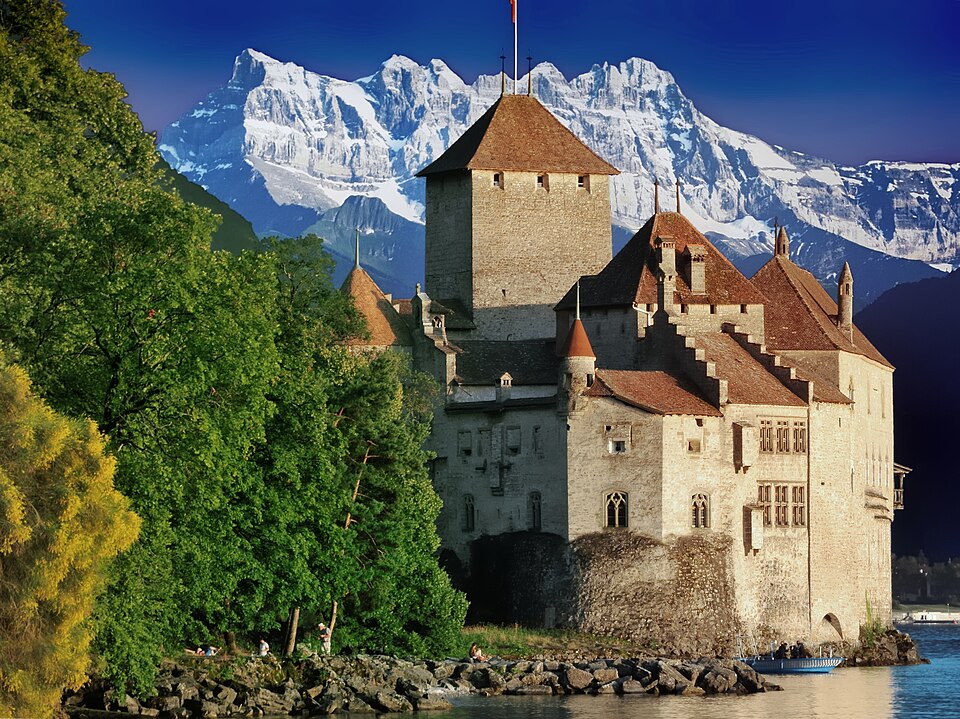
François Bonivard, the prisoner of Chillon, and his literary myth
Château de Chillon: the true story of the prisoner immortalised by Byron
On the shores of Lake Geneva, the Château de Chillon owes part of its fame to François Bonivard, a monk imprisoned for six years in its dungeons, and to the poem Lord Byron dedicated to him in 1816.
Editorial journal · Carte des Châteaux ·
In 1816, an exiled English poet visits a medieval castle perched on a rocky islet in Lake Geneva. In its vaulted dungeons, he is told the story of a Genevan monk imprisoned there nearly three centuries earlier. Lord Byron draws from it a poem, The Prisoner of Chillon, which will permanently transform the reputation of the Château de Chillon and turn François Bonivard—a rebellious prior turned political prisoner—into one of Europe’s most famous captives.
A dungeon turned literary pilgrimage site
Byron did not merely write his poem: he is said to have carved his name into one of the pillars in Chillon’s dungeons—a gesture now part of the tour and a symbol of the castle’s allure for 19th-century Romantic travellers.
“Chillon! thy prison is a holy place, And thy sad floor an altar, for 'twas trod, Until his very steps have left a trace.”
A castle at the heart of a network of Swiss monuments
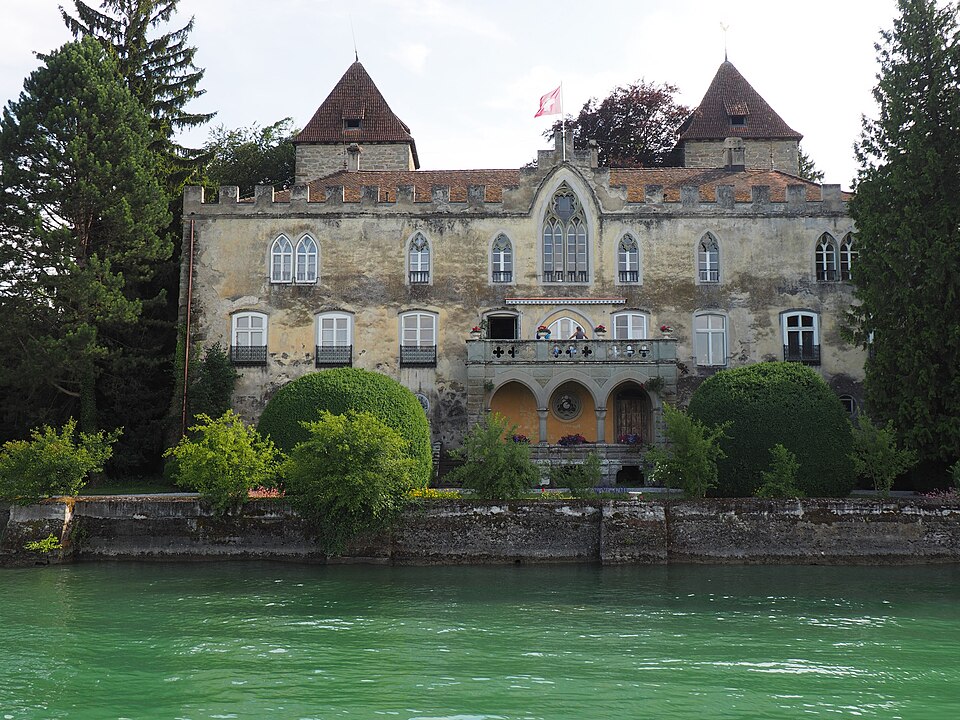
Chillon is not the only Swiss castle to have held troublesome figures: in Gottlieben, Thurgau, a pope and a religious reformer are said to have been imprisoned in the early 15th century in a building now undergoing restoration.
Read next
Sources