
Selection of castles to visit for the European Heritage Days 2026
European Heritage Days 2026: the castles to discover on 19 and 20 September
The European Heritage Days 2026 take place on 19 and 20 September: reopenings, completed restorations, archaeological digs and rare openings at 10 castles not to be missed across France.
Editorial journal · Carte des Châteaux ·
The European Heritage Days return on Saturday 19 and Sunday 20 September 2026, preceded on Friday 18 September by the school initiative \"Look Up!\". For this 43rd edition, two themes take centre stage: \"Photographic Heritage\", celebrating the bicentenary of Nicéphore Niépce’s invention, and the European theme \"Heritage in Peril: Revive, Resist, Reimagine\", focusing on endangered monuments and those working to save them. Rather than compiling an exhaustive list of every monument open that weekend, we have selected ten castles that offer something particularly special this year: highly anticipated reopenings, just-completed restorations, archaeological digs in progress, or exceptional openings of sites usually closed to the public. Each of these castles features on the Carte des Châteaux and is mapped in the interactive feature below.
01
Reopenings and completed restorations: the grand return
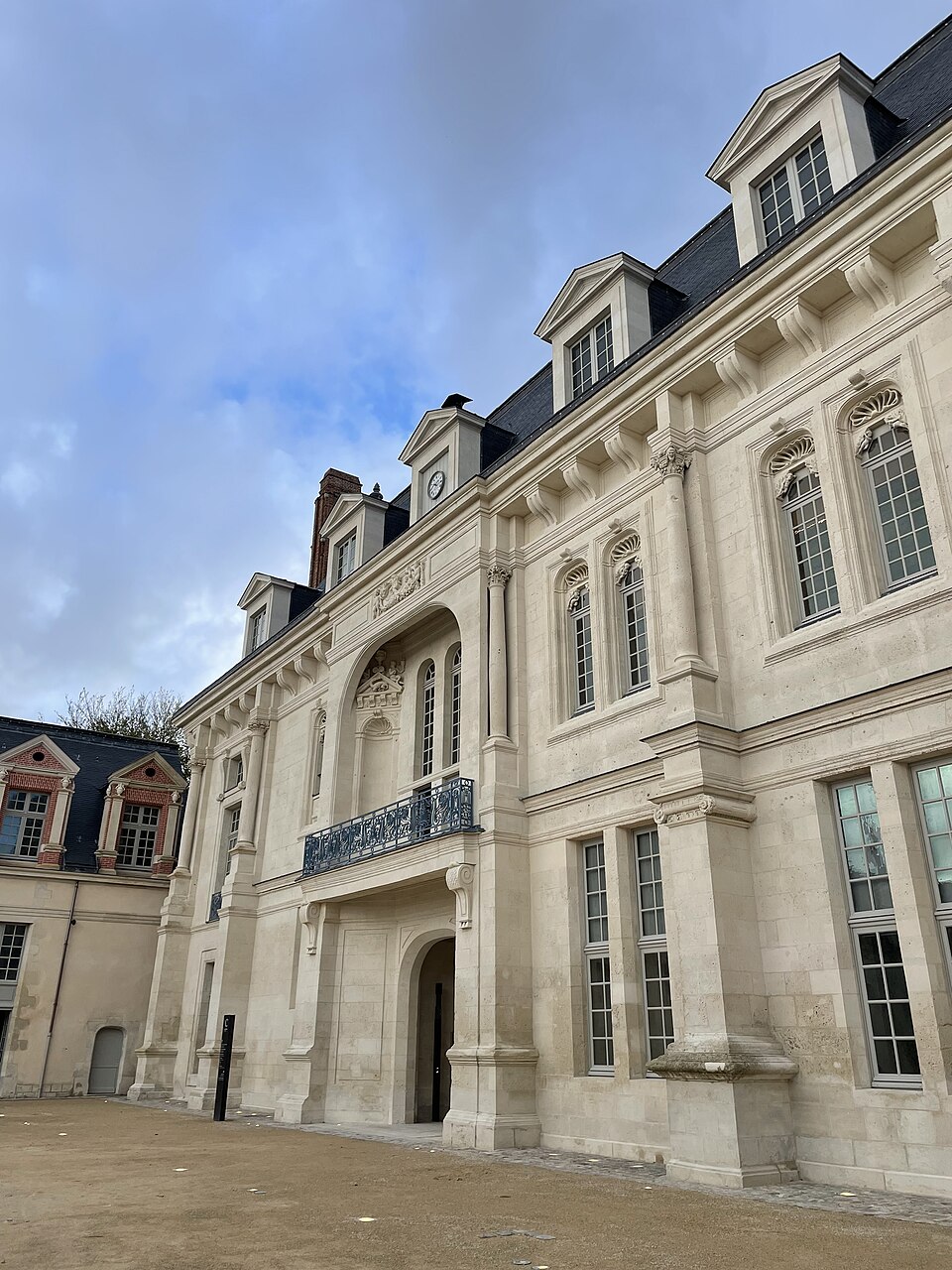
This year, several castles are closing a long chapter of restoration work. In Castries (Hérault), the château dubbed the \"Little Versailles of Languedoc\" reopens its doors on 18, 19 and 20 September 2026 under its new identity, the \"Château de Lumières\", after several years of closure. On 19 and 20 September, as part of the European Heritage Days, entry is offered at a flat rate of €10 (free for under-4s), with adjusted opening hours on Saturday and Sunday. In Villers-Cotterêts (Aisne), the Château François Ier, long abandoned, has been transformed into the Cité internationale de la langue française following a three-year, large-scale restoration project. For the EHD 2026, under the theme \"Heritage in Peril\", the Cité is hosting an exhibition on the behind-the-scenes of this restoration: the public can join guided tours on Saturday and Sunday at 11am, 2pm, 3.30pm and 5pm (on-site booking), meet stonemason Mikael Rebelo Pereira, or take part in an archaeological treasure hunt organised by Inrap. The permanent 1,200 m² exhibition on the French language is accessible free of charge both days. In Bournazel (Aveyron), the completion of an extraordinary restoration project is being celebrated: after 18 years of work, this Renaissance château-museum, built between 1540 and 1560, has been restored to its 16th-century glory. For the EHD, guided tours are offered without booking every 15 to 20 minutes, on Saturday from 2pm to 6pm and Sunday from 10am to noon and 2pm to 6pm, at a preferential rate of £7.50 (free for under-6s). The garden, reconstructed from archaeological digs, was awarded the \"Remarkable Garden\" label in 2019.
HERAULT · Castries
Château de Castries
Le château de Castries, surnommé « le Petit Versailles du Languedoc », domine la ville de Castries, près de Montpellier, dans l'Hérault. Propriété de la maison de Castries depuis 1465, il fut reconstruit en 1565 par Jacques de Castries sur des bases médiévales antérieures. Ses jardins furent dessinés en 1666 par André Le Nôtre, alimentés par un aqueduc attribué à Pierre-Paul Riquet. Endommagé pendant la Révolution française, il fut restauré en 1828. René de La Croix de Castries, qui l'avait acquis en 1935, en fit donation en 1985 à l'Académie française, qui le gère aujourd'hui avec l'Institut de France. Classé au titre des monuments historiques, le château est ouvert au public.
AISNE · Villers-Cotterêts
Château de Villers-Cotterêts
The Château de Villers-Cotterêts, in the Aisne, succeeded a medieval residence of the 12th–14th centuries that Francis I inherited at the age of three, as a cousin of King Louis XII. From 1528, Francis I undertook major works, entrusted notably to the master masons Jacques and Guillaume Le Breton, to make it one of the few Renaissance-style royal palaces in Picardy; its chapel is one of the first in France to break with the Gothic tradition, decorated with royal emblems rather than Christian symbols. Henry II, and later Louis XIV, who gave the château as an appanage to the House of Orléans in 1661, stayed there. The park was redesigned by André Le Nôtre. Seized as national property during the Revolution in 1790, the château became in 1808 a dépôt de mendicité (a workhouse for beggars) able to house up to 1,800 people, served as a military hospital during the First World War, and then as a retirement home from 1889 to 2014. After a major restoration, it opened in 2023 as the Cité internationale de la langue française; it is owned by the State and managed by the Centre des monuments nationaux.
AVEYRON · Bournazel
Château de Bournazel
Nestled in the heart of the Rouergue, the Château de Bournazel is one of the most ambitious Renaissance building projects ever undertaken in the Aveyron, commissioned by Jean de Buisson and Charlotte de Mancip from 1540 onwards. Left unfinished after work stopped around 1560, it bears the scars of an eventful history: looting during the Revolution, a loss of status in the 19th century, then conversion into a rest home for more than sixty years. Bought in 2007 by Martine and Gérald Harlin, it has undergone an exemplary restoration that has brought its sculpted façades, its grand staircase and its remarkable gardens back to life. Today a historic monument open to the public, it combines heritage and cultural purposes (concerts, artist residencies) with its role as a reception venue (weddings, seminars).
02
Ongoing works and archaeological digs: behind the scenes of a renaissance
Other castles are opening their doors mid-restoration, and that’s precisely what makes them so compelling this year. In Pontivy (Morbihan), the Château des Rohan, one of Brittany’s last great medieval castles, partially collapsed in 2014; given to the town for a symbolic one euro in 2015, it has since been the subject of a reconstruction project alongside archaeological digs. For the EHD 2026, a guided tour titled \"After the Collapse: Behind the Scenes of the Château’s Renaissance\", led by Anne Bocquet, project manager for the town of Pontivy, is offered on Saturday 19 and Sunday 20 September at 11am, 2pm and 4pm. The weekend also features equestrian historical re-enactment shows in the moat, as well as a tour in French Sign Language. In Bonneville (Haute-Savoie), the 13th-century château has overlooked the town from its rocky outcrop since the Middle Ages; used as a prison from the 16th to early 20th centuries, it is now the focus of a rehabilitation programme accompanied by preventive archaeological digs. On 19 September, archaeologist Auriane Lorphelin will present the findings of the 2025 dig, which uncovered previously unknown architectural elements and medieval everyday objects. The château also enjoys exceptional openings on 19 and 20 September, with musical performances. In Saint-Vougay (Finistère), the Renaissance jewel Château de Kerjean is dedicating its 2026 EHD to the restoration itself: visitors are invited to explore the choices behind conserving a historic monument, including through the drawings of Patrice Pellerin, which reveal spaces now lost. A family-friendly architectural alphabet game is on offer, alongside a lecture-demonstration on women’s fashion in the late 16th century.
.JPG)
MORBIHAN · Pontivy
Château de Pontivy
Le château de Pontivy (Morbihan), appelé château des Rohan, a été bâti aux XVe et XVIe siècles par la famille de Rohan. Le château fait l’objet d’une inscription au titre des monuments historiques depuis le 26 octobre 1925, alors que les façades, toitures, cours et fossés sont classés depuis le 30 décembre 1953. Propriété de Josselin de Rohan, celui-ci en a fait don pour un euro symbolique à la ville de Pontivy en octobre 2015.
HAUTE-SAVOIE · Bonneville
Château de Bonneville
Le château de Bonneville, en Haute-Savoie, naît en 1262 d'un premier fort en bois de Pierre de Savoie, remplacé vers 1290 par la forteresse actuelle de Béatrice de Faucigny, la Grande Dauphine. Centre administratif savoyard à partir de 1355, il conserve un donjon circulaire du XIIIe siècle, deux tours majeures (Noire et Blanche) reliées par une courtine à pont-levis, et une chapelle gothique Sainte-Catherine. Converti en prison au XVIIIe siècle, il est acquis par la commune de Bonneville en 1934 après la fermeture de celle-ci, classé monument historique en 1987, et ouvert au public en été (tours, courtine, cour centrale), avec des fouilles archéologiques menées en 2019.
FINISTERE · Saint-Vougay
Château de Kerjean
Le château de Kerjean, à Saint-Vougay (Finistère), est bâti entre les années 1540 et 1590 pour la famille Barbier, ultérieurement titrée marquis de Kerjean. Un des plus beaux témoignages de l'architecture Renaissance du pays de Léon, il associe une résidence de style Renaissance à une enceinte défensive à bastions et casemates, alors peu courante pour ce type d'édifice. Le mariage avec la famille de Coatanscour agrandit le domaine au XVIIIe siècle, jusqu'à ce que la marquise de Coatanscour soit arrêtée, emprisonnée puis guillotinée à Brest pendant la Révolution, entraînant la confiscation du domaine. Il passe ensuite aux familles Brilhac, à partir de 1802, puis Forsanz-Coatgoureden. Racheté par l'État en 1911 et classé monument historique, il est restauré des années 1980 au début des années 2000. Propriété de l'État-Ministère de la Culture, le château, sur un domaine de 20 hectares comprenant notamment un colombier remarquable, est ouvert au public et sa gestion assurée par l'établissement public de coopération culturelle Chemins du patrimoine en Finistère.
03
Heritage in peril: saving what can be saved
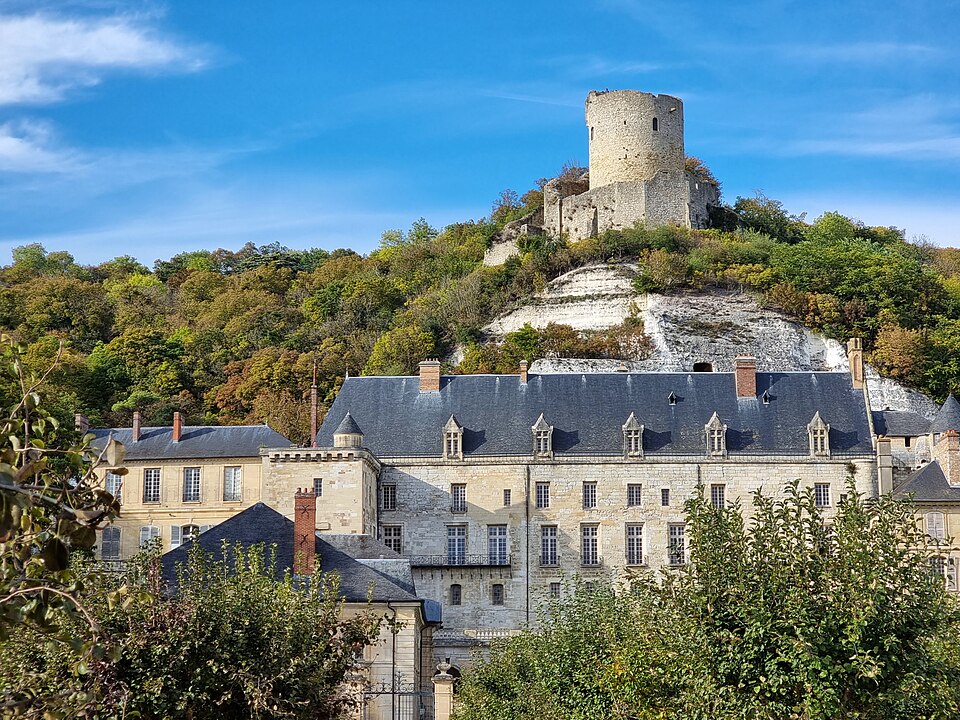
The European 2026 theme, \"Heritage in Peril\", finds a very real echo in two of our selected castles. In Médavy (Orne), the 18th-century classical château was devastated by a fire on the night of 24–25 September 2025, destroying two-thirds of the monument. Selected among 18 emblematic regional sites for the Mission Patrimoine led by Stéphane Bern, the château will receive a €450,000 grant from the Heritage Lotto, officially presented on Saturday 19 September 2026 during the European Heritage Days. Reconstruction work, overseen by a chief architect of historic monuments, is set to begin in 2026 and conclude in early 2029; a partial reopening is planned for summer 2027. In La Roche-Guyon (Val-d’Oise), the troglodyte château—unique in Île-de-France—was selected in 2019 by the mission to identify endangered heritage. For the EHD 2026, as part of its cultural season \"History and Memory\", guided tours all day focus on the Second World War: in partnership with the Pact en Vexin association, actors bring the monument to life with readings of letters from resistance fighters and prisoners, while a sound and light installation, \"The Voices of the Casemates, 1944\", is presented in the underground chambers. The château is open on Saturday 19 and Sunday 20 September from 10am to 6pm.
VAL-D'OISE · La Roche-Guyon
Château de La Roche-Guyon
Le château de La Roche-Guyon est un château qui se dresse sur la commune française de La Roche-Guyon dans le département du Val-d'Oise aux portes de la Normandie sur la rive droite de la Seine. L'ancien château fort en ruine, dominé par son donjon, au sommet du coteau a reçu des ajouts importants au XVIIIe siècle au pied du coteau et un jardin et potager « à la française » : le potager du château de la Roche-Guyon. Le château, classé au titre des monuments historiques, propriété de la maison de La Rochefoucauld est aujourd'hui géré par un établissement public de coopération culturelle (EPCC) regroupant le département du Val-d’Oise, la commune de La Roche-Guyon, le syndicat mixte d’aménagement et de gestion du parc naturel régional du Vexin français et l'État. Élargi et embelli à de nombreuses reprises, notamment lors d'importants travaux au XVIIIe siècle entrepris par ses propriétaires actuels, les La Rochefoucauld, l'ancienne place forte est progressivement devenue un lieu d'apparat. Depuis 2010, l'exposition « On emménage au château » a transformé l'endroit en musée éphémère dévoilant des œuvres contemporaines au détour d'une galerie ou d'un rempart, comme des colonnes installées par Daniel Buren.
ORNE · Médavy
Château de Médavy
Privé
04
A rare opening not to be missed
Some sites are almost never open to the public: such is the case of the Château Raoul in Châteauroux (Indre). Built in the 10th century and now part of the private residence of the prefect of Indre, this iconic monument opens its doors only on very rare occasions. For the European Heritage Days, the Indre Departmental Council and the tourist office are offering free guided tours on Saturday 19 and Sunday 20 September 2026 at 10am and 2pm, in groups limited to 25 people. Advance booking is strongly advised given the rarity of the opening. It is also possible, the same weekend, to visit the adjoining prefectural residence.
05
Thirty years of protection, an exceptional restoration
In Agde (Hérault), the Château Laurens is marking 2026 as the 30th anniversary of its listing as a historic monument, achieved in 1996—a date that coincides with the inscription of the nearby Canal du Midi on the UNESCO World Heritage List the same year. This eclectic villa, built from 1898 for collector Emmanuel Laurens and long left to decay before being purchased and restored by the town of Agde, is hosting an anniversary week from 15 to 20 September 2026. \"An Exceptional Restoration\" themed tours are offered from 15 to 18 September (€14), ahead of a free weekend for the Heritage Days: Saturday 19 September by advance booking (recommended), Sunday 20 September with open access and no booking required. The exhibition \"The Genius of Waters\", linking Agde’s round lock and the château grounds to contemporary creations, remains on view until 1 November 2026.
06
Practical information and tips for making the most of the weekend
A few tips to help you get the most out of the weekend. The rarest sites—the Château Raoul in Châteauroux, the guided tours in Villers-Cotterêts—operate on a booking basis with limited numbers: it’s best to reserve as soon as possible rather than travel without certainty. By contrast, castles like Bournazel or La Roche-Guyon can be visited freely, without booking, over extended time slots. Entry fees vary widely: free in Villers-Cotterêts, Bonneville, the Château Raoul and on Sunday at the Château Laurens, a flat reduced rate in Castries and Bournazel, standard rates elsewhere. As every year, the opening hours, entry fees and programmes listed here may be adjusted by organisers at the last minute: it’s advisable to check the latest information for each site before travelling, particularly on the official European Heritage Days platform. To discover the full history of each of these monuments—and many more—outside this exceptional weekend, visit their detailed profiles on Carte des Châteaux.
The route on the map
The castles to discover for the European Heritage Days 2026
The ten castles selected for the European Heritage Days 2026, across France.
Markers follow the suggested visiting order. Select a castle to open its page.
Sources