
Fairy-Tale Heritage and Storybook Architecture
French Châteaux That Seem Straight Out of a Fairy Tale
Silent moats, slender towers and perched fortresses: ten French châteaux that look as though they have stepped out of a storybook, from the Loire to the Pyrenees.
Editorial journal · Carte des Châteaux ·
There are châteaux in France that seem to have escaped from the pages of a picture book rather than from the archives of history. Slender towers lost in the mist, moats mirroring a pale façade, fortresses clinging to a rocky spur: some monuments possess that extra measure of soul which turns a simple visit into a plunge into the imagination of childhood. It is no coincidence that several of them have, over the centuries, inspired storytellers and illustrators, silhouettes one might almost believe were drawn before they were built. From Touraine to Alsace, by way of Brittany, the Périgord and the Pyrenees, this selection brings together ten châteaux with very different characters, yet all bearing that touch of the marvellous: homes rising from the water, medieval fortresses perched on their crags, and architecture so spectacular that it sometimes seems to defy reason. There is no itinerary to follow here, only an invitation to daydream, region by region, and to rediscover how closely French heritage can, in places, resemble the setting of a fairy tale.
01
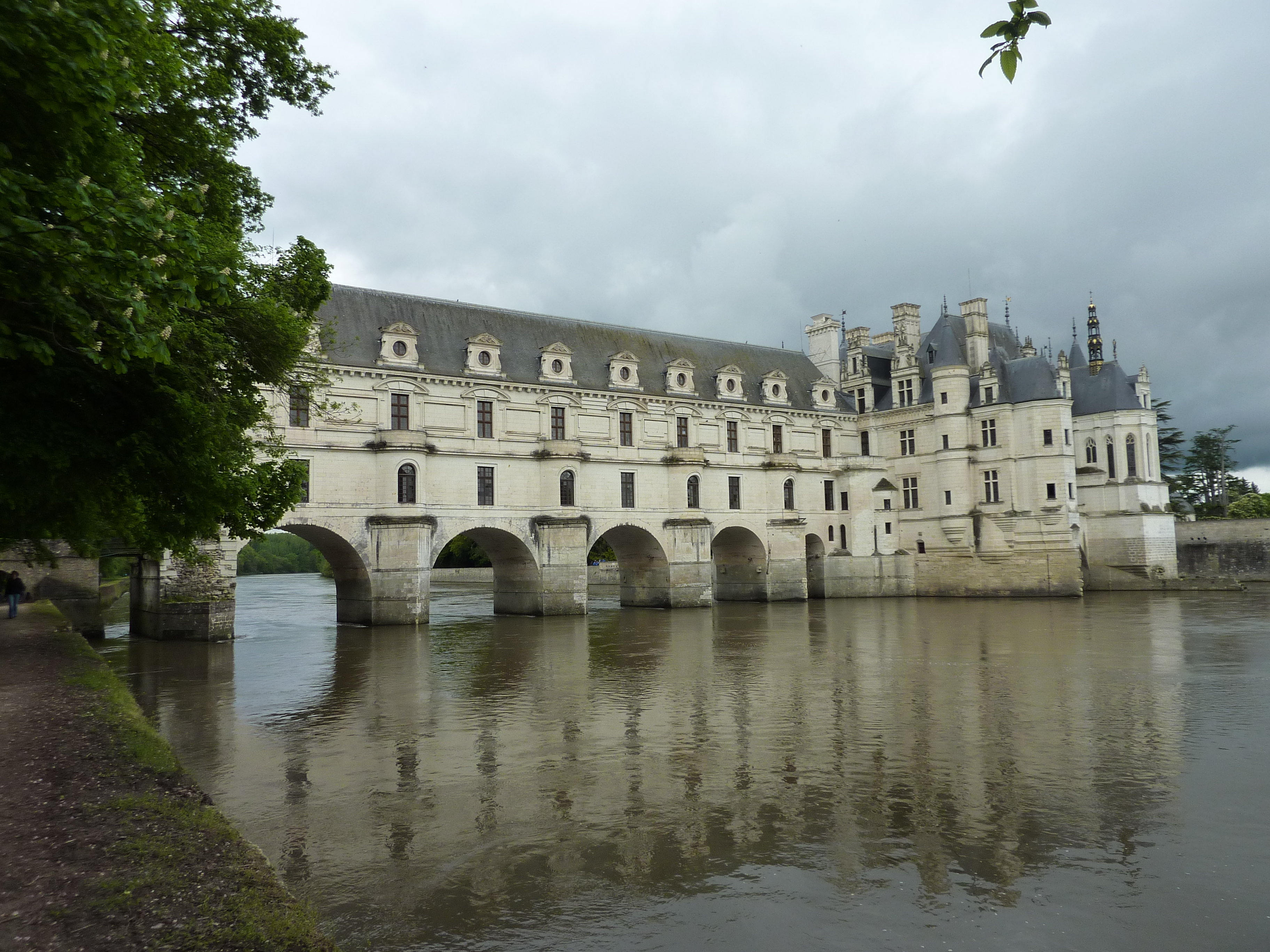
Chenonceau, the gallery suspended above the Cher
It is impossible not to think of a fairy-tale setting when faced with Chenonceau: the château, standing on piers that span the Cher, seems to float above the water. Its famous two-storey gallery, stretched from one bank to the other, creates a play of reflections and symmetries that we associate more with an illustration than with a real building. Built and remodelled over the centuries by several strong-willed women, from Katherine Briçonnet to Catherine de’ Medici, it owes much of its grace to this resolutely feminine history, which earned it the nickname ‘the Château of the Ladies’. The gardens laid out on either side of the river add an almost theatrical staging, in which the water becomes a mirror.
02
Azay-le-Rideau, set on its island like a jewel
Encircled by the moats of a former arm of the Indre, the Château d’Azay-le-Rideau gives the impression of resting directly on the water. Its corner turrets and finely carved dormer windows, inherited from the Renaissance style, are doubled in the liquid mirror surrounding it, blurring the line between stone and reflection. Though it has the look of a fortress, it was not designed for defence but above all as a pleasure residence, which explains the lightness of its lines and the precision of its decoration. It is this meeting of architectural rigour and watery reverie that makes Azay-le-Rideau one of the most photographed châteaux of the Loire Valley.
.JPG)
03
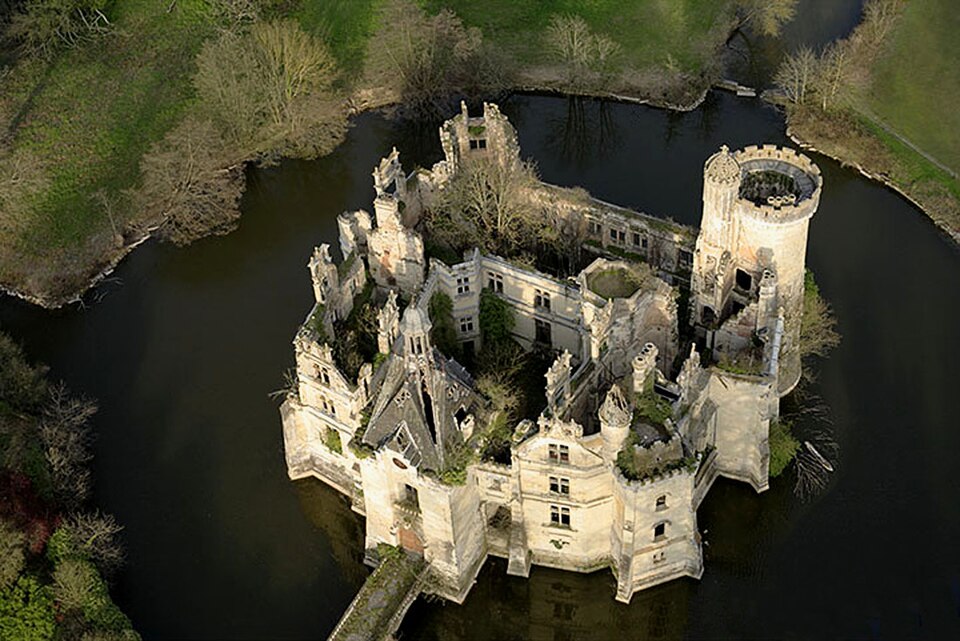
La Mothe-Chandeniers, the sunken château rescued by legend
It is hard to find a more romantic silhouette than that of La Mothe-Chandeniers: a ruin surrounded by water, whose towers, gutted by a fire in 1932, still rise proudly out of the vegetation and the moat. Long left abandoned, the estate has had a destiny almost worthy of a fairy tale itself, having been bought in 2017 by thousands of individuals brought together by a crowdfunding campaign, to be rescued from total ruin. This ‘sunken’ air, with towers that seem to float between sky and water, makes it one of the most mysterious and most photogenic sites in the region, midway between Anjou and Poitou.
04
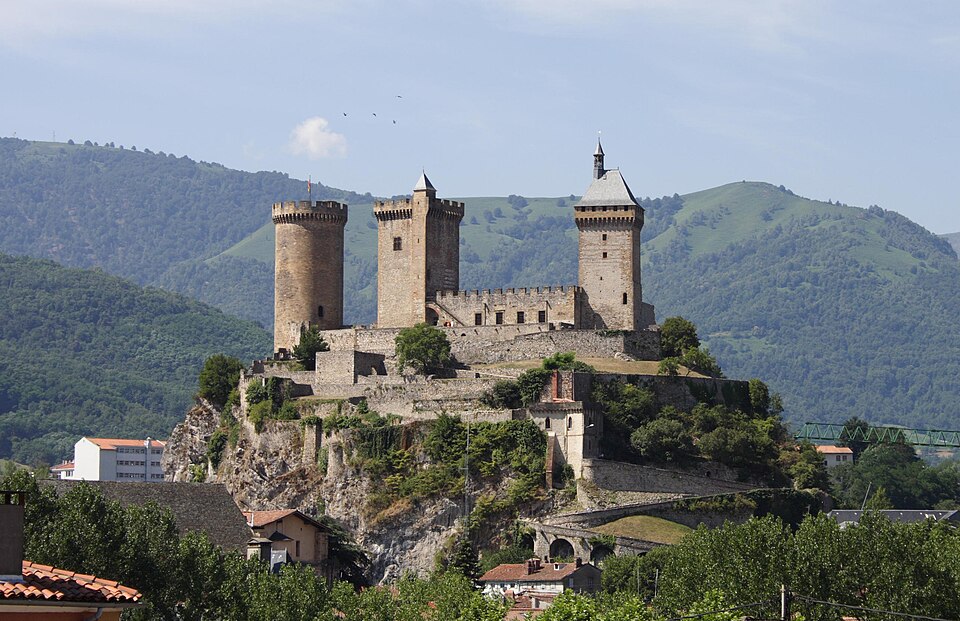
Foix, the fortress that watches over its town
Dominating the Ariège valley from its rocky platform, the Château de Foix asserts its silhouette long before one reaches the town that bears its name. Its three massive towers, visible for miles around, form a storybook image of the medieval fortress as we imagine it as children: austere, vertical, unreachable. Remodelled several times since the 10th century, it has kept that eagle’s-nest appearance which makes it today one of the most recognisable symbols of the Pyrenees, somewhere between Cathar legends and tales of feudal counts.
05
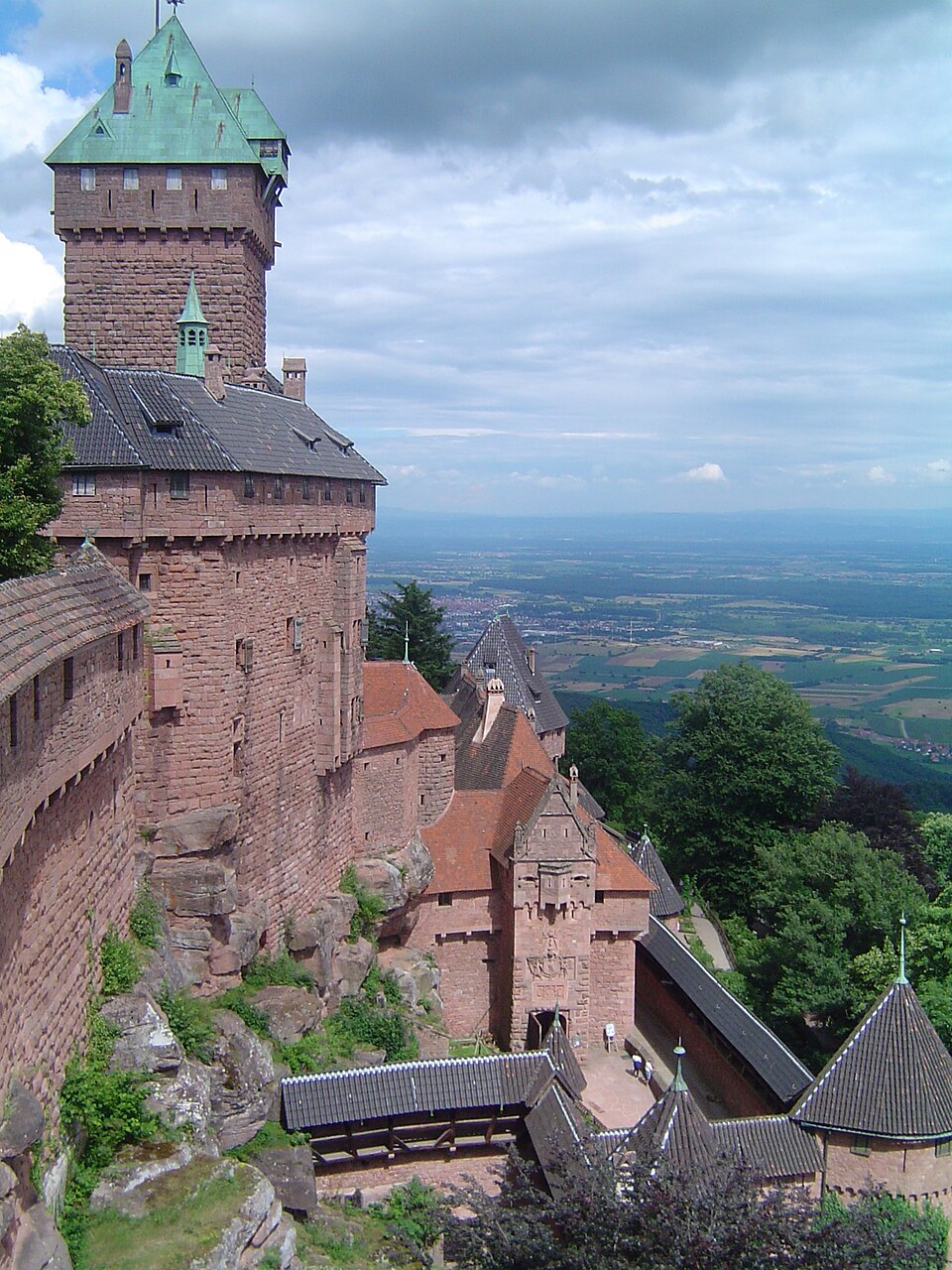
Haut-Koenigsbourg, a stone sentinel of pink sandstone above the Rhine
Perched on a spur of the Vosges massif at over 700 metres above sea level, the Château du Haut-Koenigsbourg overlooks the Alsace plain and, on clear days, the Rhine valley as far as the Black Forest. Its spectacular restoration at the beginning of the 20th century gave it crenellated towers, a wall walk and an overall appearance owing as much to archaeology as to a very romantic notion of the medieval castle. This silhouette of pink Vosges stone, encircled by fir forests, makes it one of the most visited monuments in France outside the Paris region.
06
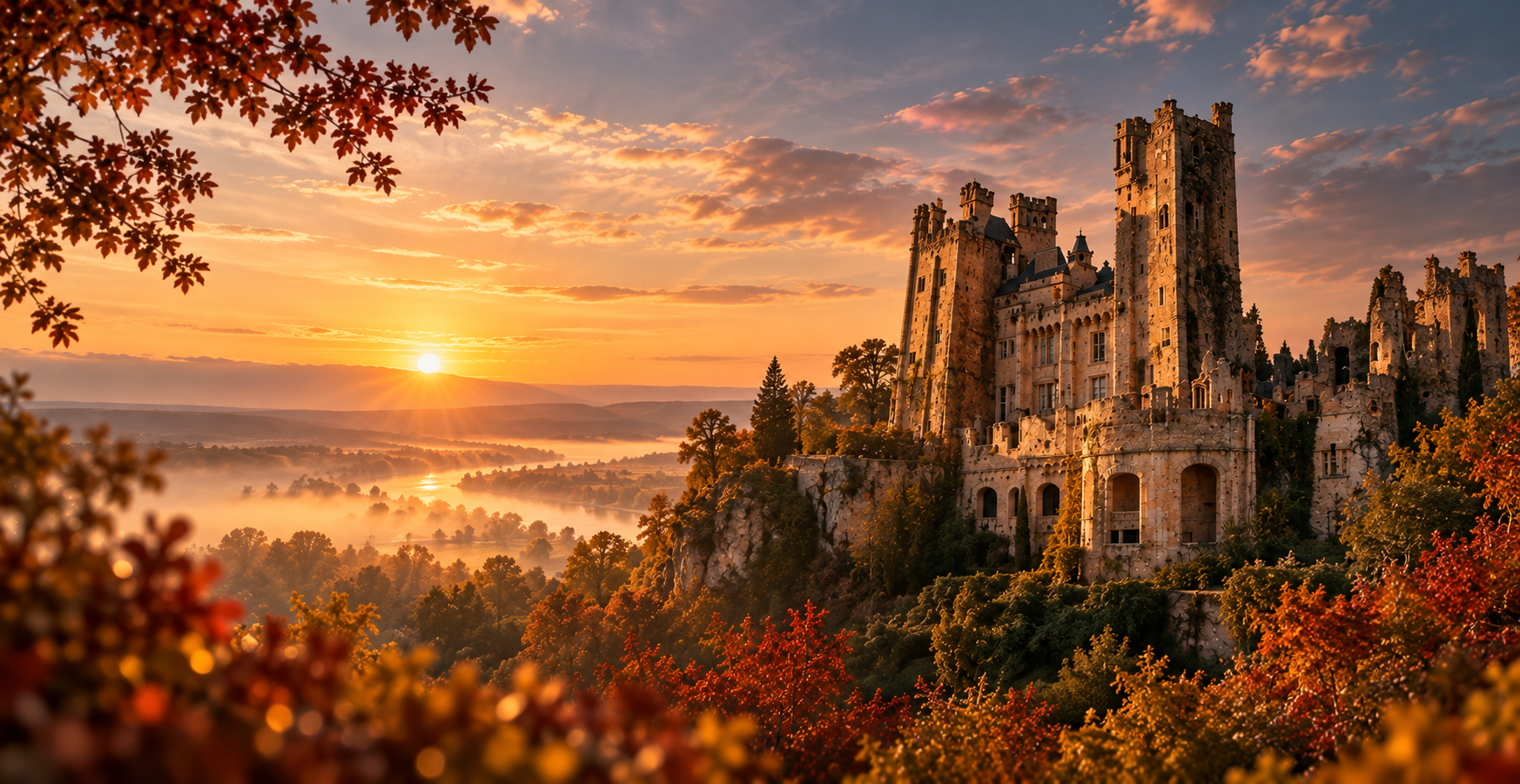
Beynac, the cliff that became a château
The Château de Beynac does not merely overlook the Dordogne: it seems literally to spring from the limestone cliff on which it rests, some hundred metres above the river. Regarded as one of the best-preserved in the Périgord Noir, it retains its Romanesque keep and austere curtain walls, which bear witness to the rivalries between French and English during the Hundred Years’ War. Seen from the gabares gliding along the river below, the ensemble forms a vertical landscape striking enough to have inspired more than one medieval film set.
07
Josselin, its round towers mirrored in the Oust
With its three towers crowned by tall pointed roofs rising directly on the banks of the Oust, the Château de Josselin offers one of the most emblematic images of inland Brittany. The seat of the Rohan family since its construction at the turn of the 15th and 16th centuries, it presents on the river side an almost austere defensive profile, while its inner courtyard reveals a richly sculpted façade typical of the Louis XII style. This contrast between martial austerity and decorative refinement is one of the hallmarks of the most romantic Breton châteaux.
.JPG)
08
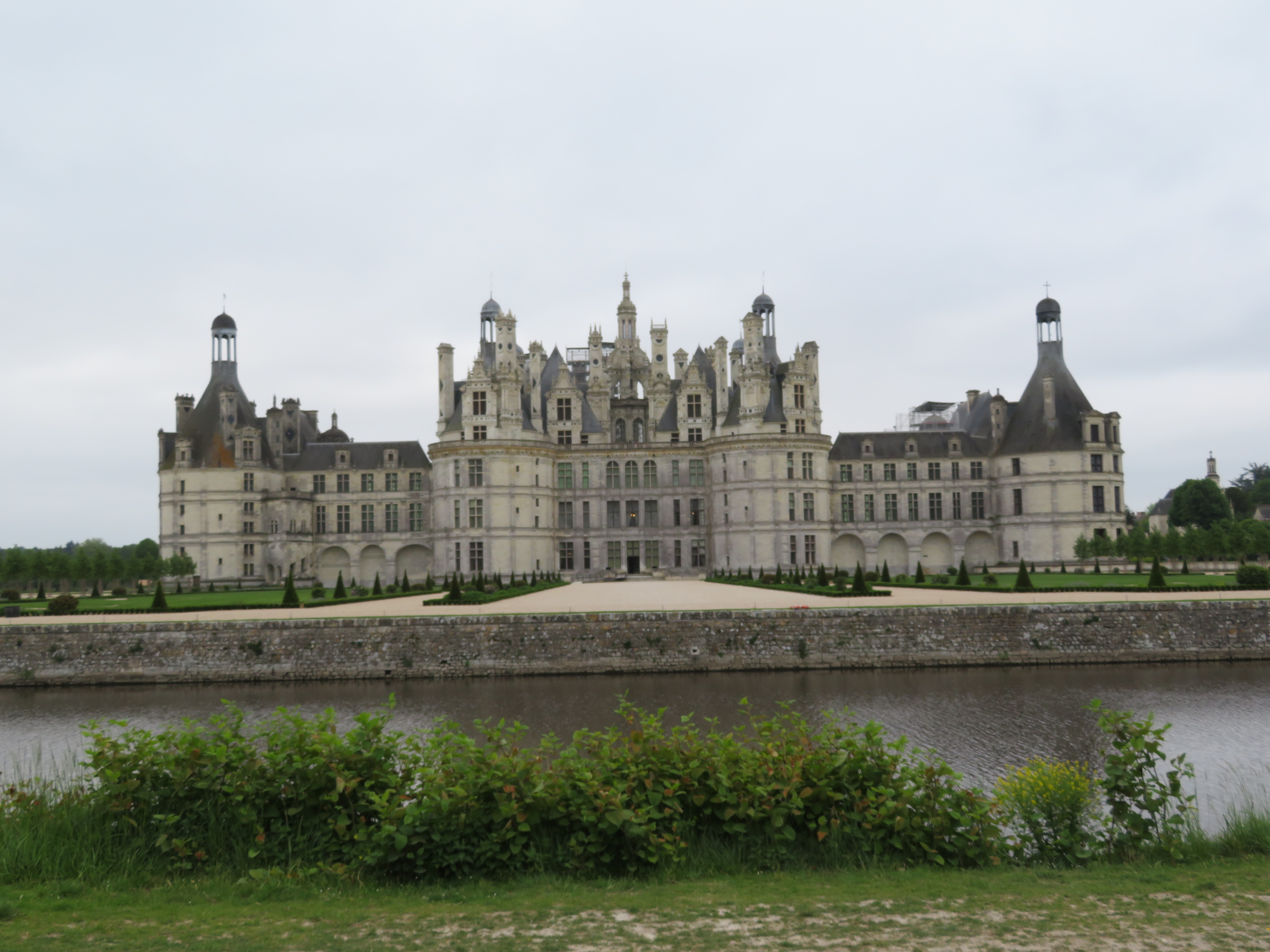
Chambord, a silhouette worthy of a picture book in its own right
No French château plays with the imagination quite like Chambord, with its roofscape, a veritable miniature town of turrets, lantern towers, carved chimneys and spiral staircases. Built in the heart of the largest enclosed forest park in Europe, it seems to rise from the woods around it like an apparition, particularly in the early morning when mist still lingers over the moats. The famous double-helix staircase, associated with the circle of Leonardo da Vinci, lends the building an almost magical dimension, that of a place designed to astonish and enchant its visitors for five centuries.
09
Pierrefonds, Viollet-le-Duc’s neo-Gothic dream
Ruined since the 17th century, the Château de Pierrefonds owes its spectacular appearance to its reconstruction, undertaken in the 19th century by the architect Eugène Viollet-le-Duc at the request of Napoleon III. The result, somewhere between archaeological restitution and pure romantic invention, is a fortress of outsized proportions, bristling with round towers and machicolations, which resembles the idea we have of a medieval stronghold more than an authentic medieval building. This openly theatrical quality has made it the setting for numerous films and television series, its silhouette matching, almost too perfectly, the storybook image of the fairy-tale château.
010
Chaumont-sur-Loire, round towers above the river
From its spur overlooking the Loire, between Amboise and Blois, the Château de Chaumont-sur-Loire presents a defensive silhouette that has remained almost intact, with its great round towers and machicolations framing the cour d'honneur. Each year, the Festival International des Jardins unfolds across its grounds with ephemeral landscape creations that soften the austerity of medieval architecture, producing a striking contrast between somber stone and dreamlike gardens. This meeting of feudal past and contemporary imagination makes Chaumont one of the most singular châteaux of the Loire Valley.
.JPG)
The route on the map
Where are these fairy-tale châteaux located?
These ten fairy-tale châteaux are scattered across every corner of France, from the Loire to Alsace, by way of Brittany, the Périgord and the Pyrenees.
Markers follow the suggested visiting order. Select a castle to open its page.