
Haunted Castles and Legends
Le Grand JD Locked Up for Three Days at the Château de Montaigne: The Haunted Home of the Author of the Essais?
Le Grand JD spent three days and two nights at the Château de Montaigne in the Dordogne. A look back at his video, at accounts of doors opening by themselves and a phantom piano, and at the true story of the tower where Montaigne wrote the Essais.
Editorial journal · Carte des Châteaux ·
Vu sur YouTube
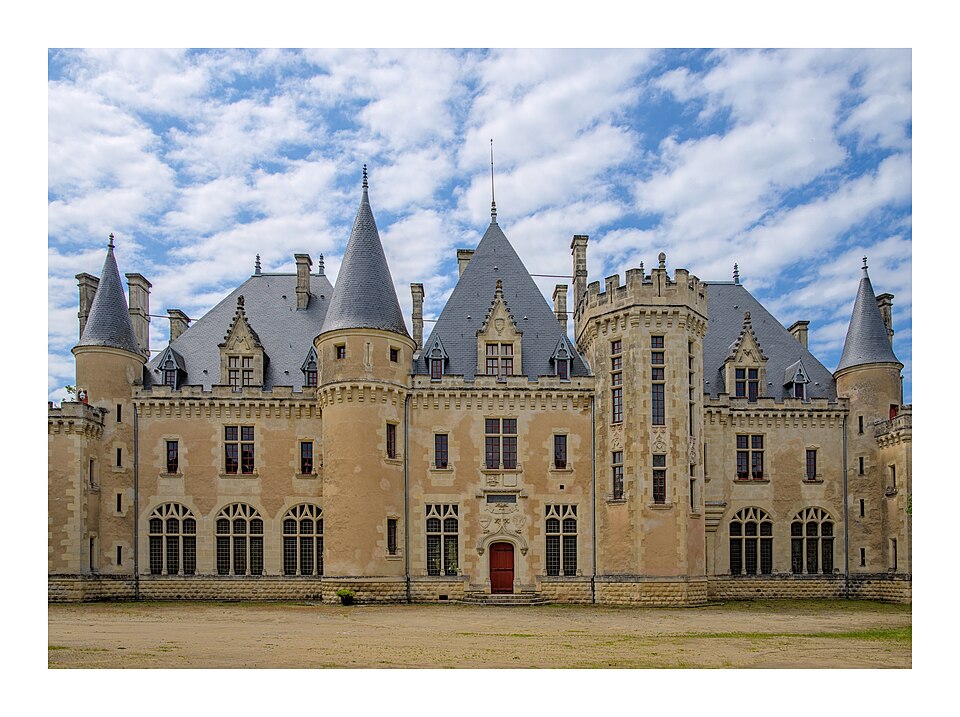
For his latest investigation, published on 4 November 2026, Swiss video creator Le Grand JD did not venture into a forgotten ruin but into a landmark of French literature: the Château de Montaigne, in Saint-Michel-de-Montaigne, on the border between Périgord and Bordelais. It was here that Michel de Montaigne, the author of the Essais, was born, lived and died. For several years, the estate has also carried a more unexpected reputation: doors that open on their own, lights that switch back on, an alarm that goes off in the dead of night, and piano notes. Enough to push French-speaking YouTube's most followed ghost hunter to lock himself in for three days and two nights. Here is his video, and what we really know about this château.
The video
Three Days Locked in a Haunted Place
For over an hour and a half, Le Grand JD recounts his stay of three days and two nights at the château, with the agreement of the estate's team. He says he came after hearing many strange accounts: doors opening even though they had been closed, lights switching back on, the alarm going off in the middle of the night, but also piano sounds and smells. True to his approach, he does not take sides. He shares the most unsettling image he filmed, a door opening, and invites his viewers to analyse it for themselves.
A Merchants' Castle Turned Temple of Humanism
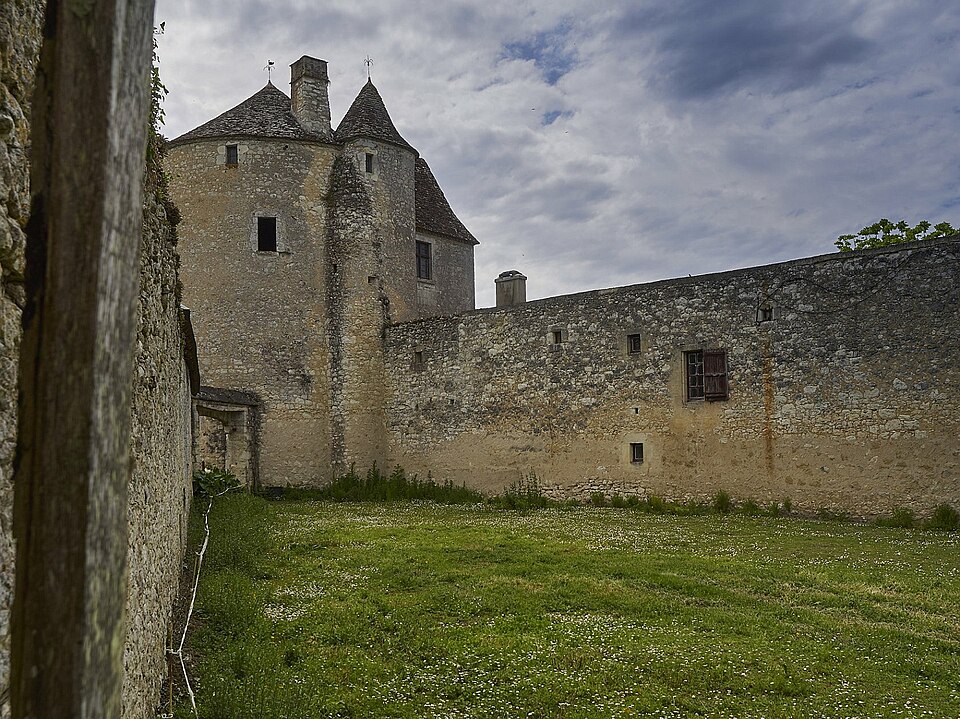
The story begins in 1477, when Ramon Eyquem, a wealthy Bordeaux merchant, buys the noble house of Montaigne and the lordship that comes with it. His grandson Pierre Eyquem has a château built there and the site fortified in the mid-16th century. It is there, on 28 February 1533, that his son Michel is born, raised in Latin from the cradle. After a career as a magistrate in Périgueux and in the Parlement of Bordeaux, Michel de Montaigne inherits the estate in 1568 and retires shortly afterwards to the large round tower of the château. On the top floor he sets up his “librairie” and begins writing a book of a new kind, in which he takes himself as his subject: the Essais, published from 1580 onwards.
The Tower, the Only Survivor
The tower of the librairie is the only part of the Château de Montaigne that has come down to us. Across three levels it houses a chapel, the philosopher's bedroom and, at the top, his library, whose beams bear 56 Latin and Greek sentences that he had painted there. An opening and a hidden staircase allowed him to follow Mass from his bedroom. The rest of the château burned down in 1885: the residence visible today is a late 19th-century neo-Renaissance reconstruction.
Five Centuries in a Few Dates
Ramon Eyquem, a Bordeaux merchant, buys the noble house of Montaigne.
Michel de Montaigne is born at the château on 28 February.
Montaigne retires to the librairie tower and begins the Essais.
He receives Henri de Navarre, the future Henri IV, at the château.
Montaigne dies in his tower bedroom on 13 September, during a Mass.
Pierre Magne, Finance Minister under Napoleon III, buys the estate.
A fire destroys the château; only the tower is spared.
The tower is listed as a historic monument, then the whole estate is registered.
Le Grand JD spends three days and two nights at the château for his video.
A Death at the Moment of the Elevation
If any place lends itself to tales of restless spirits, it is the bedroom where Montaigne breathed his last. Ill and sensing the end approaching, he summoned his family on 13 September 1592 and had a Mass said in his room. According to the account handed down by Étienne Pasquier, and repeated today by the château, he died at the very moment of the elevation. His body was laid to rest in Bordeaux, while tradition holds that his heart remained in the village church. His widow, Françoise de La Chassaigne, kept the estate and welcomed Marie de Gournay, his “adopted daughter”, who would publish the posthumous edition of the Essais in 1595.
History or Legend?
What is documented
Montaigne was born and died at the château, wrote the Essais there and received Henri de Navarre there. The château burned in 1885 and only the original tower survives. These facts rest on the archives, the historic monuments register entry and the philosopher's biographies.
What belongs to the realm of storytelling
Phantom rain, doors opening, piano, smells, night-time alarms: these are contemporary testimonies, reported by staff, film crews and video creators. They feed a recent folklore but do not prove a supernatural presence.
Others Who Left Their Mark on the Château
Françoise de La Chassaigne
Montaigne's wife from 1565, she kept the estate after his death.
Marie de Gournay
1565-1645
Montaigne's “adopted daughter”, received at the château by his widow; she published the Essais in 1595.
Pierre Magne
1806-1879
Finance Minister under Napoleon III, he bought the château in 1860 and died there in 1879. His descendants still own it.
Castle Factsheet
Sources