
Cinema
Marie-Antoinette: twenty years on, Sofia Coppola’s film returns to Versailles
Twenty years after its release, Sofia Coppola’s Marie Antoinette returns to Versailles: the château is devoting an exhibition to it, designed with the director herself, at the Petit Trianon from 22 September 2026 to 24 January 2027.
Editorial journal · Carte des Châteaux ·
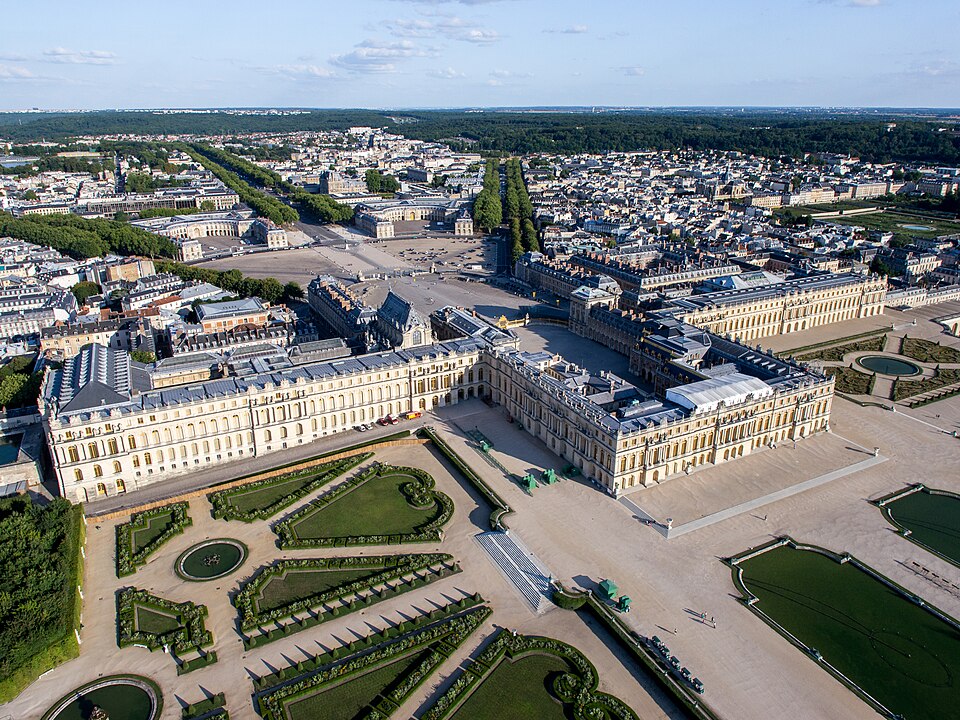
Twenty years after its release, Marie Antoinette has never truly left Versailles. The château where Sofia Coppola filmed much of her 2005 movie is now dedicating an exhibition to it, created in collaboration with the director and presented at the Petit Trianon from 22 September 2026 to 24 January 2027. This is the perfect opportunity to revisit the encounter between a place steeped in history, a queen turned pop icon, and a filmmaker’s vision that has forever transformed how we imagine Versailles.
01
Marie-Antoinette, a queen inseparable from Versailles
Marie-Antoinette arrived at Versailles in 1770 to marry the future Louis XVI, and lived there until the French Revolution. According to the château de Versailles, her image has shifted dramatically over time: reviled during the Revolution, sanctified during the Restoration, then aestheticised from the Second Empire onwards. The Petit Trianon and the Queen’s Hamlet in the Trianon estate remain the places most closely associated with her memory today. It is precisely this space that the château has chosen for the exhibition dedicated to Sofia Coppola’s film.
02
When Sofia Coppola turned Versailles into a film set
Released in 2006, Sofia Coppola’s Marie Antoinette was filmed largely at the château de Versailles, with Kirsten Dunst in the title role. The film is part of a long tradition: since 1896 and the first footage shot in the gardens, the estate has hosted nearly 240 productions, from Sacha Guitry to Pierre Schoeller. According to the château, the Petit Trianon provided the setting for many of the film’s key sequences. Rather than a conventional historical biography, Coppola offers an intimate narrative centred on a young woman grappling with isolation and the constraints of court life.
03
An aesthetic that left its mark
The film’s aesthetic—balancing historical rigour with bold contemporary touches—has left a lasting impression far beyond the cinema. Milena Canonero’s costumes earned her the 2007 Oscar for Best Costume Design, and the château de Versailles credits the film with sparking a true ‘Marie Antoinette style’, whose influence is still felt in fashion, design and photography. The soundtrack, blending rock and post-punk with tracks by Siouxsie and the Banshees and The Cure, also set the film apart from traditional historical biopics.
04
Twenty years on, an exhibition created with the director
To mark the film’s twentieth anniversary, the château de Versailles is presenting an exhibition at the Petit Trianon from 22 September 2026 to 24 January 2027, developed in collaboration with Sofia Coppola herself. The curatorial team is led by Laurent Salomé, Director of the Musée National des Châteaux de Versailles et de Trianon, and Hélène Delalex, Chief Curator at the château de Versailles. The exhibition features original costumes by Milena Canonero, on-set props, storyboards, annotated scripts, behind-the-scenes photographs and reconstructed sets, along with screenings of key scenes in the very rooms where they were filmed. The exhibition is supported by Cartier. When asked about her return to Versailles, Coppola described the château as ‘a true character in the film’s story.’
05
Practical information
The exhibition is open in the afternoons only: from 12:00 to 18:30 until 31 October, then from 12:00 to 17:30 from 1 November to 24 January; it is closed on Mondays, as well as 25 December and 1 January. It is located at the Petit Trianon in the Trianon estate, accessible on foot via the château gardens or through the Queen’s Gate and the Porte Saint-Antoine. Admission is included in the Passeport ticket (£35 / £32 concession) and the Trianon Estate ticket (£15 / £12 concession). A guided tour dedicated to the exhibition is also available for an additional £10.
Sources