
Weekend without a car from Paris
Paris without a car: a weekend discovering châteaux
A two-day weekend trip from Paris, entirely doable by public transport, between the fortress of Vincennes, the Renaissance château of Fontainebleau and the royal estate of Versailles.
Editorial journal · Carte des Châteaux ·
You don’t need a car to enjoy a weekend of châteaux from Paris. The rail network in the Île-de-France region, largely inherited from the routes once taken by the royal court between its residences, allows you to reach some of France’s most beautiful royal monuments without ever leaving the tracks. This two-day itinerary is designed as a gradual journey rather than a list of destinations: the first day stays close to the capital, with a medieval fortress just a few minutes by metro, followed by a Renaissance château a little over half an hour by train. The second day is entirely dedicated to Versailles, whose scale alone justifies a full day, including an excursion to the Petit Trianon estate, away from the main château. No car, no complicated routes—just stations served from Paris, to be taken in order to turn a simple weekend into a true journey through the history of the French monarchy, from Charles V’s fortress to Marie-Antoinette’s gardens.
01
Day 1 — From the fortress of Vincennes to the Renaissance of Fontainebleau
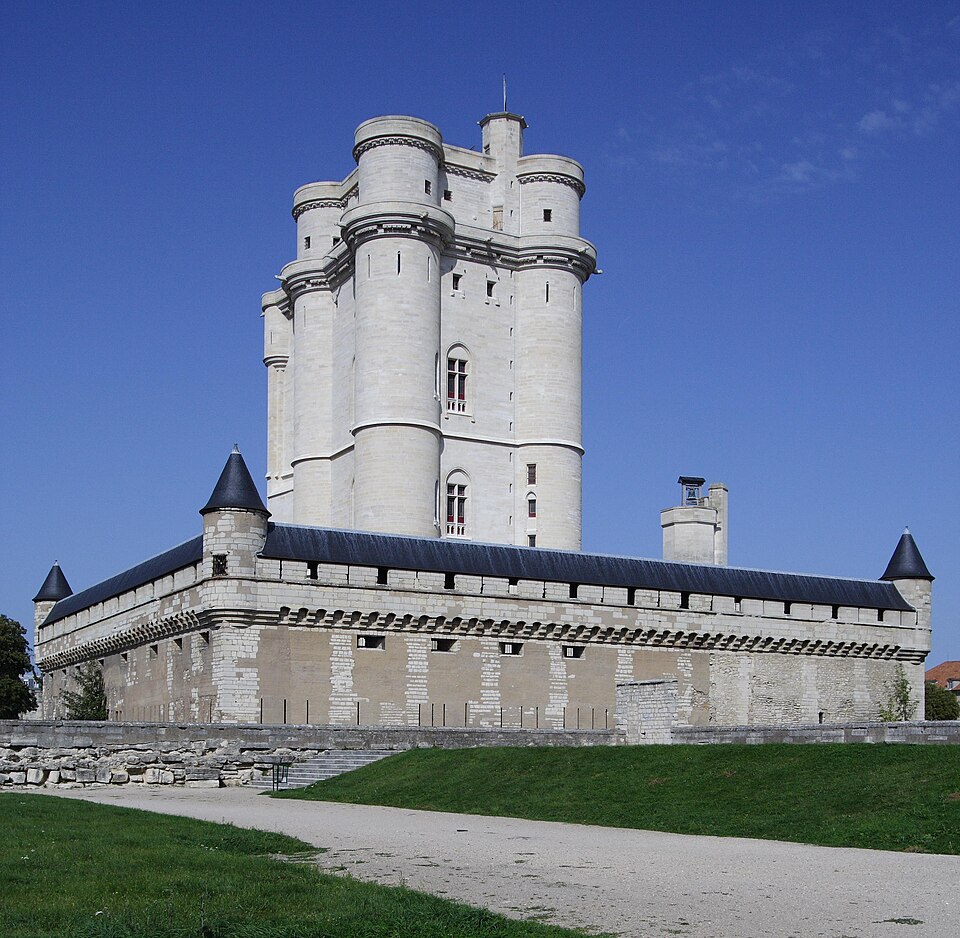
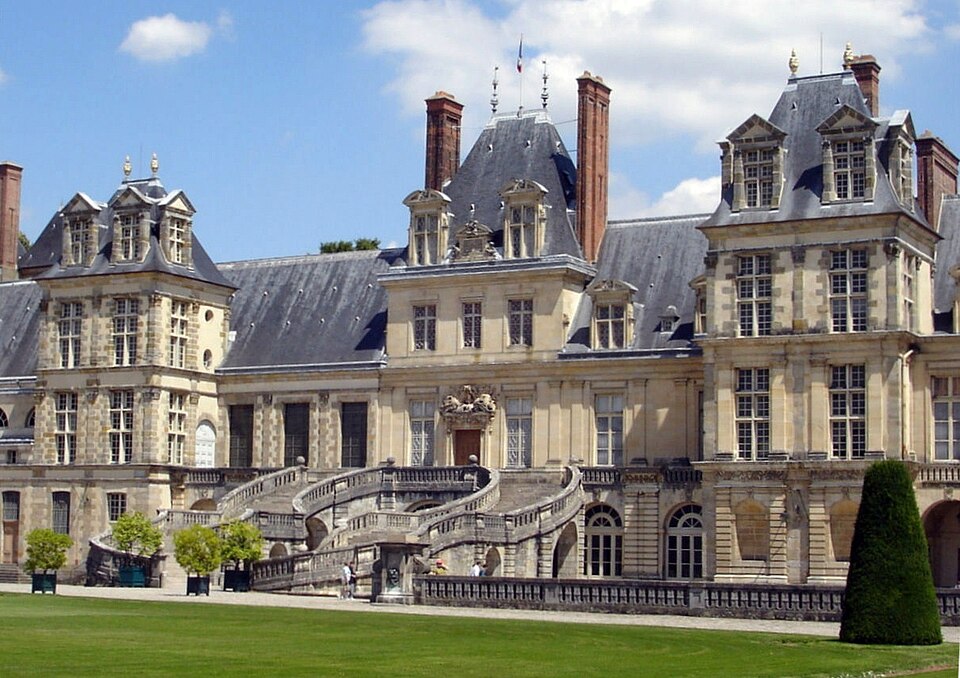
The day begins where Paris barely ends: the château of Vincennes, the largest surviving royal fortress in France, is directly served by line 1 of the metro, at Château de Vincennes station, as well as by RER A. Unlike most medieval fortresses, it occupies neither a hill nor a rocky outcrop but a simple plateau, which makes its immense keep—one of the tallest in Europe—all the more impressive from the ground. The visit unfolds at a leisurely pace over a morning, before taking the metro and then RER to the Gare de Lyon for the next leg of the journey. From the Gare de Lyon, a regional train heads south-east to Fontainebleau, around 60 kilometres from Paris. A favourite residence of François I before becoming home to almost every French monarch up to Napoleon III, the château is distinguished by the fusion of Italian art and French tradition that gave rise to the School of Fontainebleau. The famous Grand Escalier à Fer à Cheval, with its double flight of stairs facing the courtyard, remains one of the most recognisable images of French royal heritage. Surrounded by a vast park and bordering its forest, the estate offers plenty to fill a good part of the afternoon before the return to Paris.
VAL-DE-MARNE · Vincennes
Château de Vincennes
Le château de Vincennes (également appelé autrefois Vieux Fort de Vincennes), est une forteresse située à Vincennes, dans la banlieue Est de Paris, dont la construction a duré du XIVe au XVIIe siècle. C'est le plus grand château fort royal subsistant en France et, du fait de la hauteur de son donjon, une des plus hautes forteresses de plaine d'Europe. Le château de Vincennes est le siège du service historique de la Défense. La forteresse est située près de Paris, à environ huit kilomètres de l'île de la Cité, desservie par la gare de Vincennes de la ligne A du RER par la ligne 1 du métro à la station Château de Vincennes. Contrairement à la plupart des châteaux forts, il n'a pas été implanté sur une colline ou sur le rebord d'une falaise, mais sur un plateau calcaire. L'alimentation des douves en eau était assurée par le ru de Montreuil, qui descend du plateau de Montreuil. Le trop-plein de ce cours d'eau se jetait dans le lac de Saint-Mandé. Au Moyen Âge, le site était couvert d'une forêt giboyeuse. Depuis le XIXe siècle, les alentours du château sont urbanisés : l'ancienne forêt subsiste partiellement dans le bois de Vincennes, dont l'étendue est du ressort de Paris.
SEINE-ET-MARNE · Fontainebleau
Château de Fontainebleau
Le château de Fontainebleau est un château royal de styles principalement Renaissance et classique, près du centre-ville de Fontainebleau, à une soixantaine de kilomètres au sud-est de Paris, en France. Les premières traces d'un château à Fontainebleau remontent au XIIe siècle. Les derniers travaux sont effectués au XIXe siècle. Haut lieu de l'histoire de France, le château de Fontainebleau est l'une des demeures des souverains français depuis François Ier, qui en fait sa demeure favorite, jusqu'à Napoléon III. Plusieurs rois laissent leur empreinte dans la construction et l'histoire du château, qui est ainsi un témoin des différentes phases de l'histoire de France depuis le Moyen Âge. Entouré d'un vaste parc et voisin de la forêt de Fontainebleau, le château se compose d'éléments de styles médiévaux, Renaissance, et classiques. Il témoigne de la rencontre entre l'art italien et la tradition française exprimée tant dans son architecture que dans ses décors intérieurs. Cette spécificité s'explique par la volonté de François Ier de créer à Fontainebleau une « nouvelle Rome » dans laquelle les artistes italiens viennent exprimer leur talent et influencer l'art français. C'est ainsi que naît l'École de Fontainebleau, qui représente la période la plus riche de l'art renaissant en France, et inspire la peinture française jusqu'au milieu du XVIIe siècle, voire au-delà.
02
Day 2 — Versailles, from the château to the Petit Trianon
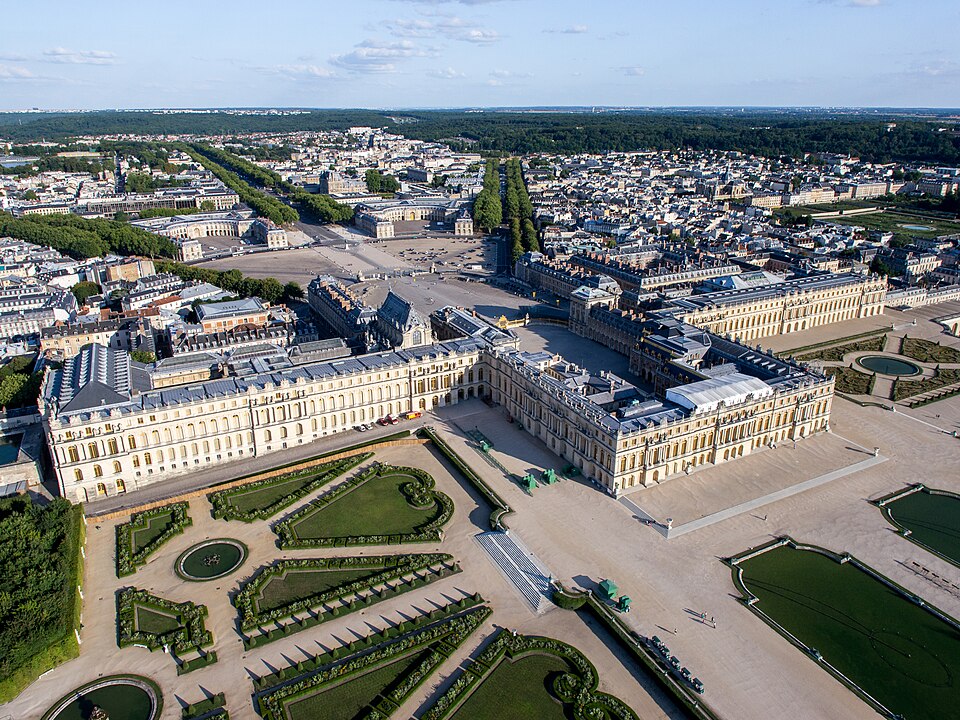
The second day is entirely dedicated to Versailles, whose scale defies haste: 63,000 m² of buildings, 2,300 rooms and 93 hectares of gardens make it a full-day expedition in itself. The permanent residence of the court and government from 1682 to 1789, the château remains the most representative monument of Louis XIV’s reign and one of the benchmarks of classical European architecture. The morning can be spent exploring the grand apartments and the Hall of Mirrors, with the afternoon reserved for a long stroll through the gardens designed by Le Nôtre. Away from the main château, extending into the park, the Petit Trianon offers a more intimate conclusion to the day. Built for Madame de Pompadour and later gifted by Louis XVI to Marie-Antoinette, this neoclassical pavilion with its perfectly proportioned four façades, adorned with Corinthian columns, deliberately contrasts with the grandeur of the main château. It’s a fitting way to end the weekend on a more personal note before taking the RER back to Paris.
The route on the map
A weekend of châteaux from Paris, without a car
The route connects the weekend’s stages in order, from Vincennes to Fontainebleau on the first day, then Versailles and the Petit Trianon on the second.
Markers follow the suggested visiting order. Select a castle to open its page.
Day by day
The itinerary
Day 1 — From the fortress of Vincennes to the Renaissance of Fontainebleau
Morning in Vincennes, on the edge of Paris, then train from Gare de Lyon to Fontainebleau for the afternoon.
Day 2 — Versailles, from the château to the Petit Trianon
A full day dedicated to the estate of Versailles: the château and, within the park, the Petit Trianon.