
Cultural news: exhibitions in châteaux this autumn 2026
The new exhibitions to discover in châteaux this autumn 2026
This autumn 2026, several French châteaux are transforming into exhibition spaces: Marie Antoinette at Fontainebleau and Versailles, Rosa Bonheur at Chantilly, contemporary art at La Roche-Guyon and Le Rivau, and Asian collections at Blois.
Editorial journal · Carte des Châteaux ·
A château is not merely a backdrop to admire from the outside or an interior frozen in time: it is also, increasingly, a place where contemporary creativity is born or forgotten royal collections are rediscovered. This autumn 2026, several French monuments are seizing the cultural rentrée to open their halls to temporary exhibitions, blending historical anniversaries, artistic tributes and groundbreaking installations. Two and a half centuries after their stays within these walls, Marie Antoinette and Louis XVI return to haunt Fontainebleau and Versailles to mark significant anniversaries. In Chantilly, it is another woman, the painter Rosa Bonheur, who is reunited with the museum dedicated to the horse she so admired. Further north, a troglodyte château in the Val d’Oise hosts a season of contemporary art populated by fantastical creatures, while in Touraine, a family château invites today’s artists to reinterpret the Renaissance. Finally, in Blois, Asian collections hitherto confined to storage are brought into the light. Six exhibitions, six châteaux, one shared idea: heritage is not merely visited—it continues to embrace creativity and reveal its secrets.
01
Marie Antoinette and Louis XVI at Fontainebleau. Splendour and the art of living — Château de Fontainebleau (Seine-et-Marne) — from 11 October 2026 to 25 January 2027
Two hundred and forty years after the royal couple’s final stay at Fontainebleau, the château is dedicating an exhibition to them, curated with the GrandPalaisRmn. Between 1774 and 1786, Marie Antoinette and Louis XVI visited seven times, far from the bustle of Versailles: over a hundred works—portraits, drawings, sculptures and objets d’art—trace these moments of court life in the Salle de la Belle Cheminée, while the permanent tour has been reimagined to restore the Queen’s Games Room, her Bedchamber and the Silver Boudoir as she knew them. The dialogue between place and subject is especially direct here: these are not abstract reconstructions, but the very rooms where the royal couple lived.
02
Rosa Bonheur and the horse — Château de Chantilly (Oise) — from 12 September 2026 to 3 January 2027
Split across two venues—the Musée Condé and the Musée Vivant du Cheval, France’s largest equestrian museum—this exhibition explores the special bond between animal painter Rosa Bonheur and Chantilly, where the Duc d’Aumale commissioned a painting from her. Drawings, paintings, photographs and rare archives reveal the rigorous working methods of an artist who studied her models in fairs and slaughterhouses to capture, with rare precision, the strength and movement of horses. Presenting Rosa Bonheur within the very stables that inspired much of her observations lends the exhibition a particular resonance.
03
Life at the Château — Château de La Roche-Guyon (Val-d’Oise) — from 20 June to 1 November 2026
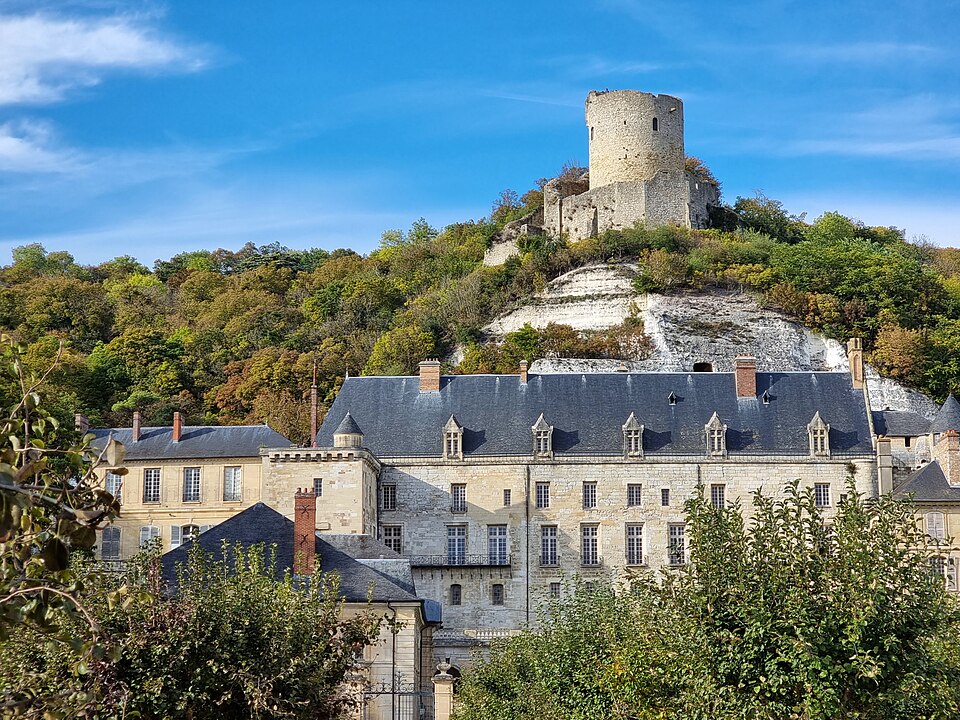
Perched against a chalk cliff linked to its medieval keep by an underground passage, the troglodyte château of La Roche-Guyon welcomes eight artists or duos each summer for residencies, tasked with creating works conceived specifically for its spaces. Ceramic and blown-glass sculptures in the grand staircase, a fantastical bestiary nestled in a rock-hewn orangery, a sound installation recounting daily life at the château in the 18th century: the approach is unapologetically bold, pairing ancient stone with sometimes startling contemporary forms. A way to rediscover a monument already singular in its architecture, even before adding a single artwork.
04
Metamorphoses at Le Rivau — Château du Rivau (Indre-et-Loire) — from 1 April to 1 November 2026
Less renowned than its Loire neighbours, Le Rivau has for several years combined medieval architecture with contemporary art in its gardens and halls. Its 2026 offering, ‘Metamorphoses at Le Rivau’, starts from a simple premise: reimagining and recycling key Renaissance works through the eyes of today’s artists, blending humour and wonder to bring the secrets of 16th-century curiosity cabinets back to life. Closing the season, from 15 October to 1 November, an evocation of sculptor Alexander Calder’s work completes the tour for the All Saints’ break.
05
Marie Antoinette, inspired by Sofia Coppola’s film — Petit Trianon, domaine de Versailles (Yvelines) — from 22 September 2026 to 24 January 2027
Twenty years after its release, Sofia Coppola’s film Marie Antoinette, partly shot at Versailles, is the subject of a groundbreaking exhibition at the Petit Trianon, the queen’s retreat away from court life. The estate explores how the film reshaped the collective imagination of the palace and France’s last queen, juxtaposing it with the real collections and décors of the Trianon that inspired the director. An exhibition that questions both history and its contemporary reinterpretation through cinema.
06
Reflections of the Far East: the Asia of collectors’ dreams — Château royal de Blois (Loir-et-Cher) — from 19 September 2026 to 16 May 2027
For the first time, the royal château of Blois is unveiling part of its Asian collections, assembled in the early 20th century by four passionate collectors of the Far East. Installed in the Musée des Beaux-Arts, within the Louis XII wing, some fifty porcelains, textiles, prints and sculptures from China and Japan tell less the story of the objects themselves than that of the Western gaze cast upon them: a collector’s passion for a largely imagined elsewhere, revealed to the public in a château otherwise devoted entirely to the history of French Renaissance.
07
Other leads to check before you go
This selection does not claim to be exhaustive: several other châteaux are announcing exhibitions or highlights for autumn 2026, but some could not be included here due to the lack of a clearly identifiable château in our database, or because details of the 2026 edition were not yet confirmed at the time of writing—this is the case, for instance, of an exhibition spotted at Pau château, whose autumn programme had not yet been finalised. The dates and visiting conditions provided come from the official pages of each monument and may change: it is best to check them directly before planning a visit. Main sources: chateaudefontainebleau.fr; chateaudechantilly.fr; chateaudelarocheguyon.fr; chateaudurivau.com; chateauversailles.fr; chateaudeblois.fr.
SEINE-ET-MARNE · Fontainebleau
Château de Fontainebleau
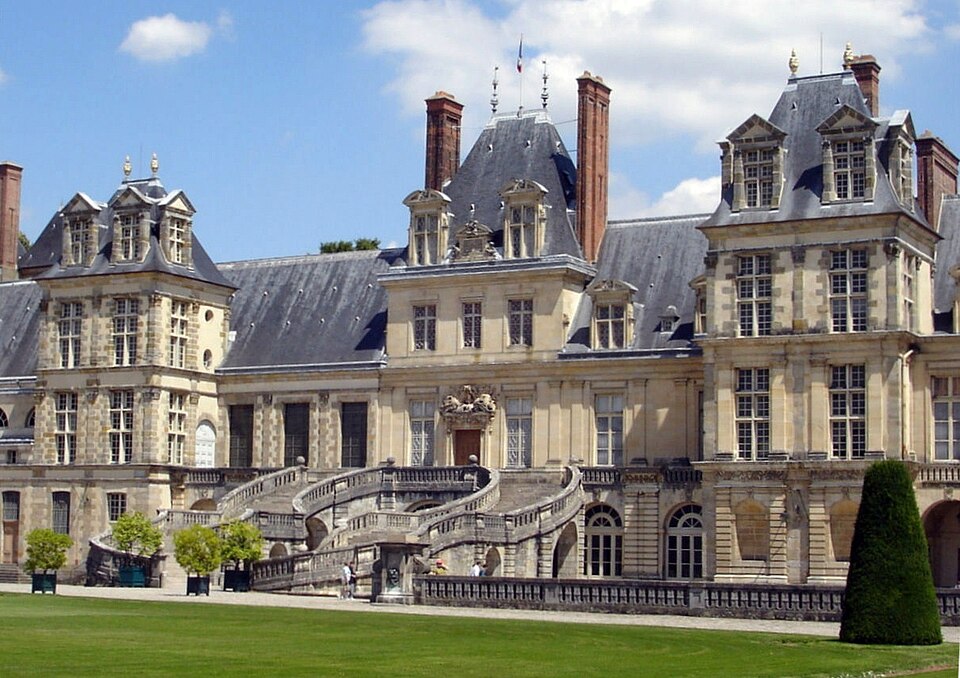
Le château de Fontainebleau est un château royal de styles principalement Renaissance et classique, près du centre-ville de Fontainebleau, à une soixantaine de kilomètres au sud-est de Paris, en France. Les premières traces d'un château à Fontainebleau remontent au XIIe siècle. Les derniers travaux sont effectués au XIXe siècle. Haut lieu de l'histoire de France, le château de Fontainebleau est l'une des demeures des souverains français depuis François Ier, qui en fait sa demeure favorite, jusqu'à Napoléon III. Plusieurs rois laissent leur empreinte dans la construction et l'histoire du château, qui est ainsi un témoin des différentes phases de l'histoire de France depuis le Moyen Âge. Entouré d'un vaste parc et voisin de la forêt de Fontainebleau, le château se compose d'éléments de styles médiévaux, Renaissance, et classiques. Il témoigne de la rencontre entre l'art italien et la tradition française exprimée tant dans son architecture que dans ses décors intérieurs. Cette spécificité s'explique par la volonté de François Ier de créer à Fontainebleau une « nouvelle Rome » dans laquelle les artistes italiens viennent exprimer leur talent et influencer l'art français. C'est ainsi que naît l'École de Fontainebleau, qui représente la période la plus riche de l'art renaissant en France, et inspire la peinture française jusqu'au milieu du XVIIe siècle, voire au-delà.
OISE · Chantilly
Château de Chantilly
Le château de Chantilly (Oise) est un ensemble composé du Petit Château, bâti en 1551 par Jean Bullant pour Anne de Montmorency, et du Grand Château reconstruit de 1876 à 1882 par Honoré Daumet pour le duc d'Aumale. Légué à l'Institut de France en 1886, il abrite le musée Condé et s'accompagne des Grandes Écuries (1719-1740) qui accueillent le musée du Cheval, d'un parc de 115 hectares dessiné en partie par André Le Nôtre et du parc de Sylvie.
VAL-D'OISE · La Roche-Guyon
Château de La Roche-Guyon
Le château de La Roche-Guyon est un château qui se dresse sur la commune française de La Roche-Guyon dans le département du Val-d'Oise aux portes de la Normandie sur la rive droite de la Seine. L'ancien château fort en ruine, dominé par son donjon, au sommet du coteau a reçu des ajouts importants au XVIIIe siècle au pied du coteau et un jardin et potager « à la française » : le potager du château de la Roche-Guyon. Le château, classé au titre des monuments historiques, propriété de la maison de La Rochefoucauld est aujourd'hui géré par un établissement public de coopération culturelle (EPCC) regroupant le département du Val-d’Oise, la commune de La Roche-Guyon, le syndicat mixte d’aménagement et de gestion du parc naturel régional du Vexin français et l'État. Élargi et embelli à de nombreuses reprises, notamment lors d'importants travaux au XVIIIe siècle entrepris par ses propriétaires actuels, les La Rochefoucauld, l'ancienne place forte est progressivement devenue un lieu d'apparat. Depuis 2010, l'exposition « On emménage au château » a transformé l'endroit en musée éphémère dévoilant des œuvres contemporaines au détour d'une galerie ou d'un rempart, comme des colonnes installées par Daniel Buren.
INDRE-ET-LOIRE · Lémeré
Château du Rivau
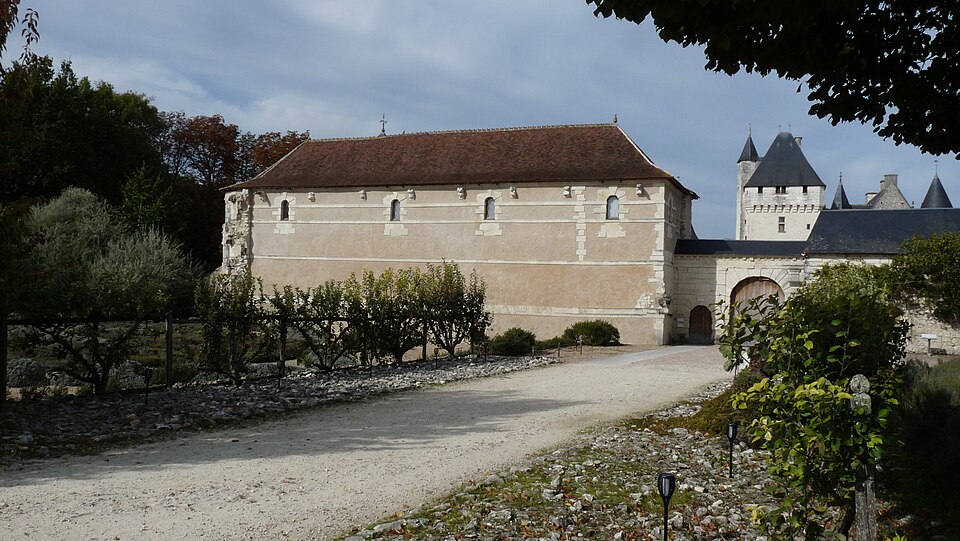
Le château du Rivau est une forteresse seigneuriale dont les premières fondations remontent au XIIIe siècle. Situé en Touraine dans la commune de Lémeré dans le département français d'Indre-et-Loire, le Rivau est l'un des châteaux de la Loire et fait l’objet de classements au titre des monuments historiques depuis juillet 1918 (château) et août 1999 (communs) ainsi que d'une inscription en février 1988 (ferme). Le Rivau combine des élements de l'architecture médiévale, l'architecture de la Renaissance, et l'art contemporain.
.JPG)
LOIR-ET-CHER · Blois
Château de Blois
Le château royal de Blois, situé dans le département de Loir-et-Cher (en Centre-Val de Loire), fait partie des châteaux de la Loire. Il fut la résidence favorite des rois de France à la Renaissance. Situé au cœur de la ville de Blois, sur la rive droite de la Loire, le château de Blois réunit autour d’une même cour un panorama de l’architecture française du Moyen Âge à l’époque classique qui en fait un édifice clé pour la compréhension de l’évolution de l’architecture au fil des siècles. Les appartements royaux restaurés sont meublés et ornés de décors polychromes du XIXe siècle, créés par Félix Duban dans la lignée des restaurateurs contemporains de Viollet-le-Duc.
The route on the map
Where to see these exhibitions in châteaux this autumn?
This map helps you locate, across France, the châteaux hosting temporary exhibitions this autumn 2026.
Markers follow the suggested visiting order. Select a castle to open its page.