En un regard
Le château en bref
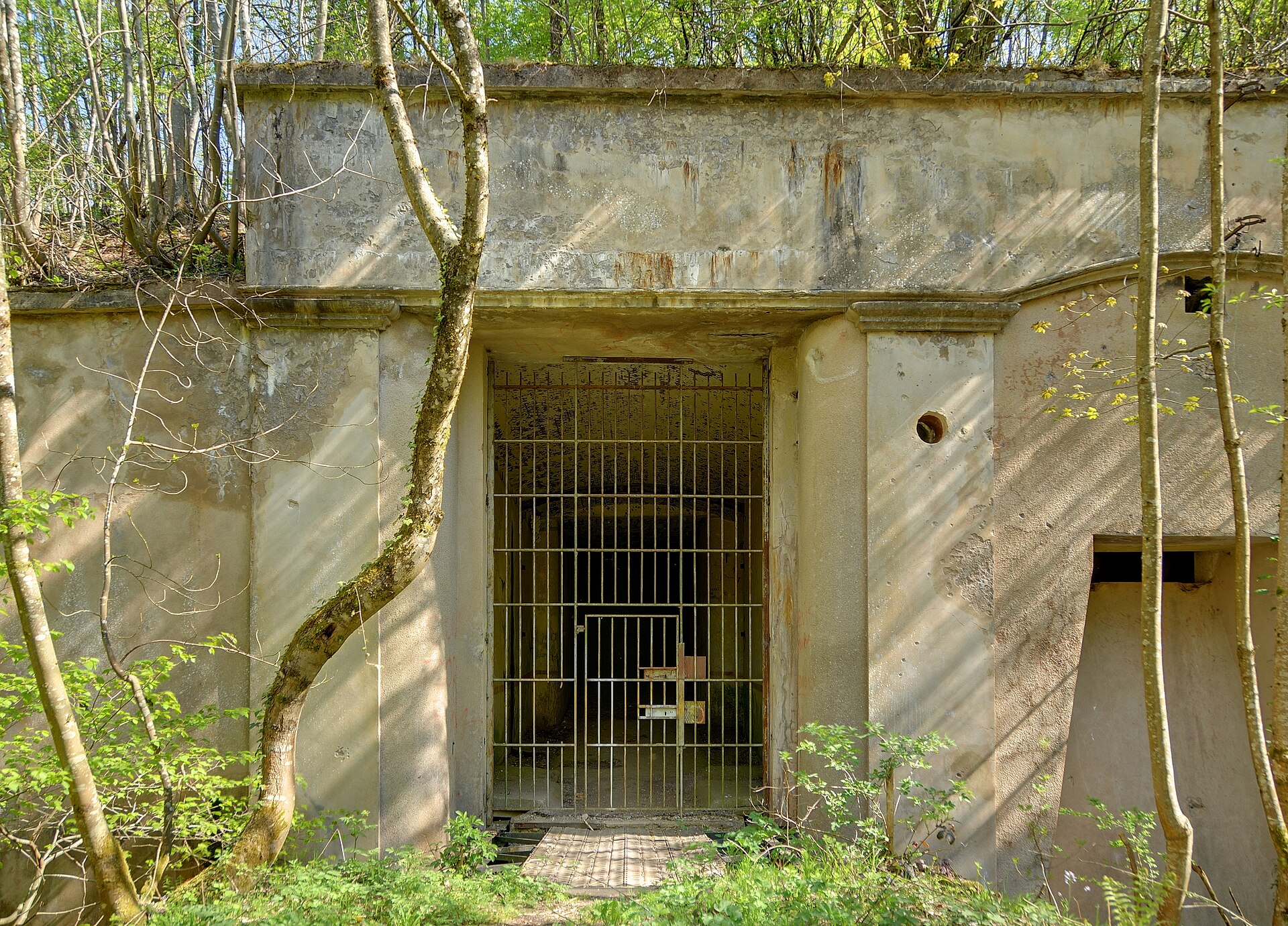
Fort de Roppe, briefly named Fort Ney (Boulanger name, in honour of Marshal Michel Ney), is a work forming part of the fortifications of eastern France of the Séré de Rivières type, built between 1875 and 1877. It is an integral part of the fortified town of Belfort.
The fort has a drawbridge at its main entrance. It is situated on top of a hill close to the village of Roppe, in the territory of that commune. In 1890, a shelter-casemate (for 252 men) was built nearby. From 1893, the fort was linked to a number of other forts around Belfort by a strategic railway.
From 1905 to 1910, the fort was modernised: a reinforced-concrete barracks for 646 men was created, the caponniers were replaced by counterscarp coffers, the Bourges casemate was created, machine-gun turrets were installed, and a 155R model 1907 turret was added.
During the First World War, a whole network of 17 galleries was dug beneath the fort and concreted during the interwar period. These galleries connect various parts of the fort to an underground barracks, itself concreted.
During the interwar period, the south-east simple counterscarp coffer exploded accidentally because of the munitions stored there. It was not repaired, but a detached coffer was built just in front of it to ensure the defence of the ditch.
The army still uses the fort to train new recruits.