En un regard
Le château en bref
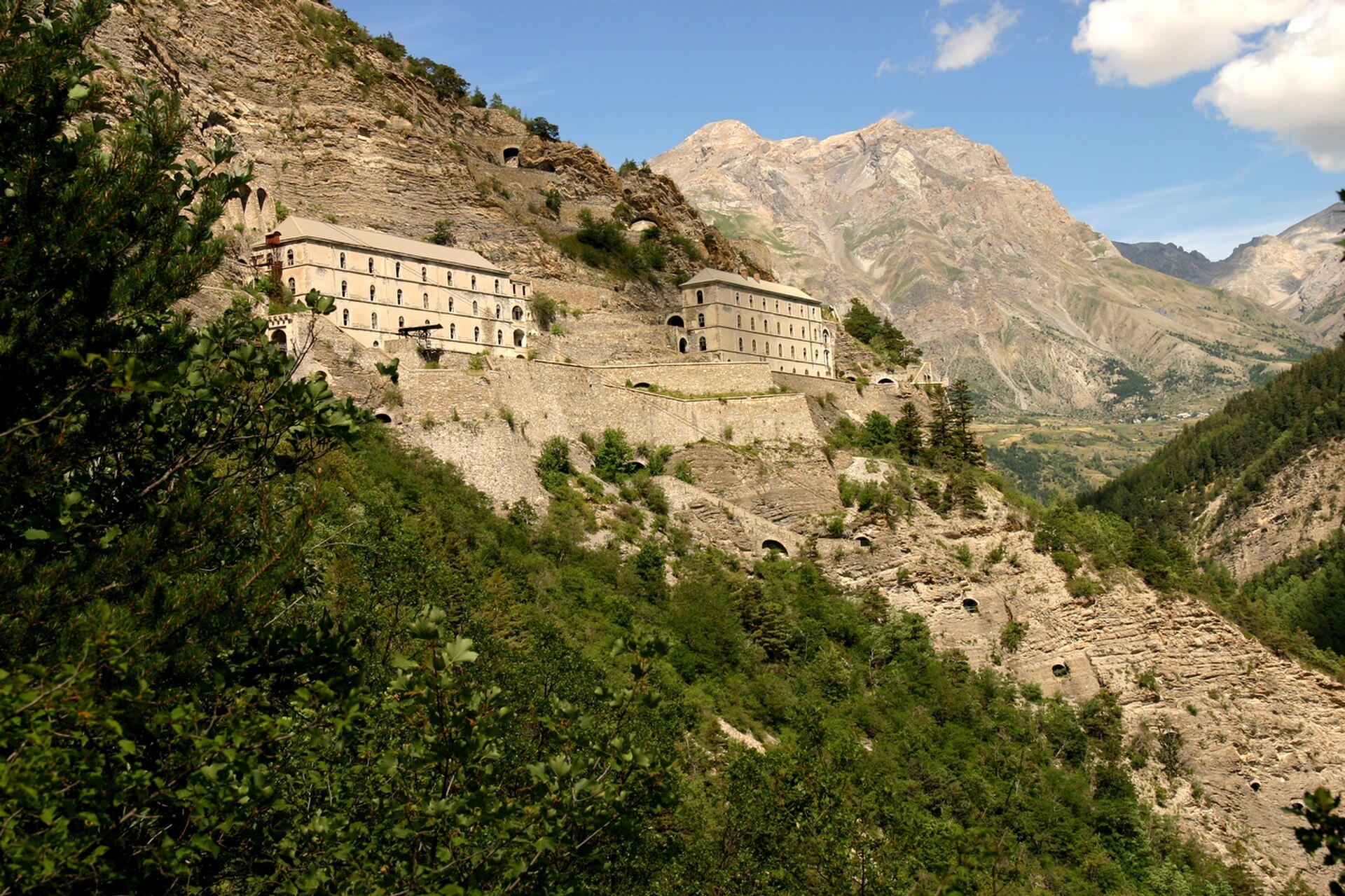
Fort de Tournoux is a defensive work in the upper Ubaye valley (Alpes-de-Haute-Provence). It consists of three superimposed forts (fort moyen, fort supérieur and batterie XII) linked by staircases, to which is added a barracks at the foot of the cliff.
Its construction, ordered by General François Nicolas Benoît Haxo under the July Monarchy to protect this valley from invasions coming from Italy, took place between 1843 and 1865. It lies on the municipal boundaries of La Condamine-Châtelard and Saint-Paul-sur-Ubaye. The hamlet of Tournoux, situated on a plateau overlooking the Ubaye and an access route to Italy through several mountain passes, gave its name to the fortification. The latter lies about two thousand metres south of the hamlet, as the crow flies. From the middle of the nineteenth century it formed the core of the strategic system of the Ubaye valley.
This major military structure has long captured the imagination. It has been described or compared in many ways that emphasise its magnificence:
‘the military Versailles of the 19th century’;
‘the Eiffel Tower of the Ubaye’;
a miniature Great Wall of China, or the ‘Grande-muraille Ubayenne’;
a Tibetan lamasery.