Angenstein, Duggingen

Duggingen canton de Bâle-Campagne Suisse

Angenstein

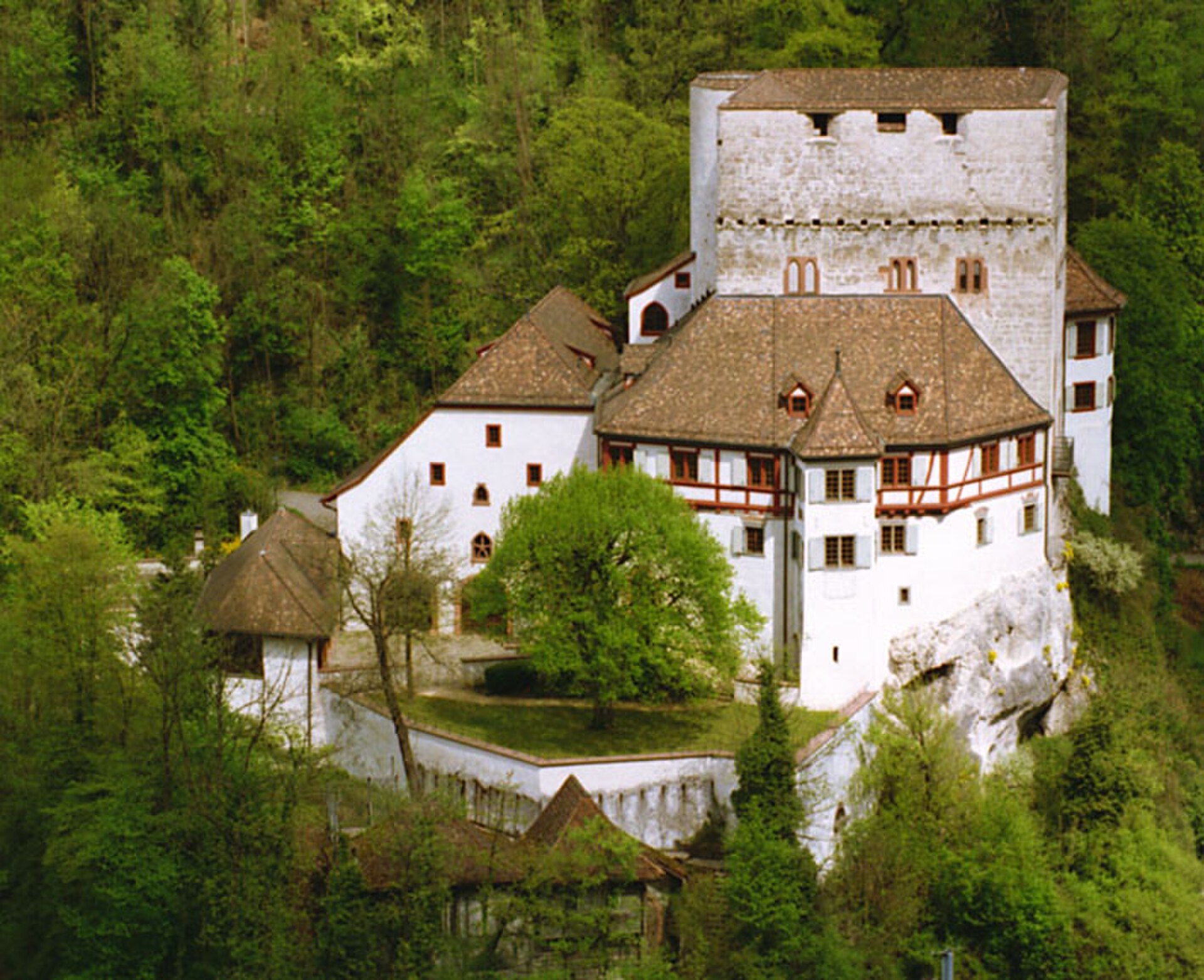
Angenstein Castle stands on a rocky spur in the narrow gorge of the Birse, between Aesch and Duggingen (canton of Basel-Country), at the entrance to the Laufen Valley.

Époque
XIIIᵉ siècle (1300)
Préparer la visite
Photo : Aschweizer · Public domain Proposer votre photo

En un regard

Le château en bref

Angenstein Castle stands on a rocky spur in the narrow gorge of the Birse, between Aesch and Duggingen (canton of Basel-Country), at the entrance to the Laufen Valley. Its name derives from this position on a ‘stone’ in the defile. Dendrochronological analyses date its construction to shortly after 1286. Its builders are poorly known, possibly the Münch family, ministerials of the Prince-Bishop of Basel, and the castle was subsequently held in fief by the counts of Thierstein and Habsburg-Laufenburg. The Basel earthquake of 1356 damaged it; it was rebuilt after 1364, then affected by fires in 1494 and 1517. In 1557, the episcopal chancellor Wendelin Zipper received the estate and converted the fortress into a residential castle; his family kept it until 1751. Transferred to the canton of Basel-City in 1951, the castle was restored from 1988 to 1991 following the fire of 1984. The square keep, measuring roughly 16 x 19 m with walls 2 m thick, dominates a group of lower buildings dating from the 16th to the 19th centuries, as well as the Chapel of St Wendelin, which has three stained-glass windows from 1572. The castle today houses flats and is not open to visitors inside; the chapel, the hearth and the courtyard can be rented for events.

Époque de construction
XIIIᵉ siècle (1300)
Localisation
Duggingen, canton de Bâle-Campagne
Usage actuel
Abrite trois logements privés.

Récit

Une histoire à travers les siècles

Le récit

L’histoire de Angenstein

Construit vers 1286 d'après la dendrochronologie, probablement par les Münch, ministériaux de l'évêque de Bâle, le château est tenu en fief par les comtes de Thierstein et de Habsbourg-Laufenbourg. Endommagé par le séisme de 1356, il est rebâti après 1364.

Lire la suiteRéduire

Des incendies le touchent en 1494 et 1517, qui détruit le donjon. En 1557, le chancelier épiscopal Wendelin Zipper reçoit le domaine et le transforme en château ; sa famille le garde jusqu'en 1751.

L’architecture

Ce qu’il faut observer

Donjon carré d'environ 16 x 19 m, aux murs de 2 m, sans toiture. Bâtiments plus bas du XVIe siècle sur trois côtés, chapelle Saint-Wendelin aux trois vitraux de 1572, corps d'entrée et portail postérieurs à 1800. Restauration en 1988-1991.

Chronologie

Les étapes de construction

Les campagnes documentées qui ont façonné le monument, période par période.

Moyen Âge

  1. peu après 1286

    Construction

    Construction du noyau du château, datée par dendrochronologie ; bâtisseurs probables : les Münch, ministériaux de l'évêque de Bâle.

  2. après 1364

    Reconstruction

    Reconstruction après les dégâts du séisme de Bâle de 1356.

Informations pratiques

Préparer sa visite

Conditions de visite non renseignées

Nous n’avons pas encore d’information vérifiée sur l’ouverture au public. Renseignez-vous auprès du site officiel ou de la mairie avant de vous déplacer.

Vous l’avez visité ?

Partagez vos photos

Après relecture, votre photo illustrera cette fiche, créditée à votre nom. Haute définition bienvenue, jusqu’à 40 Mo.

Propriétaires et gestionnaires

Vous gérez Angenstein ?

Horaires, tarifs et réservation manquent encore sur cette fiche. Transmettez-les et mettez le château en avant auprès des visiteurs qui préparent leur venue.