Vorderer Wartenberg Ruin, Muttenz

Muttenz canton de Bâle-Campagne Suisse

Vorderer Wartenberg Ruin

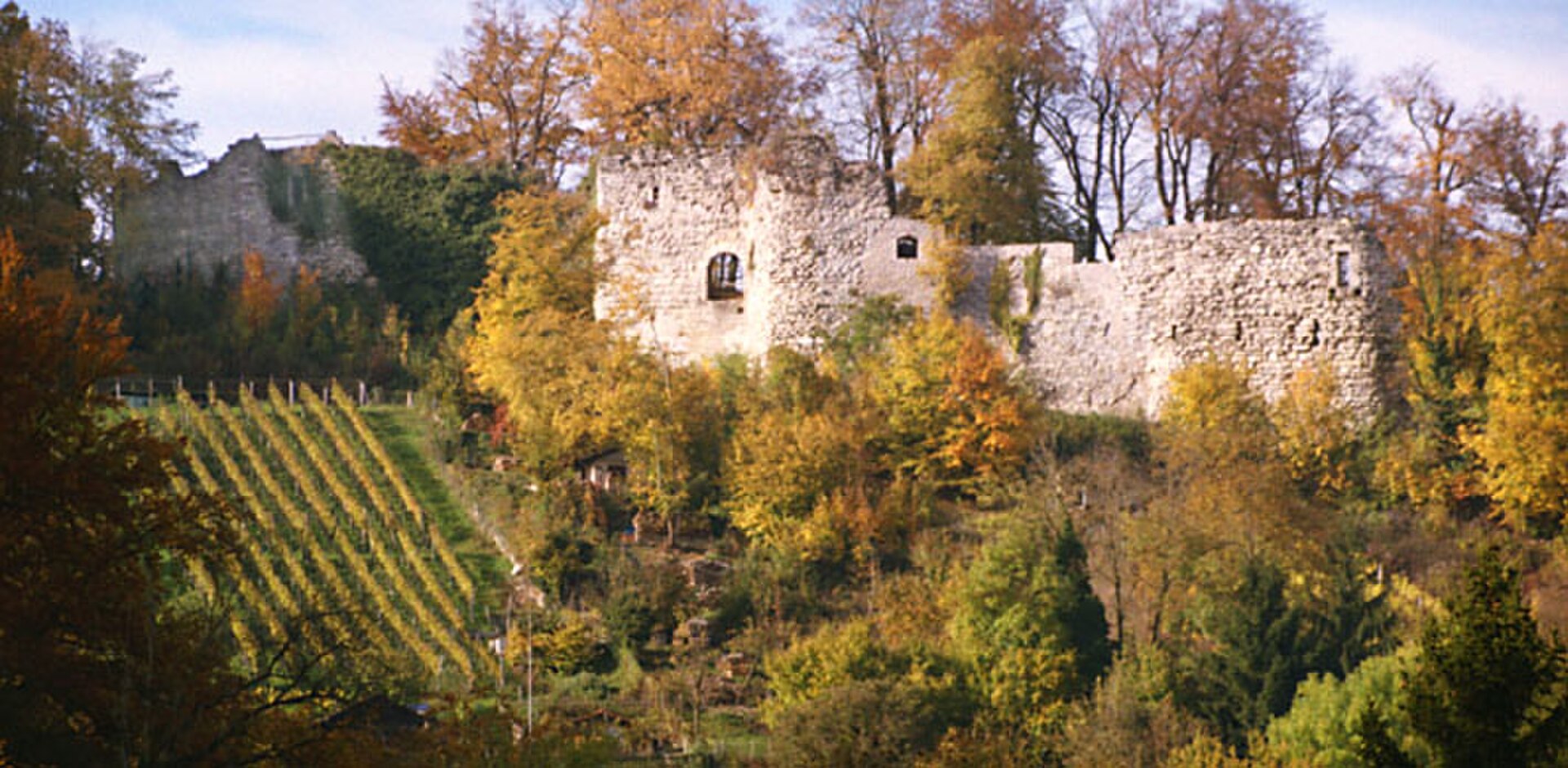
The Vorderer Wartenberg is the largest of the three castles of the Wartenberg, the hill overlooking Muttenz in the canton of Basel-Country.

Époque
Moyen Âge central
Style
château à enceinte et tours, roman
Préparer la visite
Photo : Armin Schweizer · Public domain Proposer votre photo

En un regard

Le château en bref

The Vorderer Wartenberg is the largest of the three castles of the Wartenberg, the hill overlooking Muttenz in the canton of Basel-Country. It occupies the rocky spur at the northern end of the ridge and covers an area of about one hundred metres long by thirty wide. The site has been frequented for a long time: traces date back to the Late Neolithic, the Bronze Age and the Roman period, and Carolingian sherds suggest the existence of a earlier structure predating the present castle. Mentioned in the thirteenth century, the castle comprised a curtain wall, towers, a cistern, a large building to the south-east and a gate preceded by a ramp, now restored in the form of a footbridge. A patch of masonry in the eastern wall may date from the repairs that followed the Basel earthquake of 1356. Like its neighbours, the castle was abandoned during the fifteenth century. The hill still served as a military observation post in the twentieth century, and a bunker survives within the enclosure. Maintained by the Gesellschaft pro Wartenberg, the ruin, open to the public, offers a panoramic terrace.

Époque de construction
Moyen Âge central
Localisation
Muttenz, canton de Bâle-Campagne
Usage actuel
Ruine ouverte au public avec terrasse d'observation (2011), entretenue par la Gesellschaft pro Wartenberg

Récit

Une histoire à travers les siècles

Le récit

L’histoire de Vorderer Wartenberg Ruin

Le Vorderer Wartenberg occupe l'extrémité de l'éperon du Wartenberg, colline fréquentée depuis le Néolithique tardif, avec des vestiges de l'âge du bronze, des indices d'une présence romaine et un habitat de hauteur du haut Moyen Âge. Le château actuel date de la fin du XIIe siècle.

Lire la suiteRéduire

Fief de l'évêché de Strasbourg, il passe aux comtes de Frohburg-Homburg, dont les ministériaux l'habitent. Au début du XIVe siècle, le comte Werner de Homburg l'inféode, avec la Mittlere Burg et le Dinghof de Muttenz, aux zer Sunnen de Bâle. Les droits passent aux ducs d'Autriche, aux Habsbourg-Laufenbourg, puis à la ville de Bâle. Abandonné au XVe siècle, il est un Burgstall en 1470. Une carrière détruit la partie nord vers 1860 et l'armée construit un bunker en 1939.
L’architecture

Ce qu’il faut observer

Un mur d'enceinte suit le bord de l'éperon rocheux, protégé sur trois côtés, avec un fossé de coupure au sud-ouest. Parements à bossage des XIIe-XIIIe siècles puis blocs plus irréguliers des XIIIe-XIVe. Trois hautes tours presque carrées sont intégrées à l'enceinte ; à l'intérieur, un palas au sud-est et une chapelle supposée. L'entrée est à l'est.

Informations pratiques

Préparer sa visite

Conditions de visite non renseignées

Nous n’avons pas encore d’information vérifiée sur l’ouverture au public. Renseignez-vous auprès du site officiel ou de la mairie avant de vous déplacer.

Vous l’avez visité ?

Partagez vos photos

Après relecture, votre photo illustrera cette fiche, créditée à votre nom. Haute définition bienvenue, jusqu’à 40 Mo.

Propriétaires et gestionnaires

Vous gérez Vorderer Wartenberg Ruin ?

Horaires, tarifs et réservation manquent encore sur cette fiche. Transmettez-les et mettez le château en avant auprès des visiteurs qui préparent leur venue.