
Safenwil canton d'Argovie Suisse

Scherenberg Ruin

The ruin of Scherenberg occupies a small sandstone knoll at the locality of Sodhubel, in the municipality of Safenwil (district of Zofingen, canton of Aargau), above the former road to Zofingen.

Époque
Moyen Âge
Style
Architecture militaire médiévale

En un regard

Le château en bref

The ruin of Scherenberg occupies a small sandstone knoll at the locality of Sodhubel, in the municipality of Safenwil (district of Zofingen, canton of Aargau), above the former road to Zofingen. Of this medieval castle only the castle mound and a well survive: the last masonry was dismantled in the 19th century, and the dressed stone was used to build in the village. Local historiography attributes its foundation to the barons of Belp, who held rights over Safenwil in the 13th century, and places it in the sources around 1200. The castle then passed to the lords of Ifenthal, ministerials of the counts of Froburg and Habsburg as well as of the Bishopric of Basel: together with the Alt Wartburg, Scherenberg formed one of the two centres of their lordship in the 13th and 14th centuries. In 1344, John IV of Ifenthal, known as "junker of Scherenberg", founded an anniversary there in favour of the convent of Ebersecken. The site declined during the 14th century, as the family shifted its centre to the lordship of Bechburg, on the southern slope of the Hauenstein. The site today offers a singular curiosity: between 1939 and 1945, Hans Widmer carved reliefs on the sandstone walls left by quarrying, inspired by the Bible, folk tales and Swiss history, documented by the Aargau cantonal monuments service.

Époque de construction
Moyen Âge
Localisation
Safenwil, canton d'Argovie
Usage actuel
Site de promenade en libre accès, reliefs sculptés de Hans Widmer

Récit

Une histoire à travers les siècles

Le récit

L’histoire de Scherenberg Ruin

Mentionné vers 1200 et attribué aux barons de Belp, Scherenberg devint l'un des deux centres de la seigneurie des Ifenthal, ministériaux des Frobourg, des Habsbourg et de l'évêché de Bâle, avec l'Alt Wartburg. Au XIVe siècle, les Ifenthal gouvernaient Safenwil depuis ce château ; le 4 juillet 1344, Jean IV d'Ifenthal, junker de Scherenberg, y institua un anniversaire au bénéfice du couvent d'Ebersecken (acte conservé aux Archives d'État de Lucerne).

Lire la suiteRéduire

Le transfert du centre de gravité familial vers la seigneurie de Bechburg dans la première moitié du XIVe siècle entraîna le déclin du château ; la famille s'éteignit au début du XVe siècle. Safenwil passa sous l'autorité de Berne après la conquête de l'Argovie en 1415. Les vestiges encore debout furent démolis au XIXe siècle (1844 selon la littérature locale), et la colline servit de carrière de grès.
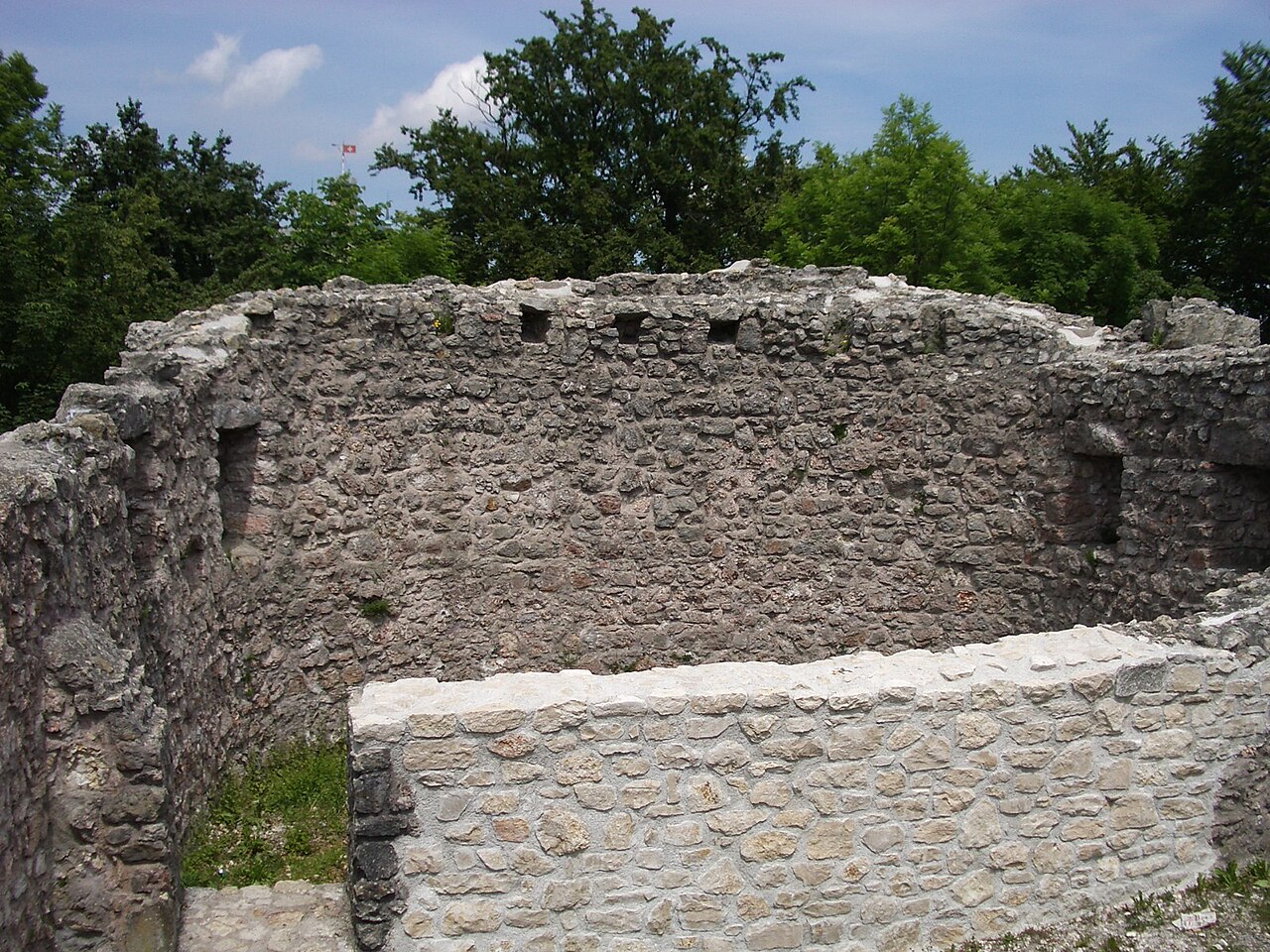
L’architecture

Ce qu’il faut observer

Château fort de hauteur implanté sur un affleurement de grès molassique. Les structures ont presque entièrement disparu : seuls subsistent la butte castrale et un puits creusé dans la roche. Les parois verticales issues de l'exploitation de la pierre portent depuis 1939-1945 les reliefs sculptés de Hans Widmer (1887-1964).

Chronologie

Les étapes de construction

Les campagnes documentées qui ont façonné le monument, période par période.

Moyen Âge

  1. vers 1200

    ÉvolutionDatation à confirmer

  2. XIVe siècle

    ÉvolutionDatation à confirmer

Informations pratiques

Préparer sa visite

Conditions de visite non renseignées

Nous n’avons pas encore d’information vérifiée sur l’ouverture au public. Renseignez-vous auprès du site officiel ou de la mairie avant de vous déplacer.

Vous l’avez visité ?

Aucune photo pour l’instant : partagez la vôtre

Après relecture, votre photo illustrera cette fiche, créditée à votre nom. Haute définition bienvenue, jusqu’à 40 Mo.

Propriétaires et gestionnaires

Vous gérez Scherenberg Ruin ?

Horaires, tarifs et réservation manquent encore sur cette fiche. Transmettez-les et mettez le château en avant auprès des visiteurs qui préparent leur venue.