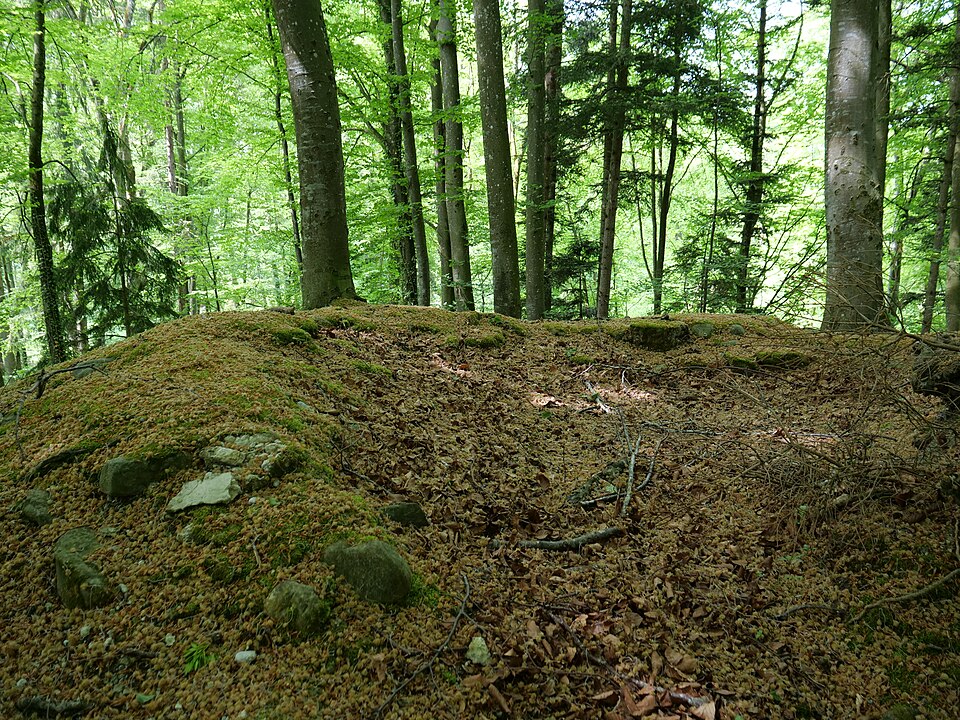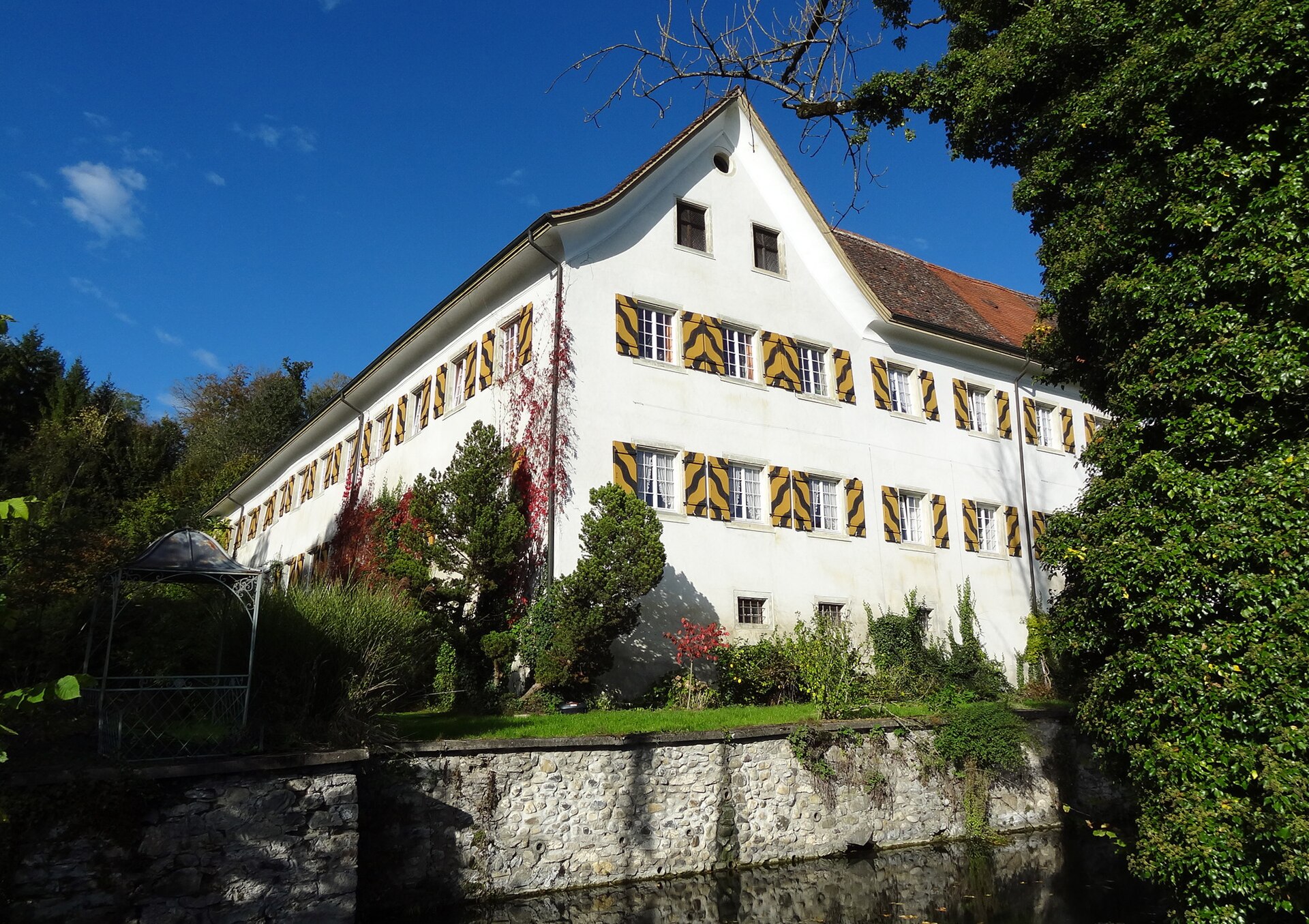
Schloss Klingenberg, Homburg

Homburg canton de Thurgovie Suisse

Schloss Klingenberg

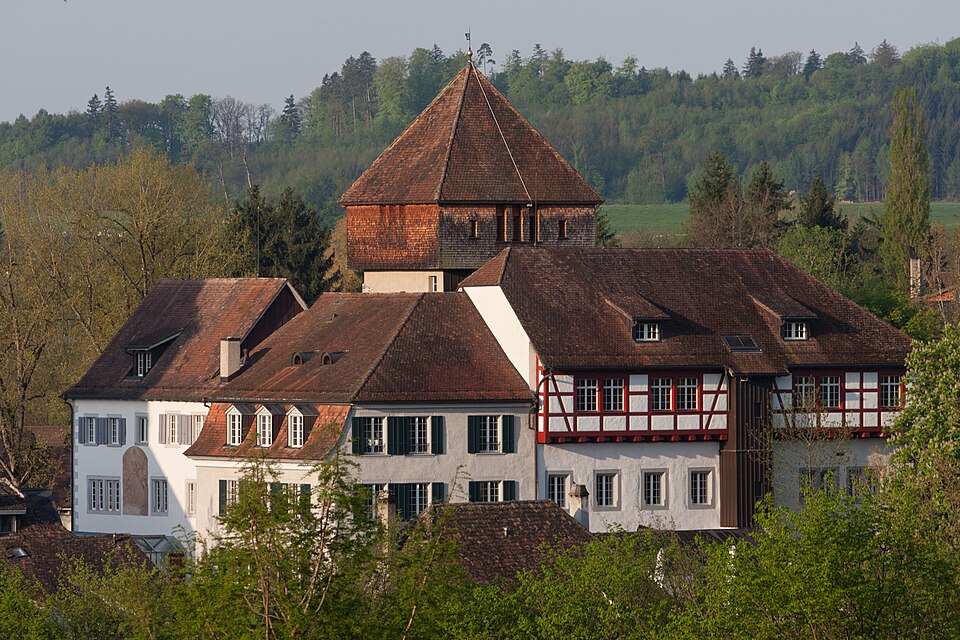
Schloss Klingenberg, above the village of Homburg in Thurgau, is a residential castle with three wings open to the north, the ancestral seat of the lords of Klingenberg (a water castle attested from 1220).

Époque
XVIIIᵉ siècle (1774)
Style
Baroque, Régence, Rococo
Préparer la visite
Photo : Pingelig · CC BY-SA 4.0 Proposer votre photo

En un regard

Le château en bref

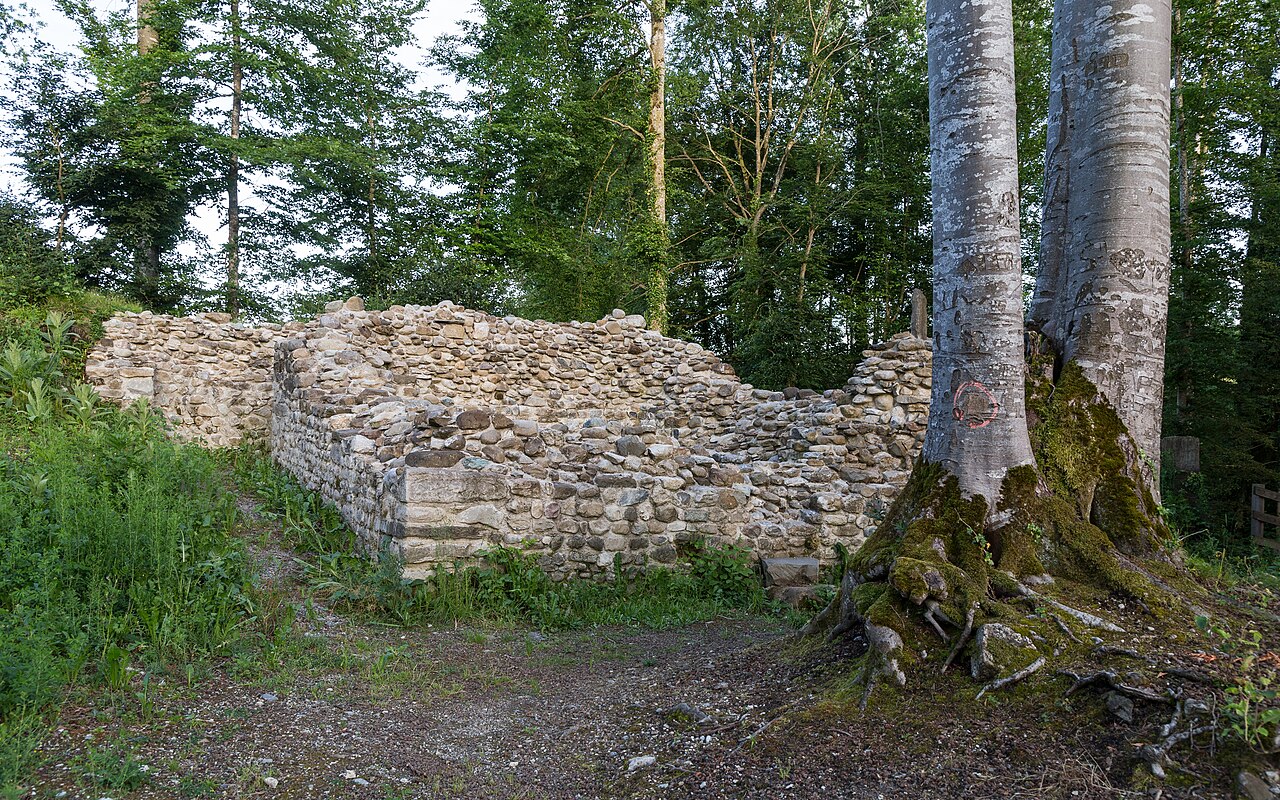
Schloss Klingenberg, above the village of Homburg in Thurgau, is a residential castle with three wings open to the north, the ancestral seat of the lords of Klingenberg (a water castle attested from 1220). The upper fortress was destroyed in 1444 and then demolished in 1849; the lower castle dates from 1446. Under the authority of Muri Abbey from 1651 to 1841, it was rebuilt after the fires of 1722 and 1772, hence its Baroque appearance: a rusticated portal bearing the arms of Abbot Zurlauben, stepped gables, a scrolled gable dating from 1772, and Régence (1723) and rococo (around 1772) stuccowork. Particularly valuable according to the Thurgau inventory, it is object B of the federal inventory.

À remarquer

  • Présenté par la presse comme le seul château baroque du canton de Thurgovie
Époque de construction
XVIIIᵉ siècle (1774)
Style architectural
Baroque, Régence, Rococo
Localisation
Homburg, canton de Thurgovie
Usage actuel
Résidence privée

Récit

Une histoire à travers les siècles

Le récit

L’histoire de Schloss Klingenberg

Berceau des chevaliers de Klingenberg ; château haut perdu en 1444, château bas bâti en 1446. De 1651 à 1841, expositure du monastère de Muri. Incendies de 1722 et 1772, reconstructions 1733-36 et 1772-74. Vendu en 1841 au canton d'Argovie puis à des particuliers ; Albert Santo (1910-1984) propriétaire jusqu'à sa mort. Restaurations 1958-82.
L’architecture

Ce qu’il faut observer

Trois ailes à deux niveaux ouvertes au nord, sur caves de terrassement ; portail à bossages armorié, pignons à croupe tombante, pignon à volutes de 1772 ; stucs Régence (1723, Johann Schmid probable) et rococo (vers 1772, Moosbrugger et Gassner probables).

Chronologie

Les étapes de construction

Les campagnes documentées qui ont façonné le monument, période par période.

Moyen Âge

  1. XIIIe siècle

    ÉvolutionDatation à confirmer

    Château d'eau attesté.

  2. XVe siècle

    ÉvolutionDatation à confirmer

    Noyau de l'actuel château bas en 1446.

Informations pratiques

Préparer sa visite

Conditions de visite non renseignées

Nous n’avons pas encore d’information vérifiée sur l’ouverture au public. Renseignez-vous auprès du site officiel ou de la mairie avant de vous déplacer.

Vous l’avez visité ?

Partagez vos photos

Après relecture, votre photo illustrera cette fiche, créditée à votre nom. Haute définition bienvenue, jusqu’à 40 Mo.

Propriétaires et gestionnaires

Vous gérez Schloss Klingenberg ?

Horaires, tarifs et réservation manquent encore sur cette fiche. Transmettez-les et mettez le château en avant auprès des visiteurs qui préparent leur venue.