Kilchlidossen Artillery Fortification, Stansstad

Stansstad Suisse

Kilchlidossen Artillery Fortification

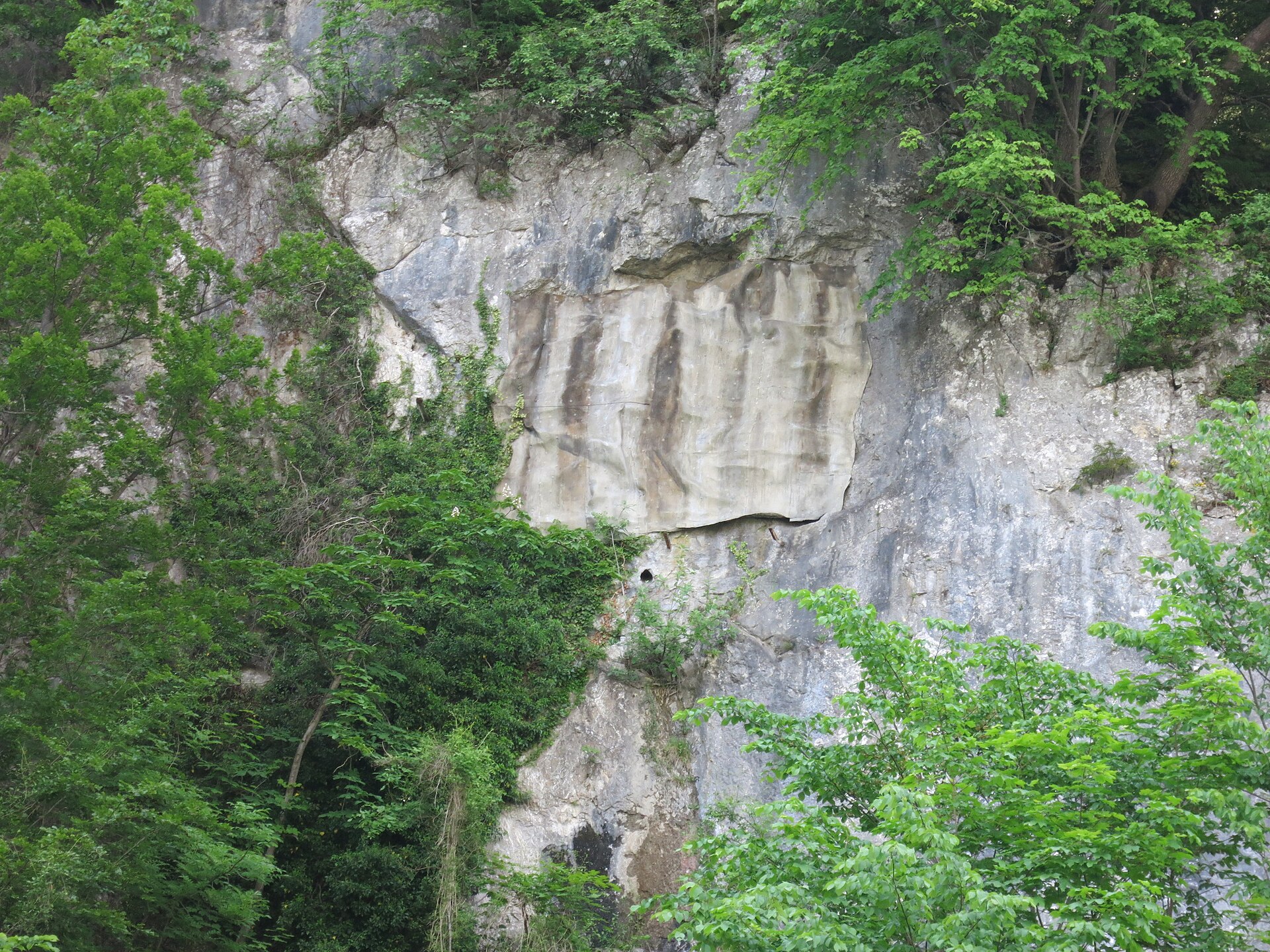
The Kilchlidossen Artillery Fortification (army designation A 2261) is a former casemate fortification on the western flank of the Bürgenstock in Stansstad, canton of Nidwalden, Switzerland.

Époque
1941–1943
Préparer la visite
Photo : Paebi · CC BY-SA 4.0 Proposer votre photo

En un regard

Le château en bref

The Kilchlidossen Artillery Fortification (army designation A 2261) is a former casemate fortification on the western flank of the Bürgenstock in Stansstad, canton of Nidwalden, Switzerland. The fortress lies at an altitude of 520 m above sea level, in the rock beside the Stansstad–Bürgenstock road. Construction of the three-storey works began in June 1941. It was ready for firing in September 1942 and was taken over by Fortress Watch Company 15 in June 1943. The first section of the access tunnel is passable by lorry. The works had a lift. The entrance behind the camouflage could be closed by a massive concrete gate (tilting gate). The construction cost was approximately CHF 1'000'000. During the Second World War, the fortress was equipped with four 12 cm 1912/39 L14 field howitzers on lever-type mountings. Its field of fire extended primarily over the Stansstad defile, the crossing over the Rengg Pass, the Lopperstrasse and the area around Hergiswil. After the Second World War, the guns were replaced by four 10.5 cm 1942 L22 fortress guns. Further armament consisted of two 24 mm anti-tank rifles (TB), four fortress machine guns (Mg) 11, four reserve Mg and eight light machine guns (Lmg). To protect the exposed gun positions, two twin anti-aircraft emplacements were built into the rock face, fitted with 20 mm anti-aircraft cannons (Flab Kann) W+F 1938.

Époque de construction
1941–1943
Localisation
Stansstad

Récit

Une histoire à travers les siècles

Le récit

L’histoire de Kilchlidossen Artillery Fortification

Commencé en juin 1941 dans le flanc ouest du Bürgenstock, l'ouvrage d'artillerie de Kilchlidossen (A 2261) est prêt à tirer en septembre 1942 et repris par la compagnie de gardes-fortifications 15 en juin 1943. Coût : environ un million de francs.

Lire la suiteRéduire

Pendant la guerre, quatre obusiers de campagne de 12 cm balayaient l'étranglement de Stansstad, le passage du Renggpass, la Lopperstrasse et la région de Hergiswil ; après guerre, ils sont remplacés par quatre canons de forteresse de 10,5 cm.

L’architecture

Ce qu’il faut observer

Casemate sur trois niveaux creusée dans la roche à environ 520 m d'altitude, avec ascenseur, galerie d'entrée praticable en camion fermée par un lourd portail basculant en béton, et deux doubles positions antiaériennes de 20 mm dans la paroi.

Chronologie

Les étapes de construction

Les campagnes documentées qui ont façonné le monument, période par période.

Époque contemporaine

  1. 1941

    Construction

    Datation normalisée depuis descriptionCastle.

Informations pratiques

Préparer sa visite

Conditions de visite non renseignées

Nous n’avons pas encore d’information vérifiée sur l’ouverture au public. Renseignez-vous auprès du site officiel ou de la mairie avant de vous déplacer.

Vous l’avez visité ?

Partagez vos photos

Après relecture, votre photo illustrera cette fiche, créditée à votre nom. Haute définition bienvenue, jusqu’à 40 Mo.

Propriétaires et gestionnaires

Vous gérez Kilchlidossen Artillery Fortification ?

Horaires, tarifs et réservation manquent encore sur cette fiche. Transmettez-les et mettez le château en avant auprès des visiteurs qui préparent leur venue.