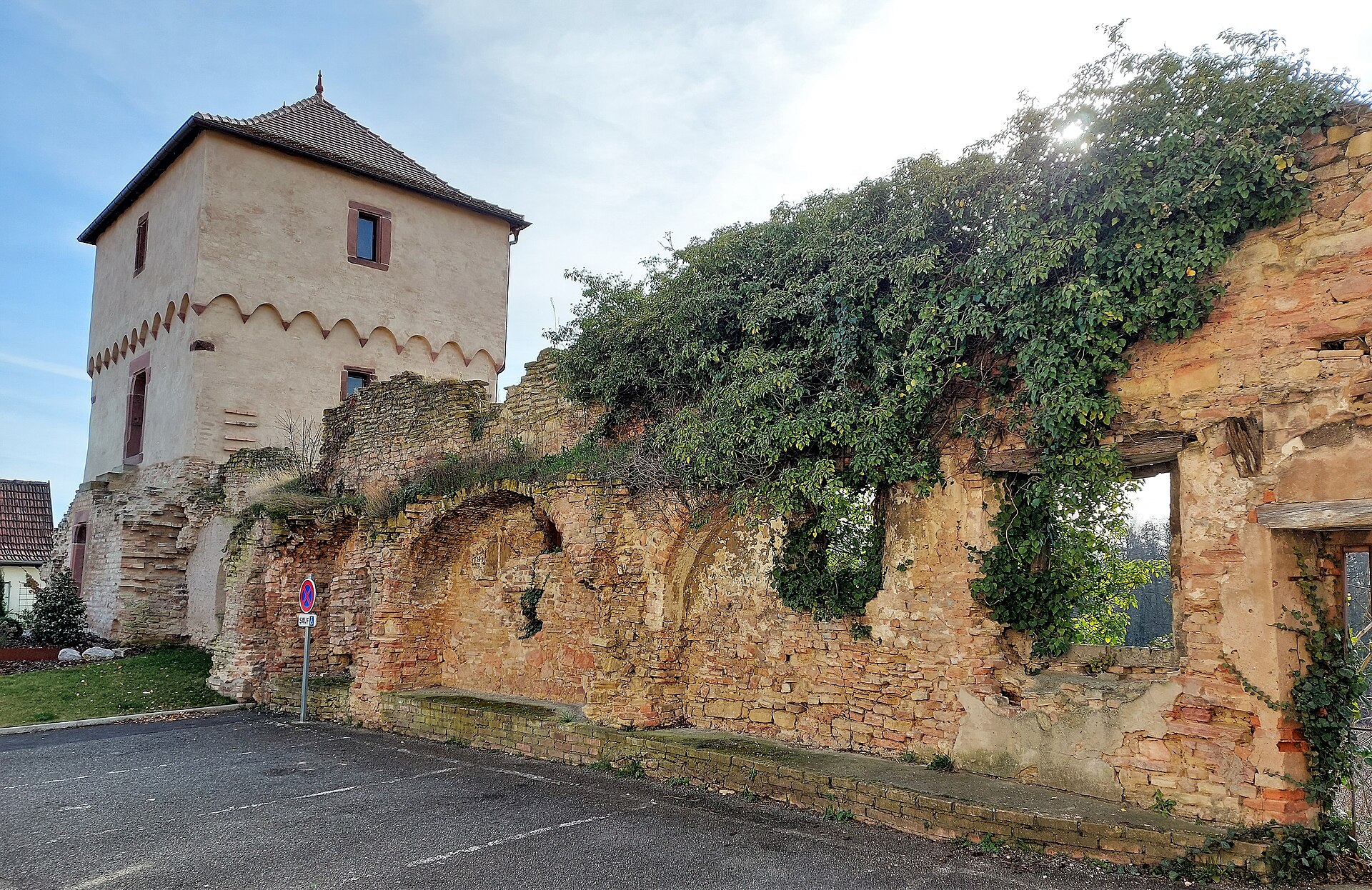
Butchers' Tower, Lauterbourg

Lauterbourg Bas-Rhin

Butchers' Tower

The Butchers' Tower is one of the remains of the medieval town walls of Lauterbourg, a town in the former Bishopric of Speyer.

Époque
XIIIᵉ siècle (1300)
Protection
Monument historique
Préparer la visite
Photo : Didivo67 · CC BY-SA 4.0 Proposer votre photo

En un regard

Le château en bref

The Butchers' Tower is one of the remains of the medieval town walls of Lauterbourg, a town in the former Bishopric of Speyer. According to the inventory, the earliest certain mention of the settlement dates from 1252. The upper town is attested as fortified in 1272, while the lower town to the east was fortified later, probably in the 15th century. At the beginning of the 18th century, Louis XIV made Lauterbourg a fortress town: the eastern and western walls were replaced by an earthen bastioned rampart, while the medieval walls to the north and south were kept and modified. The Butchers' Tower, which has two storeys and is decorated with friezes of arcading, survives together with sections of curtain wall to the south, the enclosure of the fortified castle, the Gloriette tower (remodelled in 1852) and the Landau Gate in pink sandstone, decorated with a sun in honour of Louis XIV. The Middle Gate, destroyed during the Second World War, once completed the defences. The tower has been listed as a Monument historique since 18 November 1993.

Époque de construction
XIIIᵉ siècle (1300)
Localisation
Lauterbourg, Bas-Rhin
Protection
Monument historique

Pourquoi le découvrir

Trois raisons de découvrir Butchers' Tower

  1. Vestige de l'enceinte médiévale de Lauterbourg

    Lire son histoire
  2. Ville haute fortifiée attestée en 1272

    Parcourir la chronologie
  3. Place forte de Louis XIV au début du XVIIIe siècle

    Observer l’architecture

Récit

Une histoire à travers les siècles

Le récit

L’histoire de Butchers' Tower

Lauterbourg, mentionnée en 1252, est fortifiée en ville haute en 1272, en ville basse probablement au XVe siècle, puis transformée en place forte bastionnée au début du XVIIIe siècle sous Louis XIV. La tour des Bouchers est un vestige de l'enceinte médiévale.

L’architecture

Ce qu’il faut observer

Tour de l'enceinte médiévale à deux étages avec frises d'arceaux, voisine de la tour Gloriette (remaniée en 1852), de la porte de Landau en grès rose du XVIIIe siècle et de vestiges de courtine au sud.

Chronologie

Les étapes de construction

Les campagnes documentées qui ont façonné le monument, période par période.

Moyen Âge

  1. 1272

    Fortification

    Ville haute attestée comme fortifiée.

  2. XVe siècle (probable)

    Fortification

    Fortification de la basse ville, probablement au XVe siècle.

Informations pratiques

Préparer sa visite

Conditions de visite non renseignées

Nous n’avons pas encore d’information vérifiée sur l’ouverture au public. Renseignez-vous auprès du site officiel ou de la mairie avant de vous déplacer.

Vous l’avez visité ?

Partagez vos photos

Après relecture, votre photo illustrera cette fiche, créditée à votre nom. Haute définition bienvenue, jusqu’à 40 Mo.

Propriétaires et gestionnaires

Vous gérez Butchers' Tower ?

Horaires, tarifs et réservation manquent encore sur cette fiche. Transmettez-les et mettez le château en avant auprès des visiteurs qui préparent leur venue.

Nearby

Découvrir les alentours

View all castles →

Other castles in the same region

Patrimoine à proximité