En un regard
Le château en bref
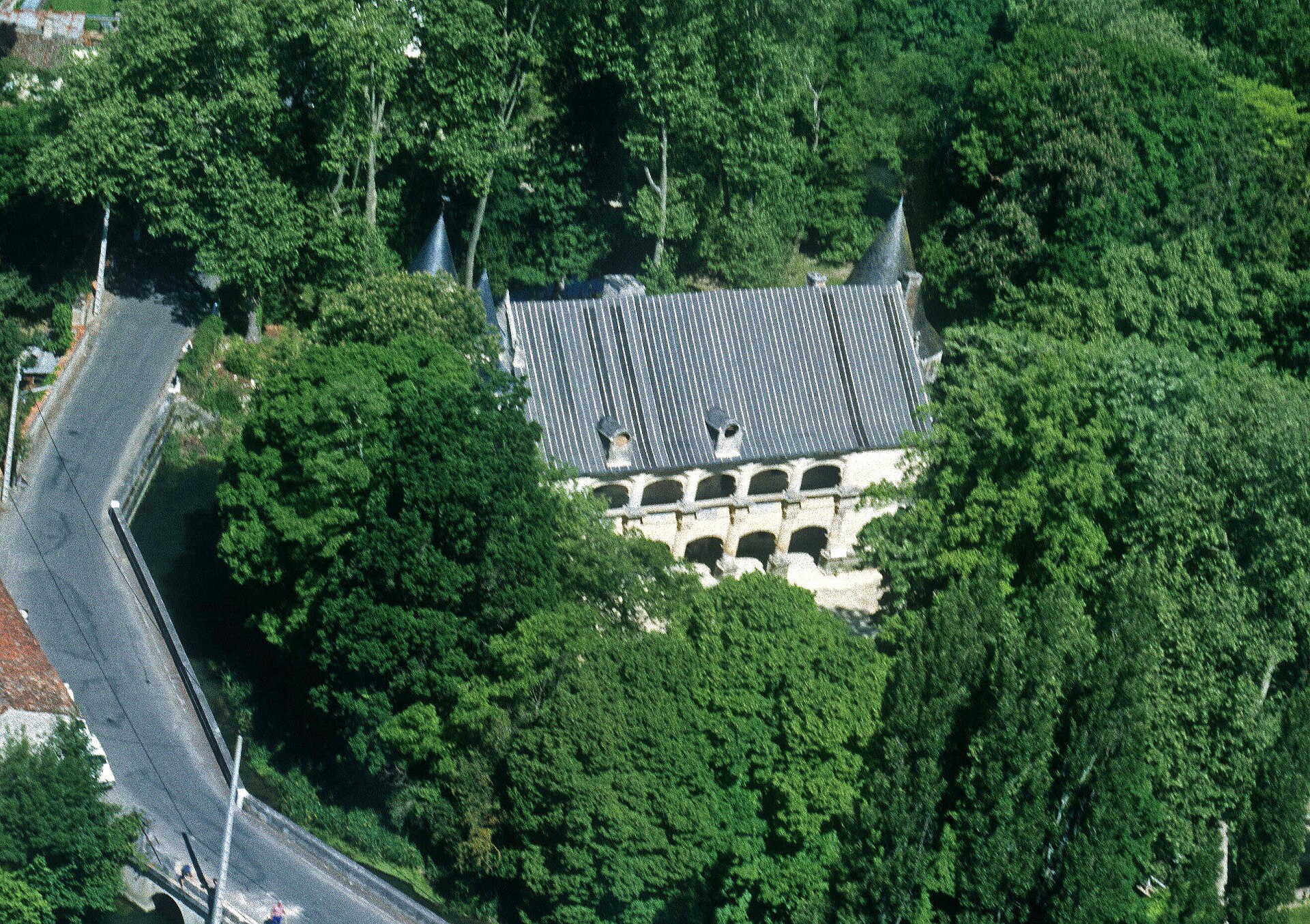
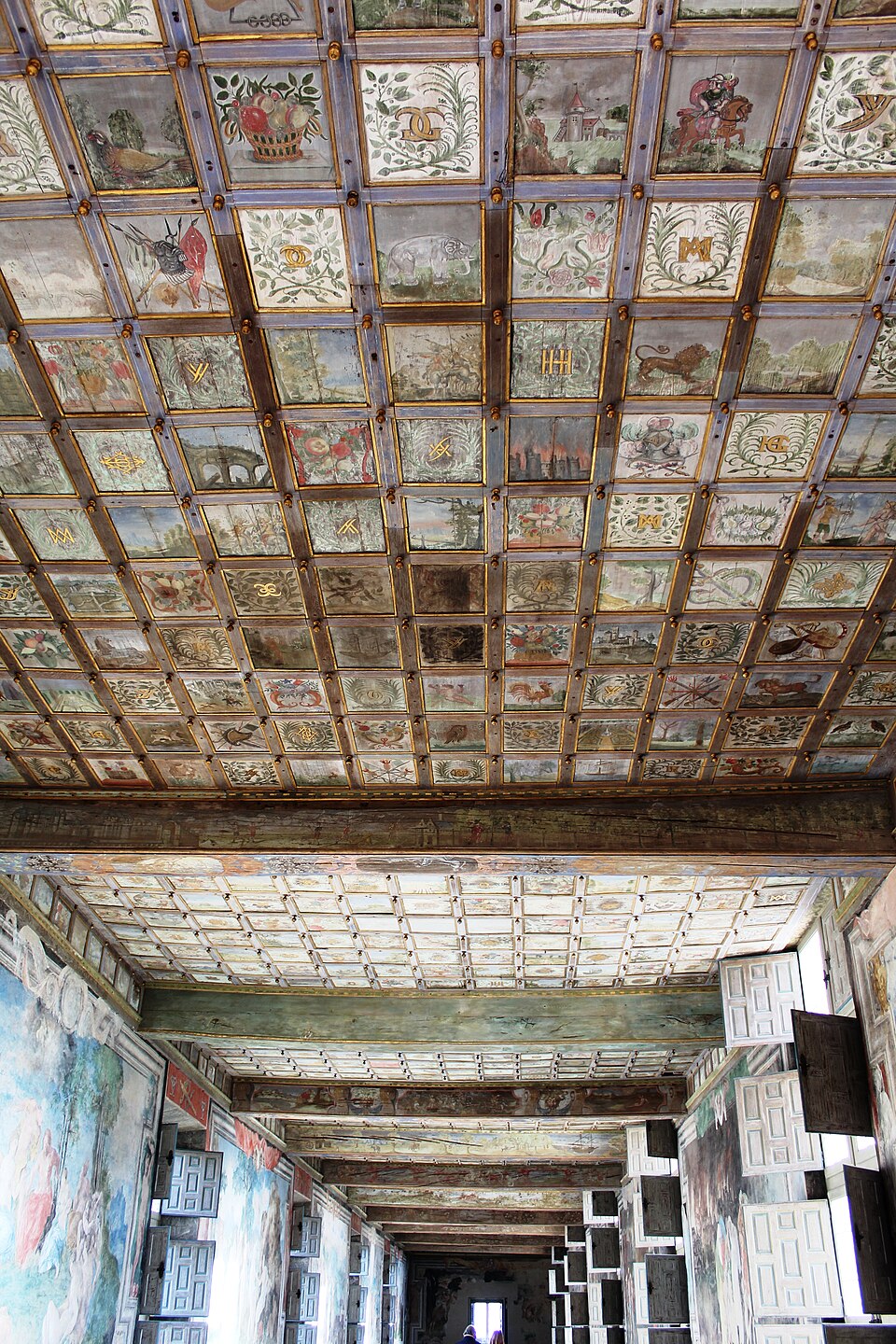
The Château de Dampierre-sur-Boutonne succeeded an earlier fortress, the Chatel Gaillard, first attested in 995. From 1495, François de Clermont undertook its reconstruction in the Renaissance taste, on two islands in the Boutonne. Between 1545 and 1550, Jeanne de Vivonne had two superimposed galleries added in the Italian manner. The upper gallery is adorned with 93 coffers bearing alchemical and mythological symbolism in Latin, and supported by 128 pendant keystones, a feature comparable only to the decorations of the châteaux of Bourges and Écuillé. The château belonged to the Maingot family from 1027 to 1342, then to the House of Clermont-Tonnerre until 1598, and to the Fourré family until 1712. It was acquired in 1752 by the Marquis de Gallifet. François I stayed here in 1539 after a hunting party. Retaken from the English by Du Guesclin in 1373, the château saw its archives destroyed by revolutionary authorities in 1793, and suffered damage during the Occupation in 1944. The Rabault-Texier-Hédelin family began its restoration from 1851. A serious fire destroyed the roofframework in 1990, but 80% of the furniture was saved. Since 2017, the château has belonged to the Kientz-Pfister-Grunhertz family. Listed as a monument historique in 1926, with a supplementary listing in 1990 covering the outbuildings, bridges, enclosure walls and moats, it is open to visitors year-round, with furnished interiors, Renaissance gardens, artistic installations, and cultural events and concerts during the season.