En un regard
Le château en bref
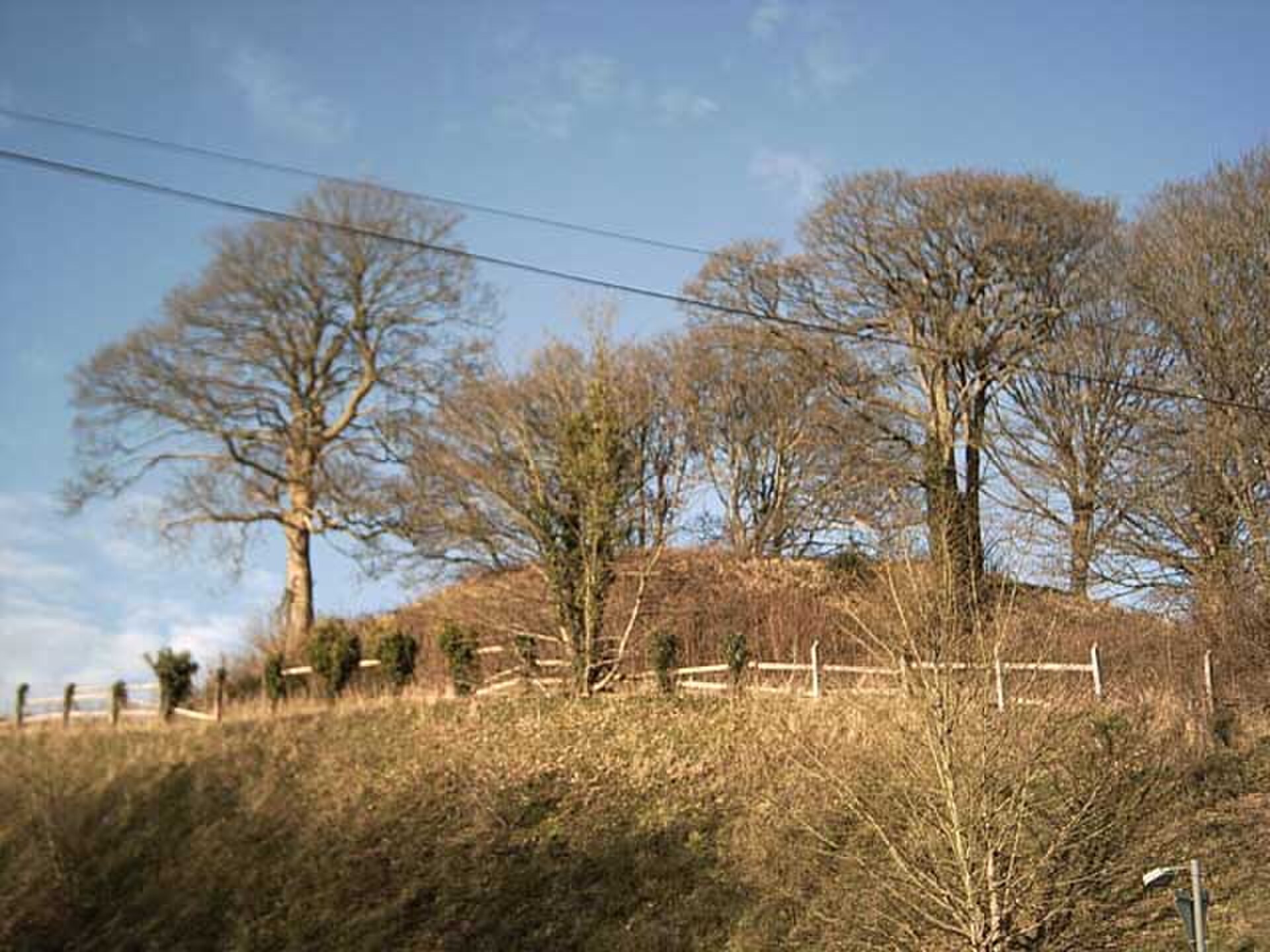
Bampton Castle, known locally as "The Mote", is a Norman motte-and-bailey castle. It lies in Devon (Mid Devon district), north of the small town of Bampton, and should not be confused with Bampton Castle in Oxfordshire. The site occupies a prominent ridge overlooking the valleys of the Exe and the Batherm as well as the town. The motte is a flat-topped circular mound about 60 m across and some twelve metres high, surrounded by a partly filled ditch. To the east lies a bailey of roughly 75 m by 70 m, enclosed on the south and east by a bank and ditch, with a counterscarp to the east. A small mound at the north-east corner of the bailey may mark the site of a tower. The lords of Bampton lived here from the Norman Conquest onwards: Walter of Douai held the estate in 1086, and he or his son may have raised the fortification. In 1136 Robert of Bampton rebelled against King Stephen, who besieged him, although some authors place this siege elsewhere. In 1336 the lord of the manor, Richard Cogan, received a licence to crenellate, which probably applied to this site. A Royal Commission survey (1992) dated the earthworks to between the late 11th and mid-12th centuries and identified the remains of a substantial building on the motte. Partial excavations (1961-1972) uncovered a large rock-cut ditch on the north side of the bailey. The site, which today survives as earthworks, is protected as a Scheduled Monument.