En un regard
Le château en bref
Castle Neroche is an extensive group of earthwork fortifications set on a spur projecting from the northern escarpment of the Blackdown Hills, at about 260 m above sea level, overlooking the Vale of Taunton Deane. Straddling the parishes of Curland and Buckland St Mary, the site combines a Norman motte-and-bailey castle with several earlier lines of ramparts, making it one of the clearest examples of the development of an earthwork fortification in south-west England.
Excavations (by Harold St George Gray in 1903, then by B. K. Davison, published in 1972) identified four phases. An undated outer enclosure, perhaps an Iron Age hillfort or an Anglo-Saxon work, was first reoccupied by a Norman ringwork built shortly after the Conquest, probably to put down the uprisings of 1067-1069. The ringwork was then converted into a motte-and-bailey castle, probably in the time of Robert, Count of Mortain, a great lord of the South West until 1103; three lines of ramparts and a barbican were laid out at that stage. Abandoned in the early 12th century, the castle was brought back into use, most likely during the Anarchy of King Stephen's reign, with a stone shell keep and curtain wall on top of the motte, whose ruins were still recorded in 1854.
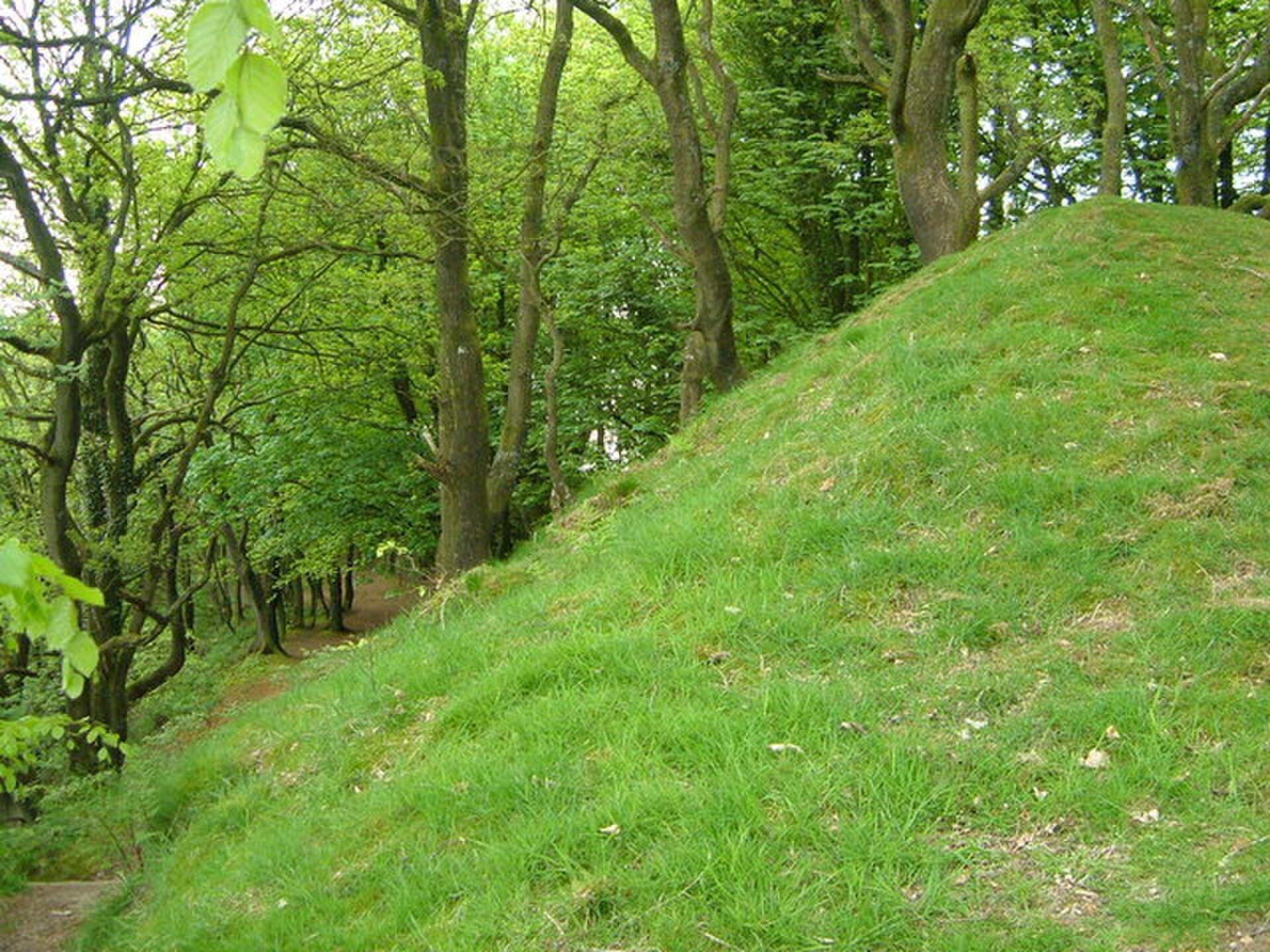
Today only the earthworks survive: the motte, ditches, tiered ramparts and a second, lobed bailey on the northern tip. A 19th-century farm occupies the inner bailey, and sand quarrying has left misleading hollows. Designated a Scheduled Monument since 1925, the site is wooded and managed by Forestry England, which provides walking trails there.