En un regard
Le château en bref
Cawood Castle, on the banks of the Ouse near Selby (North Yorkshire), was from the 13th century the principal residence of the Archbishops of York. More palace than fortress, it could nonetheless serve as a stronghold. The estate belonged to the large holding centred on Sherburn in Elmet, which King Edgar granted to the archbishop in 963. Archbishop Walter Giffard obtained a licence to crenellate in 1271-1272.
Many monarchs stayed here, from King John to Elizabeth I, among them Henry III, Edward I and Edward II. Henry VIII spent two days here with Catherine Howard. The installation of Archbishop George Neville was marked by a famous feast. In 1530 Cardinal Thomas Wolsey, fallen from favour, at last came to Cawood. He was arrested here by the Earl of Northumberland and died shortly afterwards at Leicester. During the Civil War the castle changed hands three times before Parliament ordered it slighted. Most of it was demolished in 1646.
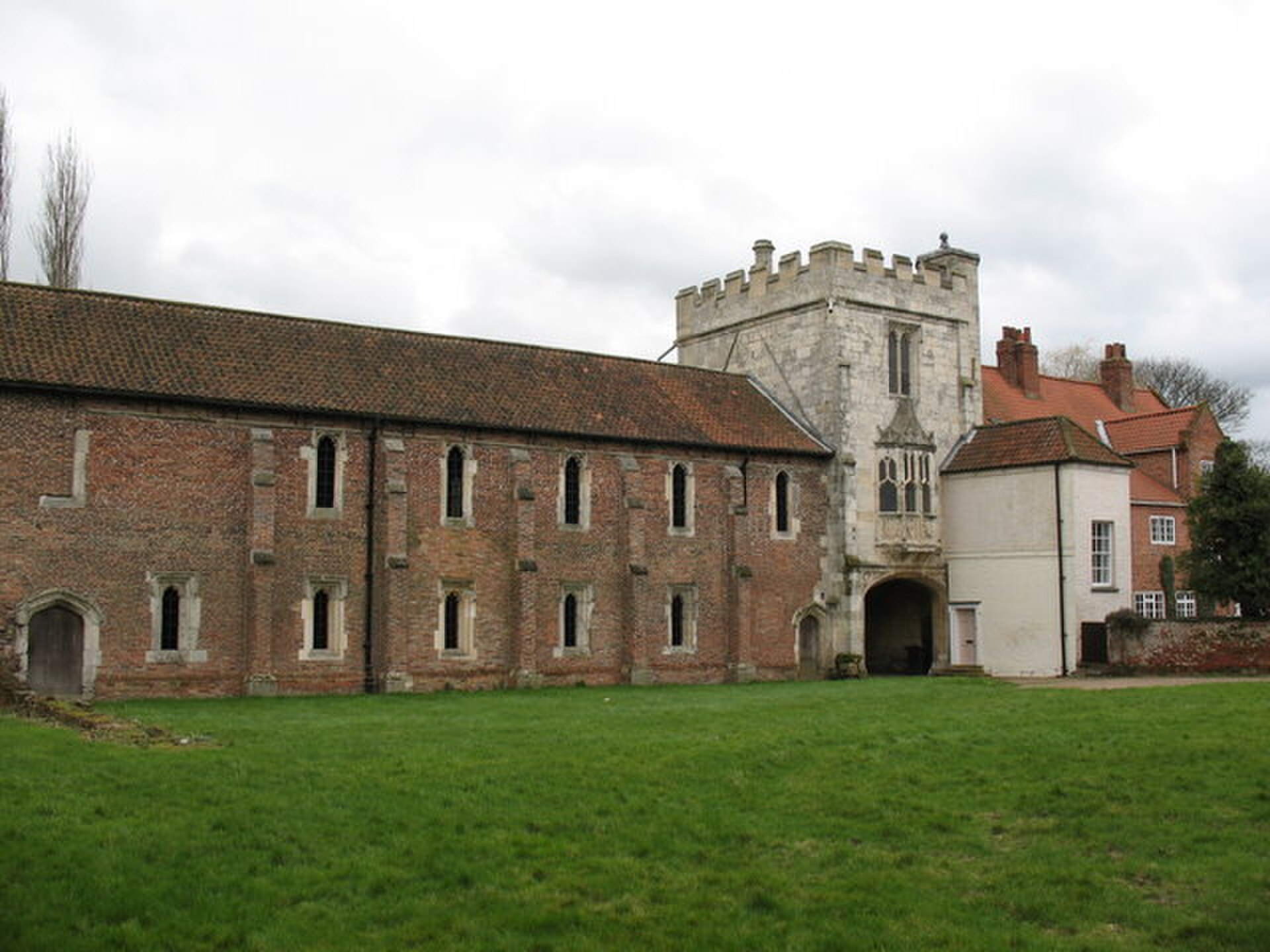
What survives is the gatehouse and the adjoining hall built under Archbishop John Kempe (1426-1452) in creamy Huddleston stone. The shields carved above the arch bear the cardinal's hat Kempe received in 1439. Stretches of the limestone precinct wall still stand up to 3 m high, and the palace foundations survive beneath houses built in the 1970s. The gatehouse, acquired in 1985 and restored by the Landmark Trust, which rebuilt the crenellated parapet and the flat roof, is now let as holiday accommodation.