Driffield East Riding of Yorkshire Angleterre

Driffield Castle

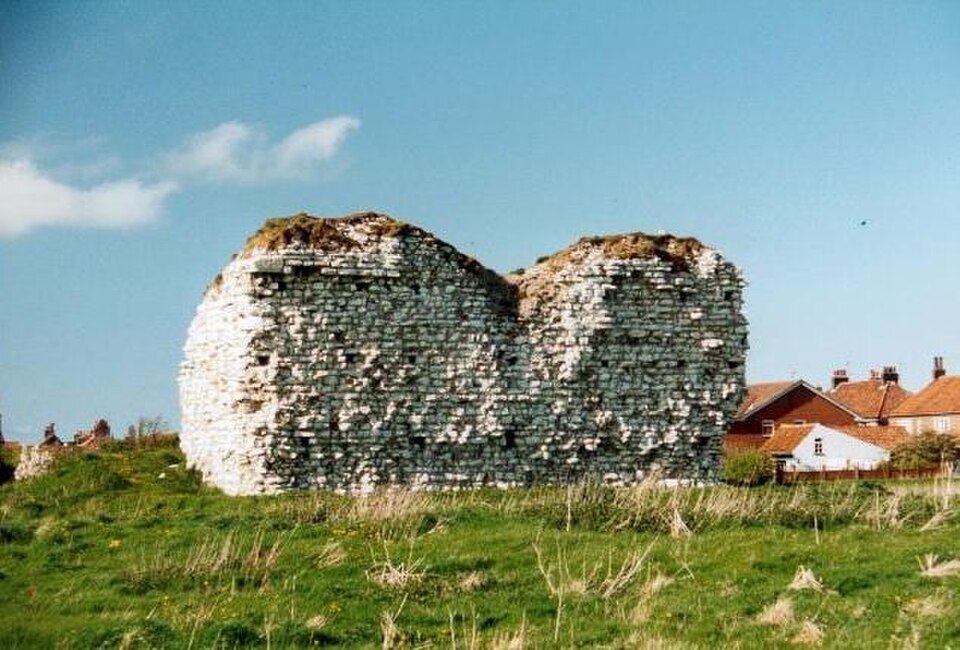
Driffield Castle, known locally as Moot Hill, is a Norman motte.

Époque
période normande (fin XIe - XIIe siècle)
Style
Normand

En un regard

Le château en bref

Driffield Castle, known locally as Moot Hill, is a Norman motte. It stands in the north of the town of Driffield, in the East Riding of Yorkshire. Historic England protects both the motte-and-bailey castle and the site of a medieval moated manor. The surviving mound is up to 4.5 m high and about 40 m in diameter, and is partly surrounded by a ditch some 15 m wide. It was originally larger, as gravel quarrying removed part of it in 1856-1858. The site has a long history. Excavations carried out in 1975 uncovered fourth-century Roman occupation beneath the motte. Tradition also places here the palace of the Northumbrian king Aldfrith, who died at Driffield in 705 according to the Anglo-Saxon Chronicle. The manor belonged to the royal demesne in 1086, and a document of 1208 mentions the castle's bailey. From the eleventh to the fifteenth century, the estate passed between the Crown and its successive grantees. In 1893, drainage works revealed a chalk foundation and a moat up to 3 m deep on the west side. The antiquarian J. R. Mortimer first took the mound for a Bronze Age barrow, then for an Anglo-Saxon moot mound. The 1975 excavations confirmed that it is a Norman motte. The monument remains in fairly good condition, but it is surrounded by modern buildings and the bailey has almost disappeared.

Époque de construction
période normande (fin XIe - XIIe siècle)
Style architectural
Normand
Localisation
Driffield, East Riding of Yorkshire

Récit

Une histoire à travers les siècles

Le récit

L’histoire de Driffield Castle

Le site révèle une occupation romaine au IVe siècle. Il est traditionnellement associé au palais du roi Aldfrith de Northumbrie, mort à Driffield en 705.

Lire la suiteRéduire

Une motte normande y est élevée après la Conquête. Le manoir est domaine royal en 1086 et la basse-cour est attestée en 1208. Un manoir à douves a occupé l'enceinte. Le monument est partiellement détruit par une gravière en 1856-1858, puis fouillé en 1893 et en 1975.

L’architecture

Ce qu’il faut observer

Motte de terre haute d'environ 4,5 m et large d'environ 40 m, en partie ceinturée d'un fossé d'environ 15 m de large et 1,5 m de profondeur. La basse-cour est presque effacée. Des vestiges enfouis d'un manoir à douves subsistent, dont une fondation de mur en craie et une douve de 3 m de profondeur à l'ouest.

Les grandes heures

Événements marquants

  • 1856-1858

    Une partie de la motte est détruite par l'extraction de gravier.

    Source ↗
  • 1975

    Les fouilles confirment la motte normande et révèlent une occupation romaine.

    Source ↗

Chronologie

Les étapes de construction

Les campagnes documentées qui ont façonné le monument, période par période.

Révolution & XIXᵉ siècle

  1. 1856–1858

    Évolution

    Une partie de la butte est enlevée par l'extraction de gravier.

Figures historiques

Ils ont marqué Driffield Castle

Les femmes et les hommes documentés dans l’histoire du lieu. Ouvrez une ligne pour en savoir plus et retrouver les autres demeures qui leur sont associées.

Informations pratiques

Préparer sa visite

Conditions de visite non renseignées

Nous n’avons pas encore d’information vérifiée sur l’ouverture au public. Renseignez-vous auprès du site officiel ou de la mairie avant de vous déplacer.

Vous l’avez visité ?

Aucune photo pour l’instant : partagez la vôtre

Après relecture, votre photo illustrera cette fiche, créditée à votre nom. Haute définition bienvenue, jusqu’à 40 Mo.

Propriétaires et gestionnaires

Vous gérez Driffield Castle ?

Horaires, tarifs et réservation manquent encore sur cette fiche. Transmettez-les et mettez le château en avant auprès des visiteurs qui préparent leur venue.