En un regard
Le château en bref
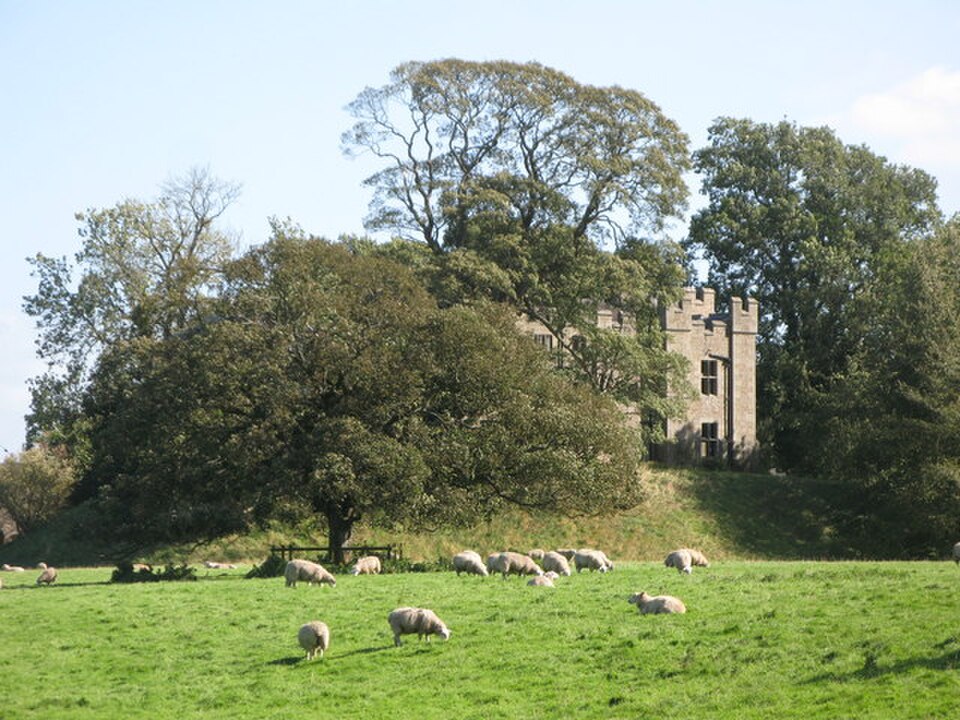
The remains of Simonburn Castle occupy a steep promontory at the meeting of two deeply cut ravines, west of the village of Simonburn in Tynedale (Northumberland). It is a solitary tower house, a type of defensible residence characteristic of the Anglo-Scottish borders, where chronic insecurity led wealthy families to build stone towers.
The tower dates from the 13th century; PastScape attributes it to Henry Graham and states it was completed in 1291, and it is mentioned in 1415 in the list of Northumberland fortresses. A disputed tradition places here an unfinished motte-and-bailey castle raised after 1138 by a certain Simon, but no trace of a bailey ditch has been identified. The tower declined in the 16th century and was ruinous by its end. In the second half of the 18th century (around 1766), the Allgood family of Nunwick consolidated it and rebuilt its north-east gable as a picturesque eyecatcher visible from their estate.
Today only the vaulted basement survives, filled with rubble from the collapsed upper floors; the north-east wall, still about 1.8 m high in 1940, and a square turret on the north-west side remain identifiable. The site is protected as a Scheduled Monument and is Grade II listed.