En un regard
Le château en bref
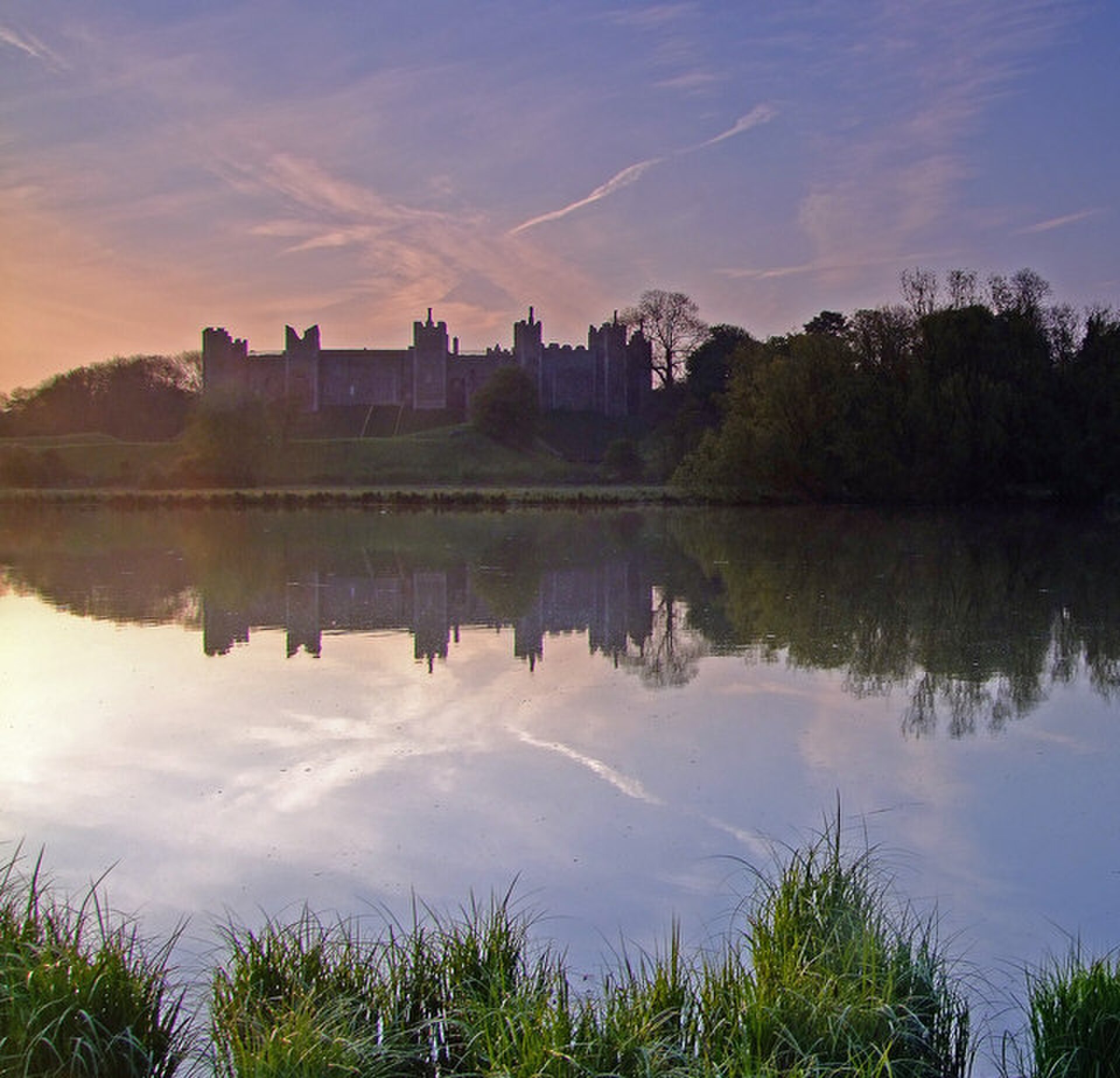
Framlingham Castle overlooks the small town of the same name in east Suffolk. It is one of the most spectacular examples in England of a late 12th-century enclosure castle: a high, continuous curtain wall, punctuated by open-backed mural towers, encloses an inner courtyard with no central keep. The site forms part of a coherent seigneurial landscape including the Mere, the town ditch and a former Anglo-Saxon cemetery, all protected together.
A stronghold of the Bigods, Earls of Norfolk, the castle owes its first stone buildings to Hugh Bigod and its present curtain wall to Roger Bigod II. Roger, one of the barons who forced Magna Carta on the king, saw King John besiege the castle in 1216; it surrendered after two days before being restored to him. The estate then passed to the Brothertons, the Mowbrays and, in 1483, to the Howards, Dukes of Norfolk, who carried out major works, notably the famous decorative brick chimneys. In July 1553 Mary Tudor withdrew there and rallied her supporters against Lady Jane Grey's party, before learning that she had been proclaimed queen.
Bought in 1635 by Sir Robert Hitcham, who bequeathed the estate to found a poorhouse, the castle lost its internal buildings; the Red House and the Poor House of 1729 still stand in the courtyard. Placed in state guardianship in 1913 by Pembroke College, Cambridge, it has been managed by English Heritage since 1984 and is open to visitors, with a wall-walk running along the top of the ramparts.