En un regard
Le château en bref
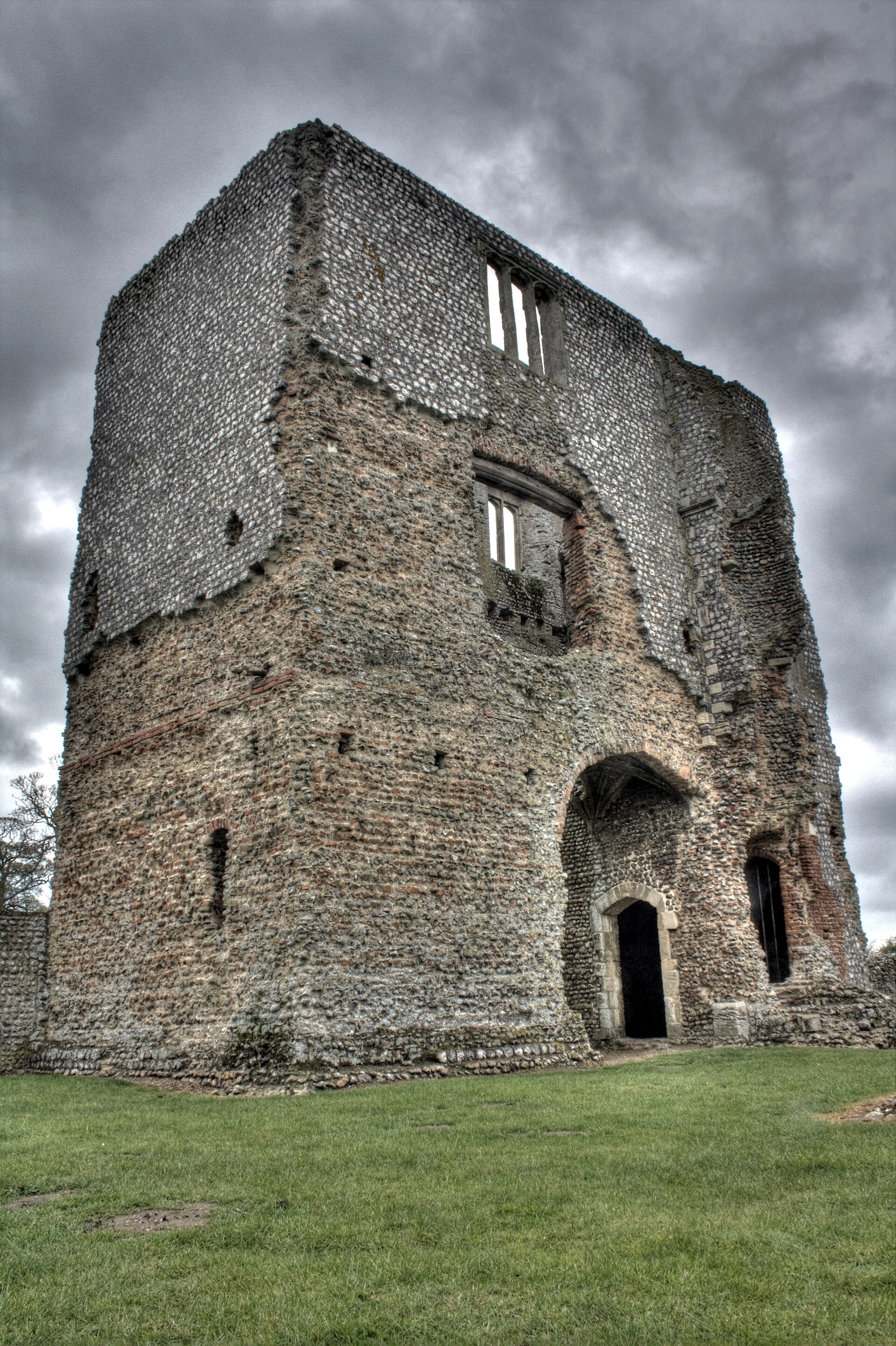
Baconsthorpe Castle is a late medieval fortified house set in a small north-facing valley about 750 metres north of the village of Baconsthorpe, in north Norfolk, a few kilometres from Holt. It probably occupies the site of an earlier manor called Wood Hall, which William Heydon acquired from the Bacon family in the early 15th century.
The complex was raised by John Heydon, an ambitious lawyer who rose to prominence during the Wars of the Roses, and then by his son Sir Henry Heydon, between the middle and the end of the 15th century; the inner gatehouse is among the oldest parts, probably predating 1480. In the 16th century, when the estate had become a large and prosperous sheep run, the Heydons added an outer gatehouse, courtyards and a barn, and part of the buildings was used for processing wool. In the early 17th century Sir Christopher Heydon altered the house again, but the family's fortunes were declining: around the middle of the century most of the buildings on the platform were demolished, and in 1654 stone was bought for the neighbouring Felbrigg estate.
The outer gatehouse, converted into a dwelling known as Baconsthorpe Hall, remained occupied until about 1920, when its western end collapsed. Today the flint ruins — a three-storey gatehouse, curtain walls pierced with embrasures, corner towers — stand on a square platform surrounded by a water-filled moat that opens to the east onto a mere. The site, protected as a Scheduled Monument and managed by English Heritage, is free to visit.