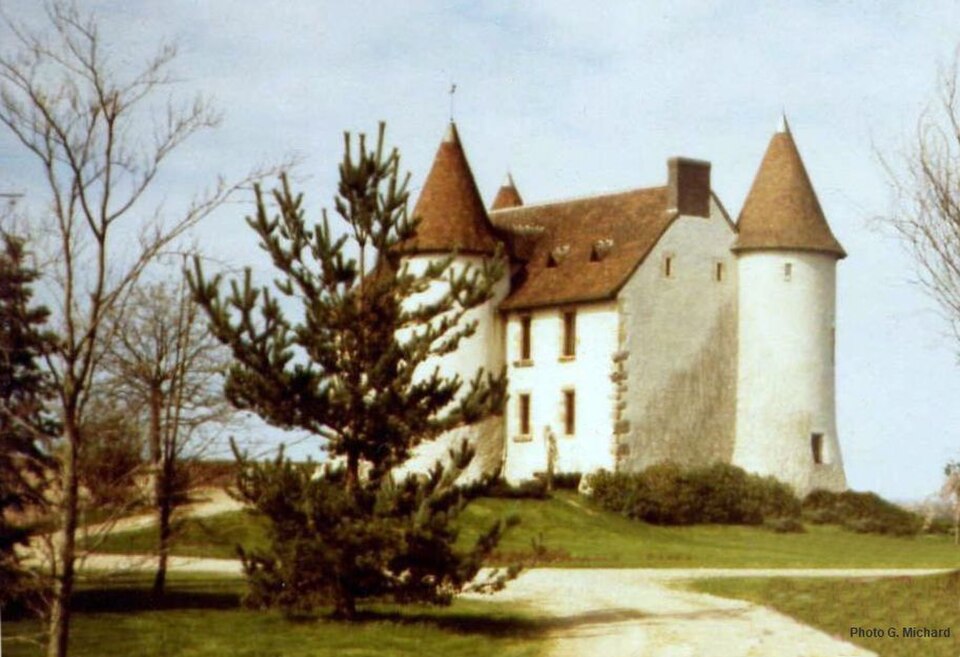
Château de Bompré, Barberier

Barberier Allier

Château de Bompré

The Château de Bompré, a former fortified house of the 15th century remodelled in the 16th and 18th centuries, stands in the commune of Barberier, in the Allier, between the villages of Barberier and Bayet, south of…

Époque
XIVᵉ siècle (1400)
Protection
Monument historique
Préparer la visite
Photo : Daftintin76 · CC BY-SA 4.0 Proposer votre photo

En un regard

Le château en bref

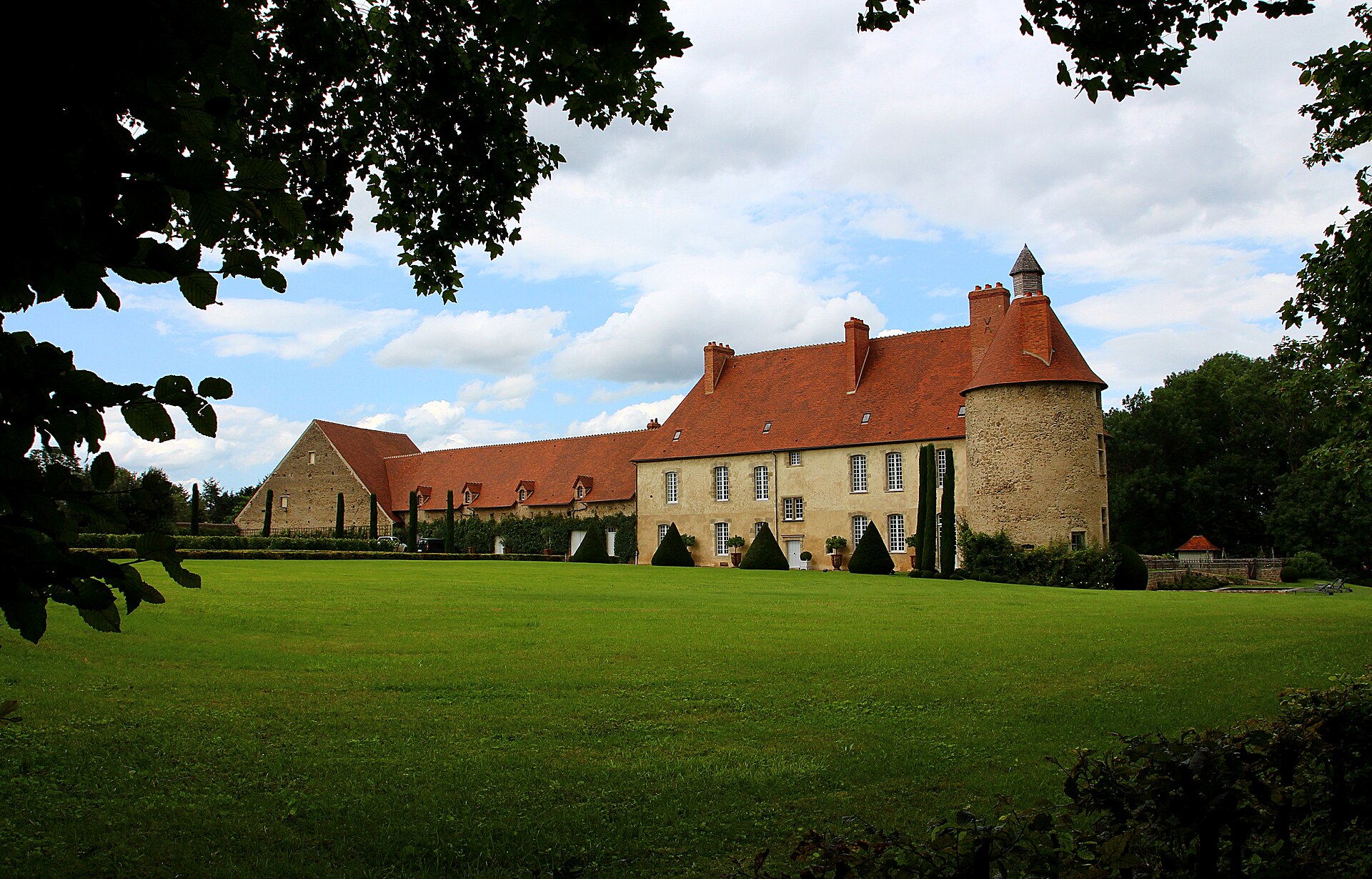
The Château de Bompré, a former fortified house of the 15th century remodelled in the 16th and 18th centuries, stands in the commune of Barberier, in the Allier, between the villages of Barberier and Bayet, south of Saint-Pourçain-sur-Sioule. The massive rectangular main building, with two storeys and an attic level, is flanked to the south-east by a circular tower topped with a conical roof and a hexagonal lantern. In the 18th century, the opening of basket-handle arched windows gave it the appearance of a manor house; the main façade, facing south, has seven irregular bays. The entrance vestibule is decorated with small square coffers covering the walls and the vault, and the staircase, dating from the third quarter of the 16th century, is comparable to that of the Château de Chareil-Cintrat. The estate first belonged to the Menudel and then the Mareschal families, who also held the lands of Barberier, before passing through marriage to the Revanger, Demastre and then Thoisy families; today it belongs to the Portejoie family. The Swiss painter Ricco Wassmer lived there from 1950 to 1963 and decorated one of the fireplaces with a painting inspired by Benozzo Gozzoli. The château has been listed (inscrit) as a historic monument since 21 August 1989, and was partially classified (classé) on 2 September 1994 (château, feudal motte, vestibule and staircase).

Époque de construction
XIVᵉ siècle (1400)
Localisation
Barberier, ALLIER
Protection
Monument historique

Pourquoi le découvrir

Trois raisons de découvrir Château de Bompré

  1. Tour circulaire à toit conique et lanterne hexagonale

    Lire son histoire
  2. Escalier du XVIe siècle comparable à celui du château de Chareil-Cintrat

    Observer l’architecture
  3. Vestibule à caissons carrés couvrant murs et voûte

    Préparer la visite

Récit

Une histoire à travers les siècles

Le récit

L’histoire de Château de Bompré

Le château de Bompré, maison forte du XVe siècle, appartient d'abord aux familles Menudel puis Mareschal, également seigneurs de Barberier, avant de passer par alliances aux familles Revanger, Demastre puis Thoisy ; il appartient aujourd'hui à la famille Portejoie. Remanié aux XVIe et XVIIIe siècles, il conserve un escalier du troisième quart du XVIe siècle comparable à celui du château de Chareil-Cintrat.

Lire la suiteRéduire

Le peintre suisse Ricco Wassmer y réside de 1950 à 1963. Le château est inscrit au titre des monuments historiques depuis 1989, puis partiellement classé en 1994.

L’architecture

Ce qu’il faut observer

Le corps de logis rectangulaire et massif, à deux étages et niveau de comble, est flanqué au sud-est d'une tour circulaire coiffée d'un toit conique et d'une lanterne hexagonale. Des fenêtres en anse de panier, percées au XVIIIe siècle, donnent à l'édifice une allure de gentilhommière ; la façade principale, orientée au sud, compte sept travées irrégulières.

Lire la suiteRéduire

Le vestibule d'entrée est orné de petits caissons carrés couvrant murs et voûte, et l'escalier date du troisième quart du XVIe siècle.

Informations pratiques

Préparer sa visite

Conditions de visite non renseignées

Nous n’avons pas encore d’information vérifiée sur l’ouverture au public. Renseignez-vous auprès du site officiel ou de la mairie avant de vous déplacer.

Vous l’avez visité ?

Partagez vos photos

Après relecture, votre photo illustrera cette fiche, créditée à votre nom. Haute définition bienvenue, jusqu’à 40 Mo.

Propriétaires et gestionnaires

Vous gérez Château de Bompré ?

Horaires, tarifs et réservation manquent encore sur cette fiche. Transmettez-les et mettez le château en avant auprès des visiteurs qui préparent leur venue.

Nearby

Découvrir les alentours

View all castles →

Other castles in the same region

Patrimoine à proximité