Châtillon-sur-Seine Côte-d’Or

Château Marmont

The Château Marmont, in Châtillon-sur-Seine (Côte-d'Or) — not to be confused with the Chateau Marmont, a Los Angeles hotel built in the 1920s — occupies the site of a 15th-century fortified building.

Époque
XVIIIᵉ siècle (1800)

En un regard

Le château en bref

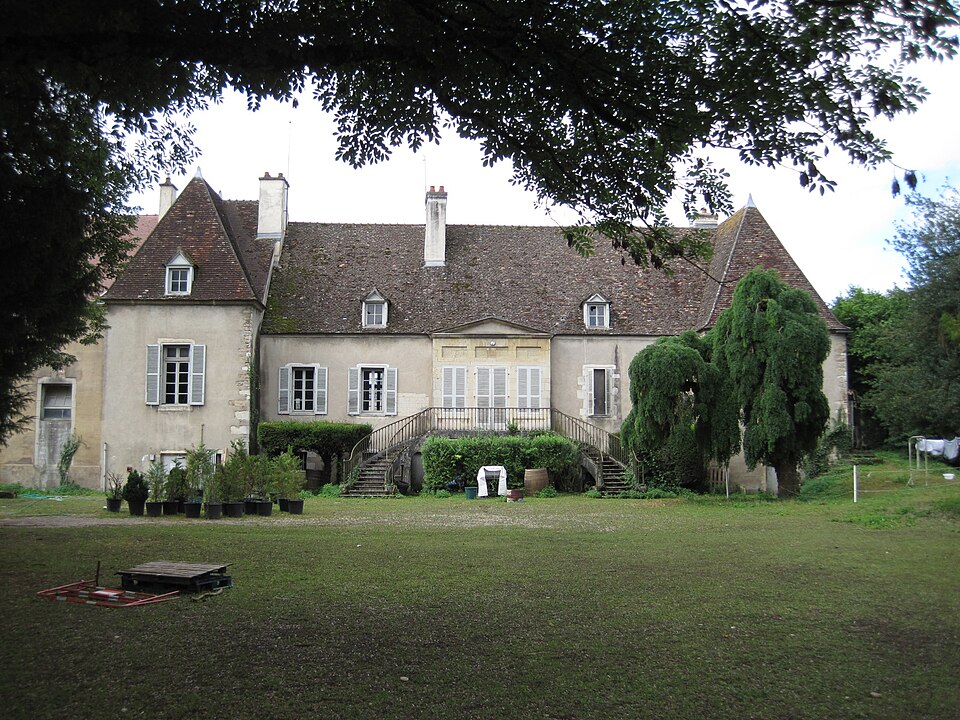
The Château Marmont, in Châtillon-sur-Seine (Côte-d'Or) — not to be confused with the Chateau Marmont, a Los Angeles hotel built in the 1920s — occupies the site of a 15th-century fortified building. The present neoclassical building is the surviving wing of a large 18th-century structure originally oriented north–south. Owned by Marshal Marmont (1774–1852) in the early 19th century, it became a major military stopover: Napoleon Bonaparte stayed there from 18 to 22 May 1795 and then on 12–13 March 1796, on his way to take command of the Army of Italy, and passed through again on 5 April 1805 heading for Milan for his coronation as King of Italy. Bought around 1824 by the local ironmaster Louis Maitre, it remained in that family until it was occupied and largely burned by Prussian troops in 1870. The current building, rebuilt from the surviving left wing and reoriented east–west, served as the starting point from which General Joffre launched the offensive of the First Battle of the Marne in September 1914; it was then occupied by American troops in 1917, among them the future president Harry Truman. Still privately owned, it stands in a large wooded park extending mainly over the territory of Sainte-Colombe-sur-Seine, and is not open to visitors.

Époque de construction
XVIIIᵉ siècle (1800)
Localisation
Châtillon-sur-Seine, COTE D'OR

Récit

Une histoire à travers les siècles

Le récit

L’histoire de Château Marmont

Propriété du maréchal de Marmont (1774-1852) au début du XIXe siècle, le château accueille Napoléon Bonaparte à plusieurs reprises (1795, 1796, 1805). Racheté vers 1824 par Louis Maitre, maître de forges, il est occupé et en grande partie incendié par les troupes prussiennes en 1870.

Lire la suiteRéduire

Reconstruit à partir de l'aile gauche subsistante, il sert de point de départ à l'offensive du général Joffre lors de la première bataille de la Marne (septembre 1914), puis est occupé par les troupes américaines en 1917.

L’architecture

Ce qu’il faut observer

Édifice néoclassique, aile préservée d'une importante construction du XVIIIe siècle initialement orientée nord-sud, reconstruite après l'incendie de 1870 selon une orientation est-ouest à partir de l'aile gauche subsistante.

Chronologie

Les étapes de construction

Les campagnes documentées qui ont façonné le monument, période par période.

Moyen Âge

  1. XVe siècle

    ÉvolutionDatation à confirmer

    Édifice fortifié d'origine sur le site.

Informations pratiques

Préparer sa visite

Conditions de visite non renseignées

Nous n’avons pas encore d’information vérifiée sur l’ouverture au public. Renseignez-vous auprès du site officiel ou de la mairie avant de vous déplacer.

Vous l’avez visité ?

Aucune photo pour l’instant : partagez la vôtre

Après relecture, votre photo illustrera cette fiche, créditée à votre nom. Haute définition bienvenue, jusqu’à 40 Mo.

Propriétaires et gestionnaires

Vous gérez Château Marmont ?

Horaires, tarifs et réservation manquent encore sur cette fiche. Transmettez-les et mettez le château en avant auprès des visiteurs qui préparent leur venue.

Nearby

Découvrir les alentours

View all castles →

Other castles in the same region

Patrimoine à proximité