En un regard
Le château en bref
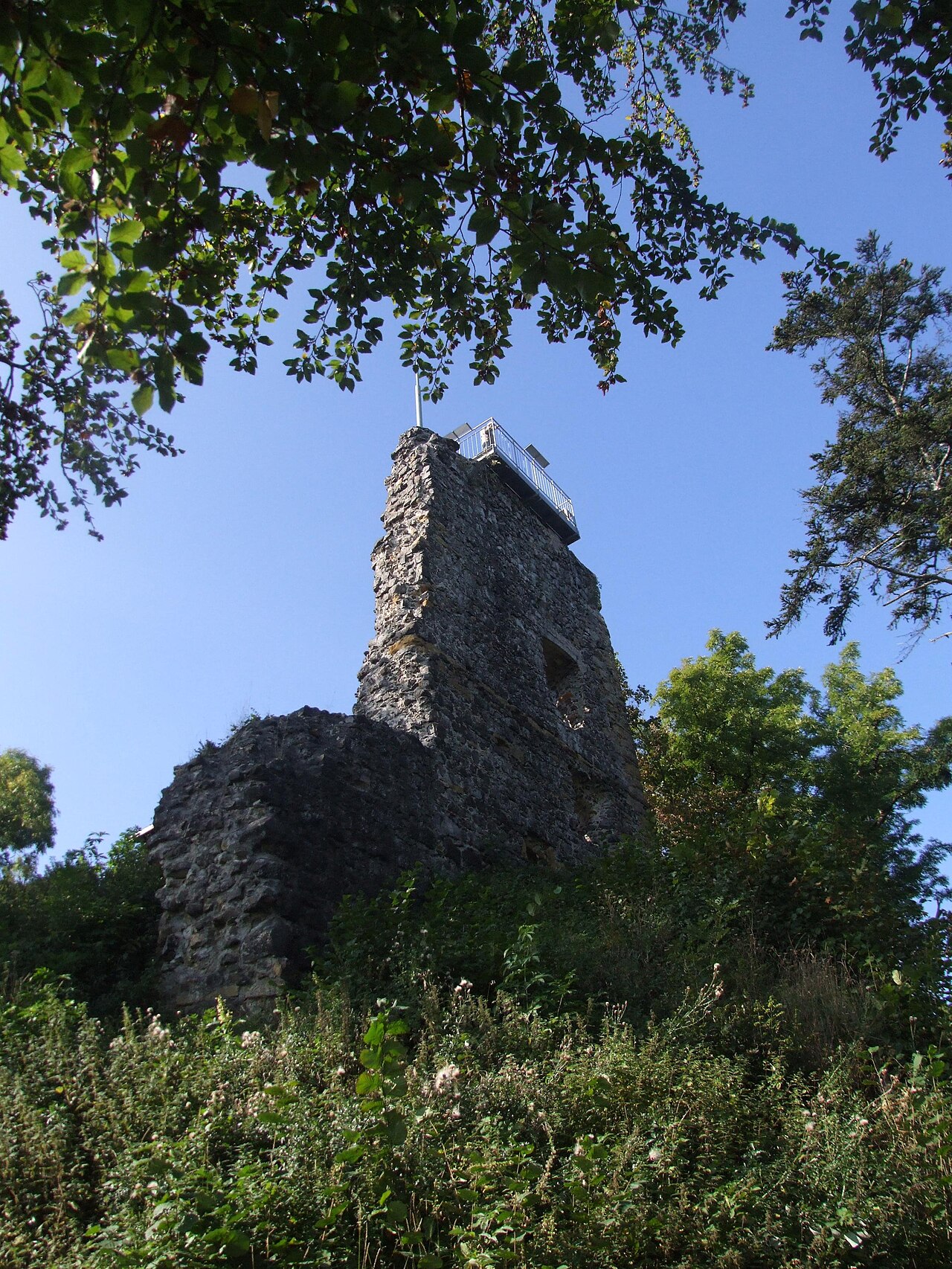
Hohenstoffeln, a former volcano with two summits rising to about 842 m east of Binningen (municipality of Hilzingen), once carried three medieval castles linked by a common enclosure: Hinterstoffeln on the northern summit, the oldest and strongest, Vorderstoffeln on the southern summit, and Mittelstoffeln in the saddle between them. A castle of Stoffeln is mentioned in 1034 and again in 1056, the year in which Bishop Gebhard of Regensburg is said to have been held there for plotting against the Emperor Henry III. The lords of Stoffeln, and later other lineages such as the Reischach, held the three fortresses, all of which were imperial fiefs; from the end of the sixteenth century the Hornstein family established itself there. During the Thirty Years' War, the site served as a prison for the Huguenot leader René du Puy-Montbrun, who escaped in early 1633. In reprisal, the Rhinegrave Otto Ludwig besieged the mountain in July 1633 with some 8,000 Swedish and Württemberg troops and heavy artillery. The castles were set on fire, and the peasants were then obliged to tear down the walls. Quarrying basalt on the northern flank until 1939 destroyed further remains; the writer Ludwig Finckh campaigned for the protection of the mountain, which has been a nature reserve since 1941. Only remnants of walls survive, most notably at Vorderstoffeln, reachable on foot from Weiterdingen.