En un regard
Le château en bref
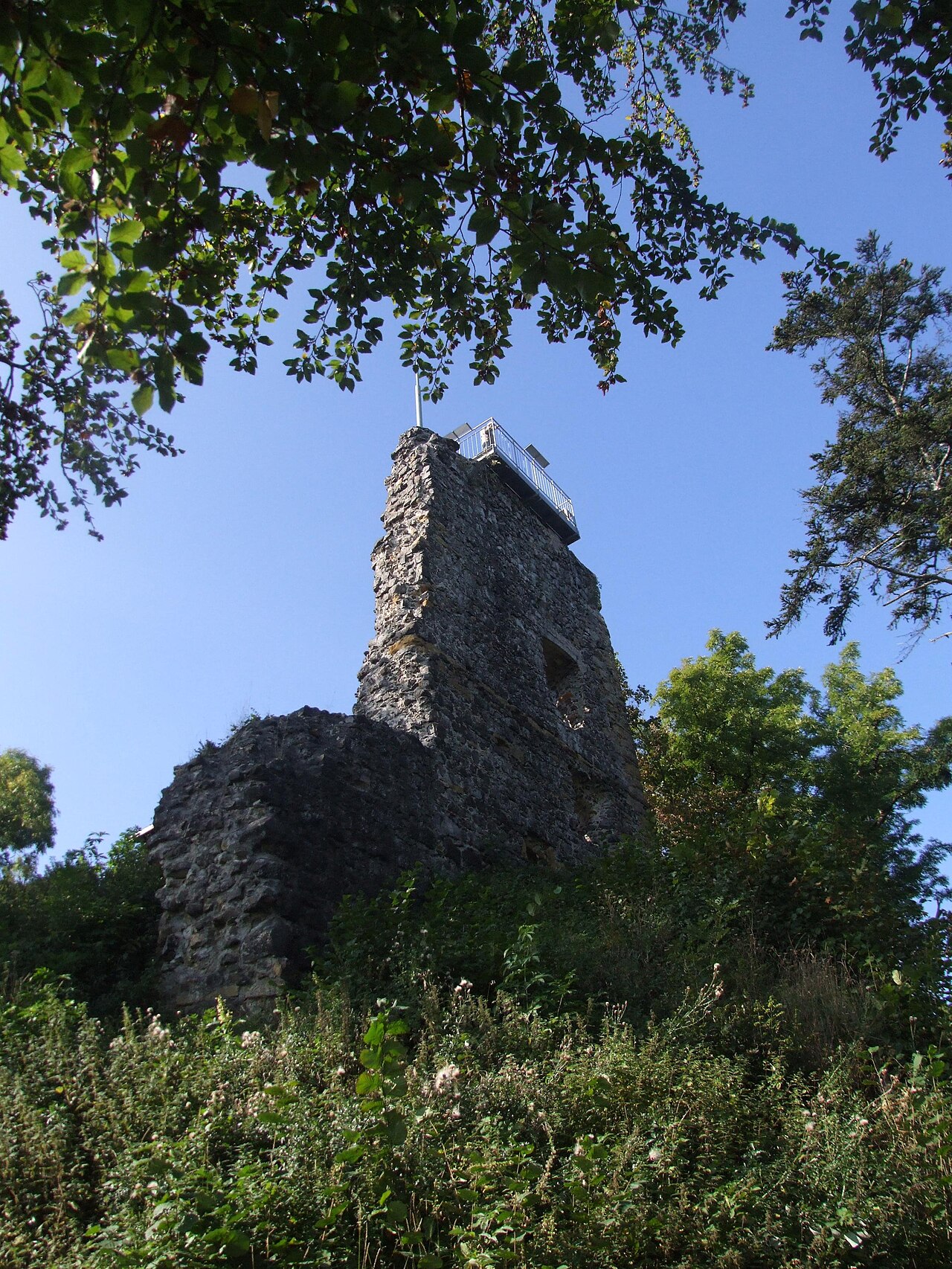
The remains of Rosenegg Castle occupy a small rocky cone of about 538 m on the northern slope of Mount Rosenegg, one of the hills of the Hegau, in the north-west of the municipal area of Rielasingen-Worblingen, between Rielasingen and Gottmadingen. The castle was probably built in the first half of the 13th century. It was the seat of the barons of Rosenegg, a family of free lords attested from Heinrich (mentioned between 1248 and 1262), who held the fortress as a fief from the Abbey of Reichenau, together with the village of Rielasingen. The family extended its possessions along the Rhine as far as the present-day Swiss cantons of Schaffhausen, Thurgau, Zurich and Aargau. In the 14th century, a division between brothers passed a share of the inheritance, through marriage, to the lords of Lupfen, who acquired the remainder when the line died out in 1480. Destroyed in 1499 during the Swabian War, the castle was soon rebuilt. After the extinction of the Lupfen line at the beginning of the 17th century, it passed to the Prince-Bishopric of Constance. During the Thirty Years' War, it was occupied and then ruined in 1638–1639 by the Württemberg garrison of the nearby Hohentwiel, and its stones were partly reused. Only remnants of walls survive today, just behind the Rosenegg mountain inn, reachable by road.