En un regard
Le château en bref
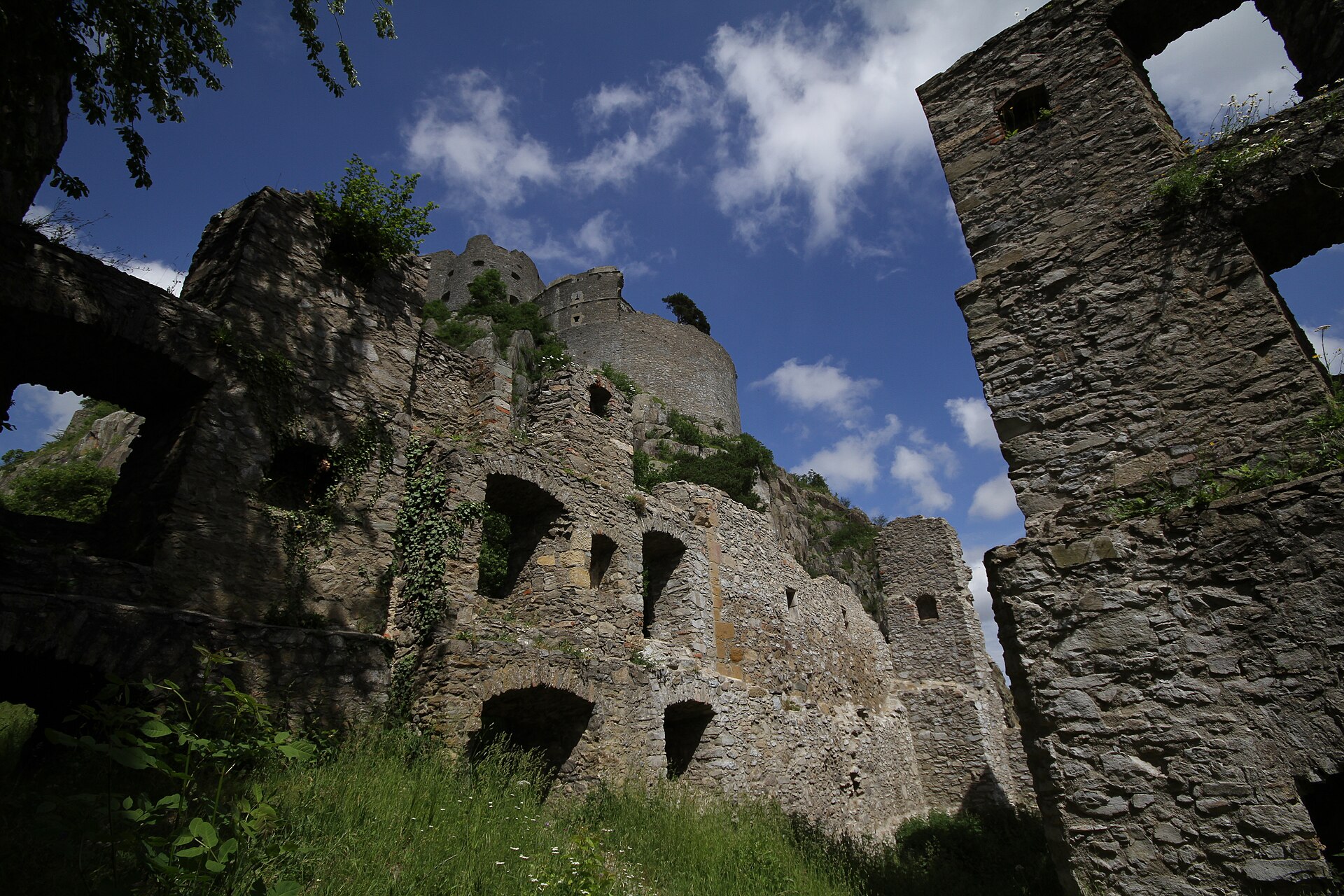
The ruins of Hohentwiel fortress crown an ancient volcanic cone in the Hegau, rising some 260 m above the town of Singen, about ten kilometres from Lake Constance. Covering nearly nine hectares, it is one of the largest fortress ruins in Germany. The summit, occupied since the Late Bronze Age, was fortified in 914 by Duke Burchard II of Swabia during his revolt against King Conrad I, who besieged it unsuccessfully in 915. Under Burchard III and his wife Hadwig, the site became a ducal residence in the 10th century, home to a St George's monastery founded around 970. It later declined to the status of a knights' castle and, from 1300, belonged to the Klingenberg family for seven generations. Duke Ulrich of Württemberg, who took refuge there in 1519, seized control of it and then purchased it in 1538; with his successor Christoph, he made it one of the seven state fortresses of Württemberg. Commanded by Konrad Widerholt, the stronghold withstood five sieges between 1635 and 1644 during the Thirty Years' War. It then served as a state prison, notably for the jurist Johann Jacob Moser. Surrendered without a fight to French troops in 1800, it was dismantled in 1800-1801. Managed by the Staatliche Schlösser und Gärten Baden-Württemberg, the ruin is open to visitors, with a visitor centre and permanent exhibition, and offers a wide panorama over the Hegau, the lake and the Alps.