En un regard
Le château en bref
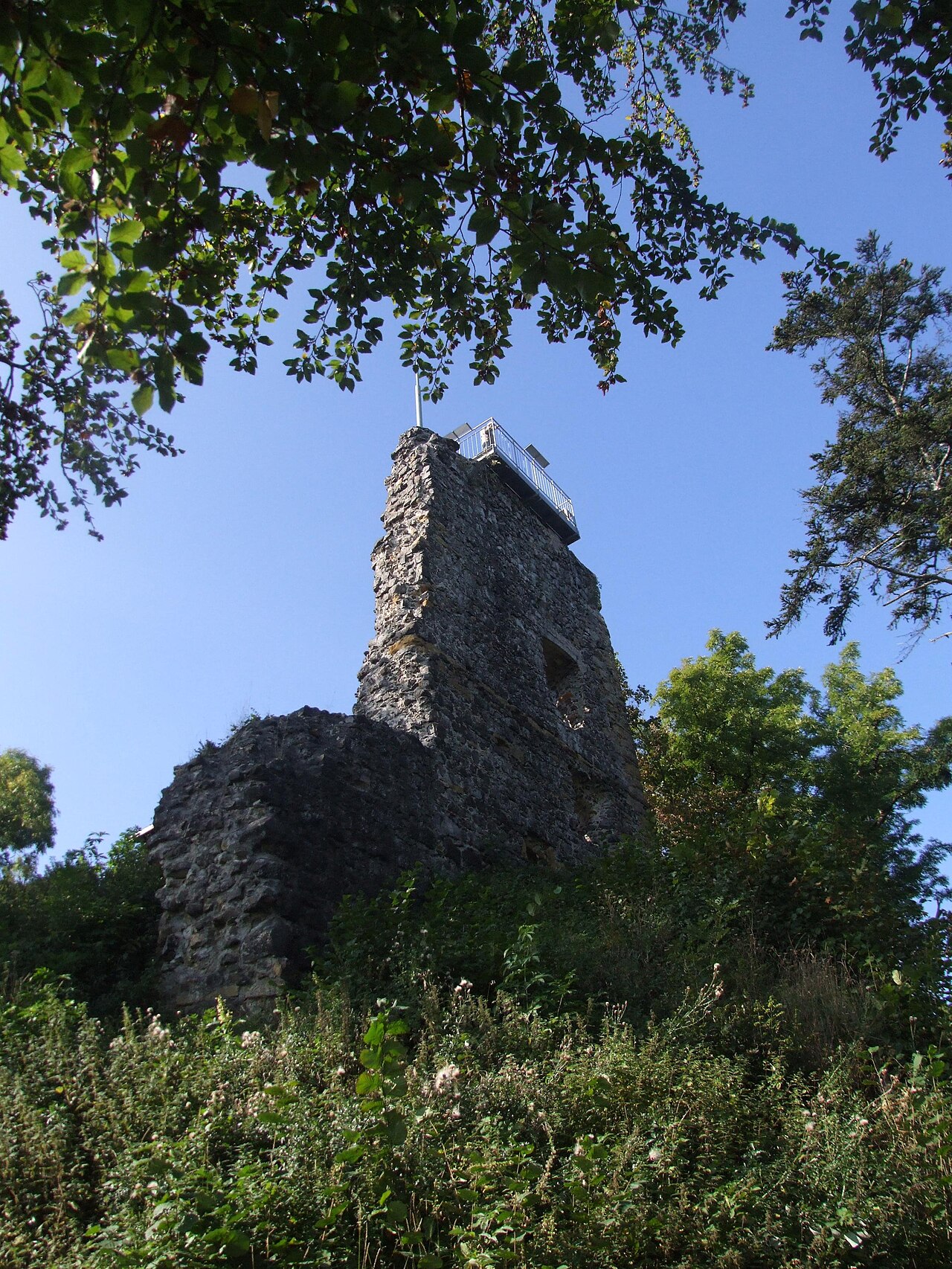
The ruins of Homburg Castle stand on a spur about 600 m above sea level, falling sheer above the village of Stahringen, a district of Radolfzell, in the Hegau, not far from the western shore of Lake Constance. In the eleventh century, the lords of Homburg, ministerials of the Bishop of Constance, built a fortified enclosure on deposits of glacial gravel. The site was easy to watch over but accessible by the gentle slope to the west, so it was protected on that side by a shield wall that was progressively thickened to nearly 3 m and faced with rusticated blocks of conglomerate. During the Swabian War of 1499, the castle was plundered and burned, then rebuilt and enlarged from 1502. In 1565, Wolf von Homburg ceded the lordship to his son-in-law Hans Konrad von Bodman and died the following year in Radolfzell, without an heir. In 1614, the village and castle passed to the Benedictine abbey of St Gall. Contested during the Thirty Years' War, the stronghold was set on fire in 1642 by Konrad Widerholt, commander of the Hohentwiel, and then served as a quarry: stones from it can be found in the farms below. The ruin passed in 1749 to the Bishop of Constance and, in 1810, to the Grand Duchy of Baden. A section of wall more than 11 m high survives, together with the massive shield wall, pierced by a gateway that opens onto the former courtyard.