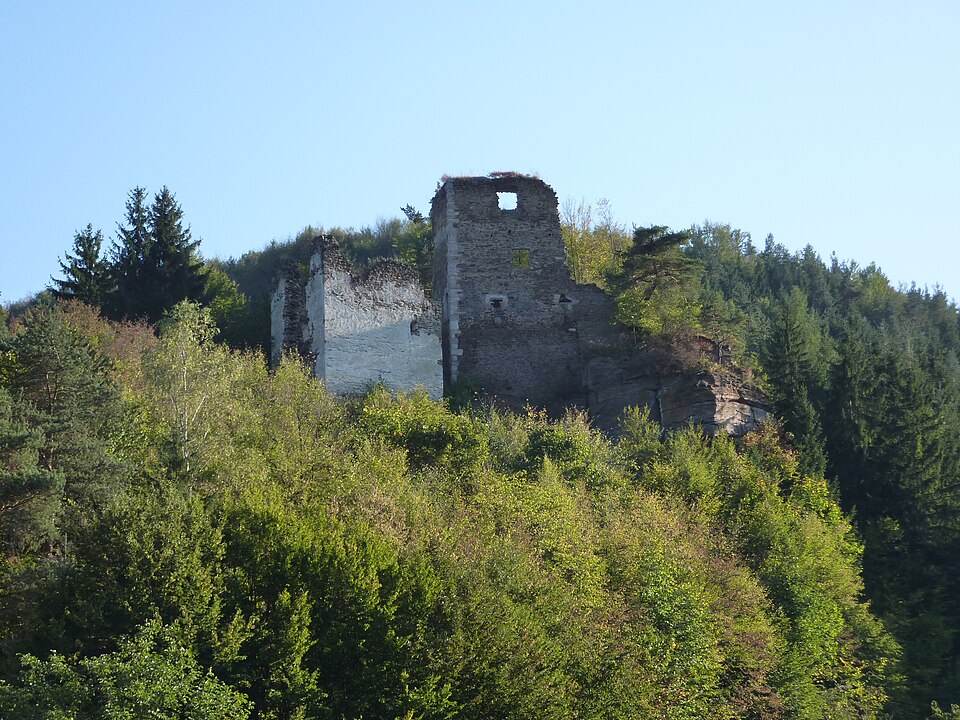
Neckarburg Ruin, Rottweil

Rottweil Landkreis Rottweil Allemagne

Neckarburg Ruin

The Neckarburg stands downstream of Rottweil, on an elongated hill almost entirely enclosed by a meander of the Neckar, at around 550 m above sea level, near Villingendorf.

Époque
VIIIᵉ siècle (793)
Préparer la visite
Photo : Harke · CC BY-SA 3.0 Proposer votre photo

En un regard

Le château en bref

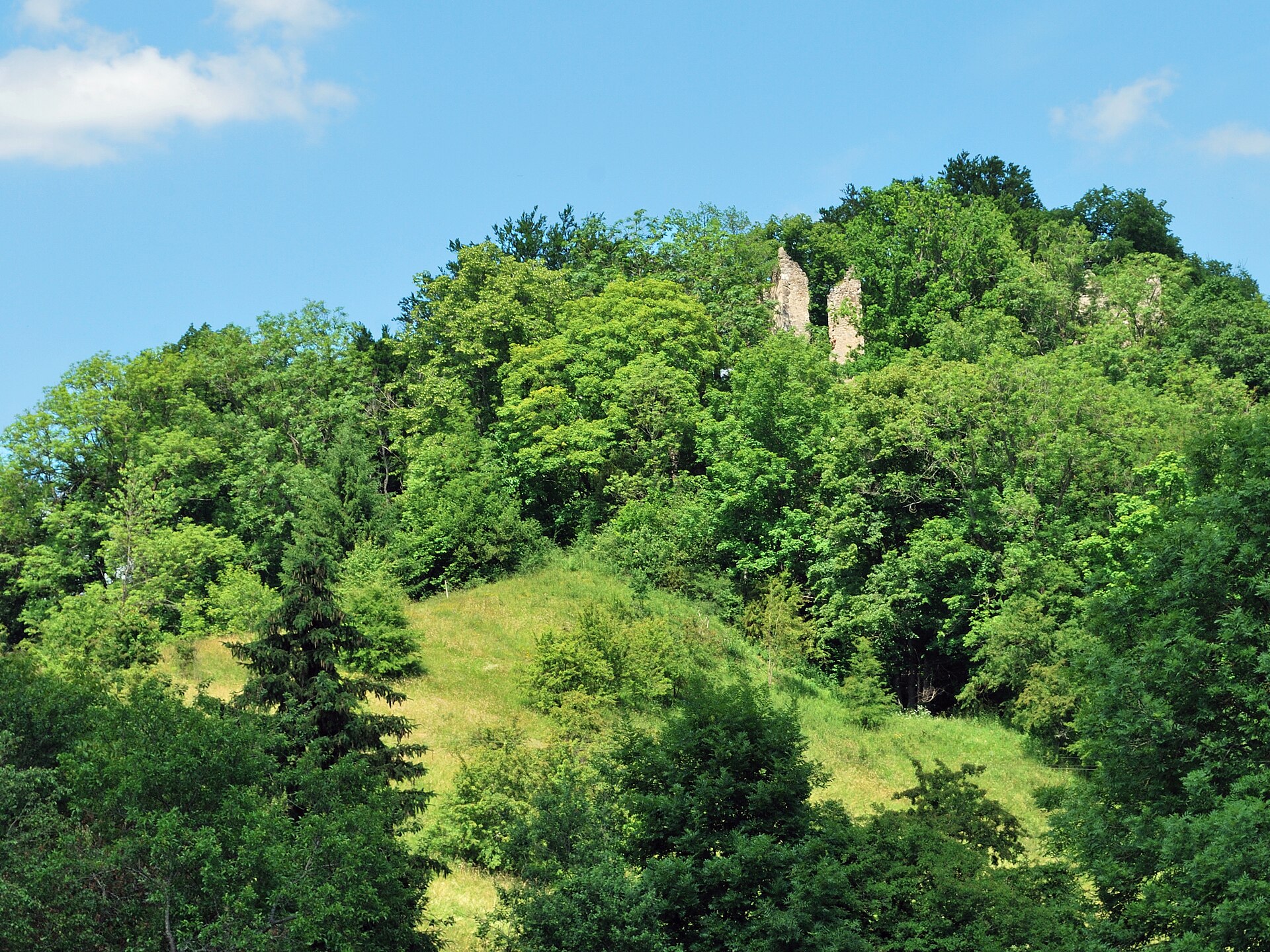
The Neckarburg stands downstream of Rottweil, on an elongated hill almost entirely enclosed by a meander of the Neckar, at around 550 m above sea level, near Villingendorf. It is considered the oldest castle site in the Rottweil district: a deed of 793 mentions ‘Nehhepurc’, which the Alemannic count Berthold gave to St Gall Abbey before receiving it back as a fief. The visible remains, however, belong to later periods. In the 14th century, the site was divided between an outer castle, held by the lords of Neuneck, and a rear castle with a tower, held by the lords of Reute, under the overlordship of the counts of Sulz and Hohenberg. Heavily damaged in 1379 during a private war, the rear castle was no more than a Burgstall by 1387. Acquired in 1580 by the Spreter family of Rottweil, the site received a three-towered residence, which was abandoned during the Thirty Years’ War. In the 18th century, the Abbey of St Georgen in the Black Forest acquired the estate and renovated the St Michael’s Chapel and the farm; since 1836, the ruin and the estate have belonged to the Counts of Bissingen-Nippenburg. The curtain walls, remains of a moat and defensive works survive, set within a nature reserve, as does St Michael’s Chapel.

À remarquer

Tous les éléments architecturaux
Époque de construction
VIIIᵉ siècle (793)
Localisation
Rottweil, Landkreis Rottweil
Usage actuel
ruine en réserve naturelle, domaine privé des comtes de Bissingen-Nippenburg

Pourquoi le découvrir

Deux raisons de découvrir Neckarburg Ruin

  1. Chapelle Saint-Michel au décor baroque

    Lire son histoire
  2. Méandre du Neckar classé réserve naturelle

    Parcourir la chronologie

Récit

Une histoire à travers les siècles

Le récit

L’histoire de Neckarburg Ruin

Mentionnée dès 793, la Neckarburg relève des comtes de Sulz à partir de 1279. Au XIVe siècle, les Neuneck et les Reute s'en partagent les deux parties. Endommagée en 1379, elle passe en 1580 aux Spreter, qui y élèvent une résidence, devenue inhabitable après la guerre de Trente Ans. L'abbaye de Saint-Georges l'acquiert au XVIIIe siècle, puis les comtes de Bissingen-Nippenburg en 1836.

Lire la suiteRéduire
Famille
comtes de Sulz à partir de 1279Source ↗
Famille
Spreter von Kreuzenstein 1580-XVIIe s.Source ↗
Famille
comtes de Bissingen-Nippenburg depuis 1836Source ↗

L’architecture

Ce qu’il faut observer

Château de hauteur sur une colline de méandre, divisé au XIVe siècle en château avant et château arrière. Restent des murs d'enceinte, des portions de fossé et de défenses. La chapelle Saint-Michel, attestée en 1275, a reçu un chœur vers 1500 et un décor baroque vers 1700.

Chronologie

Les étapes de construction

Les campagnes documentées qui ont façonné le monument, période par période.

Moyen Âge

  1. 793

    Construction

    Première mention en 793 sous le nom de « Nehhepurc » ; aucun vestige conservé de cette époque.

  2. 1379–1387

    Évolution

    Graves dommages lors d'une guerre privée en 1379 ; le château arrière est qualifié de Burgstall en 1387.

Informations pratiques

Préparer sa visite

Conditions de visite non renseignées

Nous n’avons pas encore d’information vérifiée sur l’ouverture au public. Renseignez-vous auprès du site officiel ou de la mairie avant de vous déplacer.

Vous l’avez visité ?

Partagez vos photos

Après relecture, votre photo illustrera cette fiche, créditée à votre nom. Haute définition bienvenue, jusqu’à 40 Mo.

Propriétaires et gestionnaires

Vous gérez Neckarburg Ruin ?

Horaires, tarifs et réservation manquent encore sur cette fiche. Transmettez-les et mettez le château en avant auprès des visiteurs qui préparent leur venue.