Le récit
L’histoire de Kleinsteinbach Castle Ruins
Vers 1100 : construction d'un château-tour sur le Schösslebuckel. Appartenance probable aux seigneurs de Remchingen. XIVe siècle : détruit, jamais relevé.
Pfinztal (Kleinsteinbach) Landkreis Karlsruhe Allemagne
East of Kleinsteinbach, a district of Pfinztal in the Karlsruhe district, the Schösslebuckel hill (175.6 m) carries the remains of a small medieval hilltop castle.
En un regard
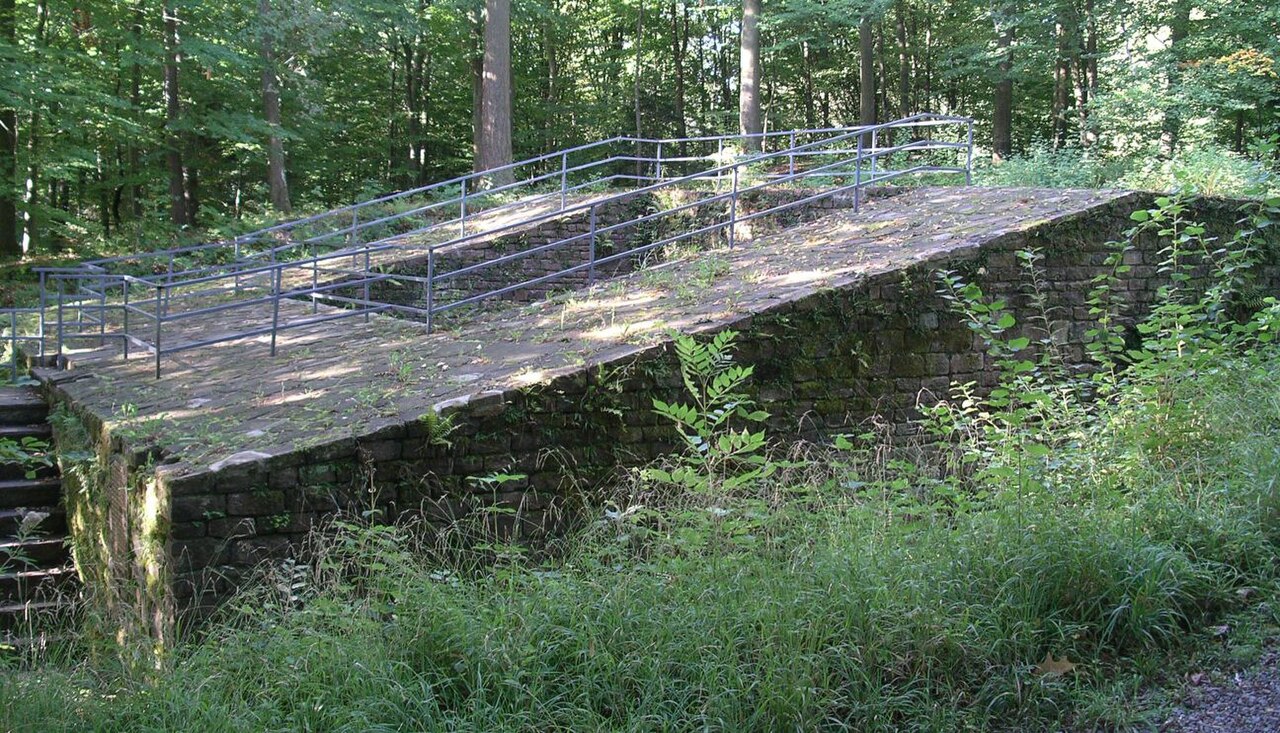
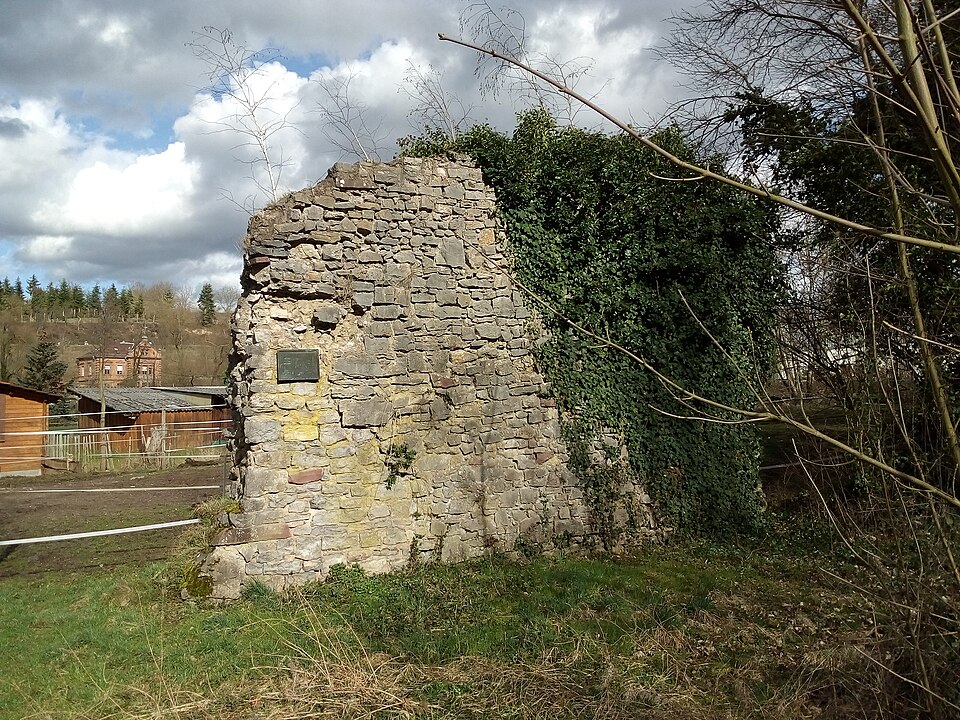
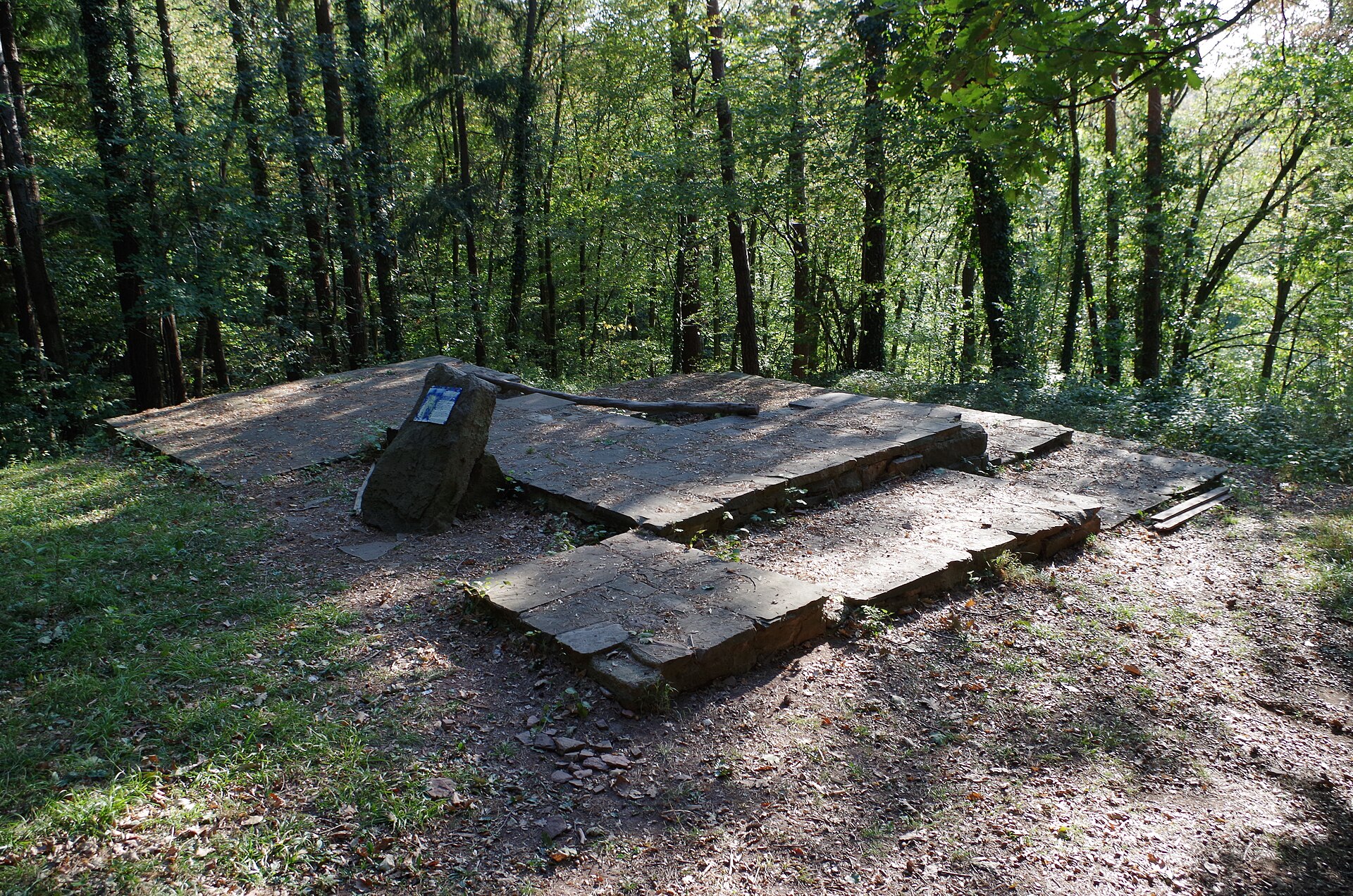
East of Kleinsteinbach, a district of Pfinztal in the Karlsruhe district, the Schösslebuckel hill (175.6 m) carries the remains of a small medieval hilltop castle. It was built around 1100 as a tower castle: its core was a keep that also served as a dwelling, on a square plan of about 10.5 m per side. The natural terrain did much of the defensive work. On the valley side a steep slope protected the site. On the side of the ridge spur, where an attacker could approach on level ground, three successive ditches cut the hill off from the plateau. The builders are not known for certain, but the castle is thought to have belonged to the lords of Remchingen, a noble family of the Pfinz and Enz area. It was destroyed in the 14th century and never rebuilt. Today little survives apart from traces of the tower and the earthworks of the ditches, which are still visible in the woodland above the Pfinz valley.
Pourquoi le découvrir
Récit
Le récit
Vers 1100 : construction d'un château-tour sur le Schösslebuckel. Appartenance probable aux seigneurs de Remchingen. XIVe siècle : détruit, jamais relevé.
L’architecture
Château-tour : donjon-logis carré de 10,5 × 10,5 m, escarpement côté vallée et trois fossés côté éperon ; seuls des vestiges subsistent.
Aujourd’hui
Ruine sans usage documenté.
Chronologie
Les campagnes documentées qui ont façonné le monument, période par période.
Informations pratiques
Nous n’avons pas encore d’information vérifiée sur l’ouverture au public. Renseignez-vous auprès du site officiel ou de la mairie avant de vous déplacer.
Vous l’avez visité ?
Après relecture, votre photo illustrera cette fiche, créditée à votre nom. Haute définition bienvenue, jusqu’à 40 Mo.
Propriétaires et gestionnaires
Horaires, tarifs et réservation manquent encore sur cette fiche. Transmettez-les et mettez le château en avant auprès des visiteurs qui préparent leur venue.
Nearby