Burgstall sur une étroite crête du Jura souabe à 722 m d’altitude
Former Windeck Castle (Neidlingen)
Architecture, patrimoine et histoire · Allemagne entière
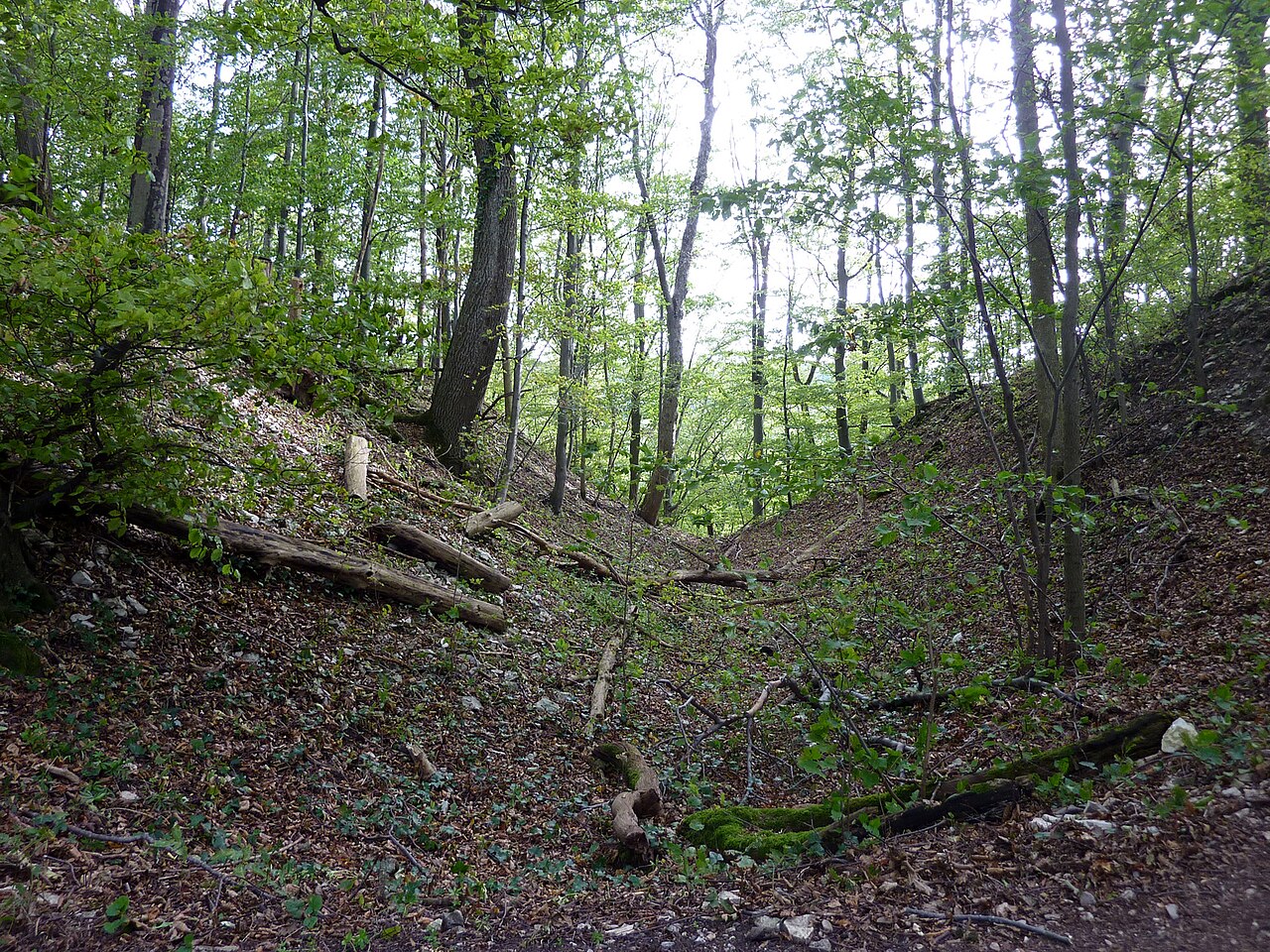
Perched at 722 metres on a narrow ridge of the Swabian Jura, about one kilometre east-northeast of the village of Neidlingen, the former Windeck Castle is today no more than a Burgstall, the site of a vanished castle. No masonry remains visible: two ditches cut into rock and earth still betray the presence of the medieval fortress. Windeck was in all likelihood an outwork or small secondary fortification of the neighbouring Merkenberg Castle, probably founded around 1200 by the Counts of Aichelberg and passed to Württemberg in the 1330s. Both sites shared the same fate and disappeared between the 14th and 15th centuries. For walkers, the wooded ridge overlooking the Lindach valley offers a discreet but authentic reading of the medieval defensive system along the edge of the Alb, best combined with a visit to the nearby sites of Merkenberg and the spectacular Reussenstein Castle.
⌖
NeidlingenAllemagne entière
♜
Moyen Âge (avant le XIVe siècle)Période de construction
Préparer votre visite
Toutes les informations pour organiser votre venue au Former Windeck Castle (Neidlingen).
Pourquoi visiter Former Windeck Castle (Neidlingen) ?
Deux fossés défensifs encore visibles dans le terrain
Ouvrage annexe probable du château de Merkenberg, disparu avec lui aux XIVe-XVe siècles
L’histoire de Former Windeck Castle (Neidlingen)
Burg Windeck, au-dessus de Neidlingen (Landkreis Esslingen), était probablement un ouvrage annexe (Vor- ou Nebenburg) du château de Merkenberg. Celui-ci fut sans doute fondé vers 1200 par le comte Egino d’Aichelberg et apparaît dans les sources en 1247 avec les frères Diepold et Ulrich de Merckenberg ; la seigneurie passa au Wurtemberg entre 1334 et 1339, après quoi le château fut laissé à l’abandon et n’était plus qu’un Burgstall en 1535. Windeck disparut avec Merkenberg au cours des XIVe-XVe siècles. Aucune date de construction propre à Windeck n’est documentée.
Ce qu’il faut observer
Château de hauteur (Höhenburg) implanté sur une crête étroite à 722,6 m d’altitude. Seul le Burgstall subsiste : deux fossés (Burggräben) taillés en travers de la crête sont encore lisibles dans le terrain. Aucun vestige maçonné n’est signalé.
Aujourd’hui
Propriété et usages actuels
Site archéologique (Burgstall) sans vestiges bâtis ; aucun usage événementiel documenté.
Les étapes de construction
Les principales campagnes documentées qui ont façonné le monument au fil des siècles.
- Datation à confirmerMoyen Âge (avant le XIVe siècle)Construction
Édification d’un petit château de crête, probablement ouvrage annexe du château de Merkenberg (fondé vers 1200) ; date précise inconnue.
Nearby
View all castles →