En un regard
Le château en bref
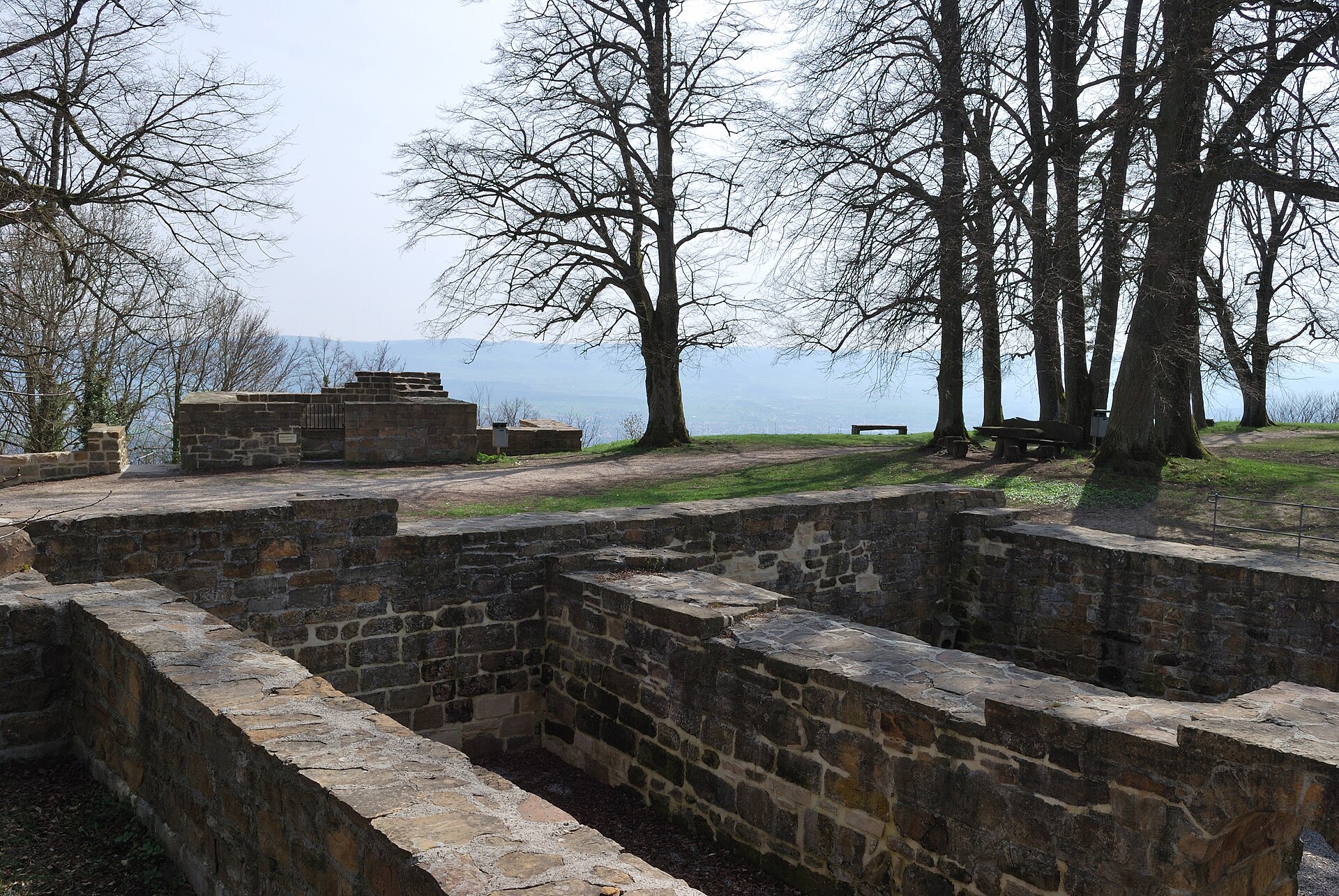
On the conical summit of the Hohenstaufen, 684 metres above sea level and above the district of Göppingen of the same name, stood the ancestral castle of the Staufer (Hohenstaufen) dynasty. The summit was already inhabited in the Bronze Age. Around 1070 Frederick I of Swabia turned a simpler fortification into a castle, a family allodial holding that predated his ducal title of 1079. Frederick Barbarossa is recorded here in 1181, and Queen Irene, widow of Philip of Swabia, died here in 1208. Having become an imperial castle after the fall of the Staufer, besieged in the 14th century and passed to Württemberg, it was taken, plundered and set on fire by the rebellious peasants at the end of April 1525, then used as a quarry for Göppingen Castle from 1555 onwards. All that remains are the foundations of an elongated oval plan, divided into a main castle and an outer bailey, with a keep about ten metres square and rusticated (bossed) stones, consolidated up to 2010. The site, on the Staufer Road, offers a memorial stele and a wide panorama; a documentation room on the history of the Staufer is located at the foot of the mountain.