En un regard
Le château en bref
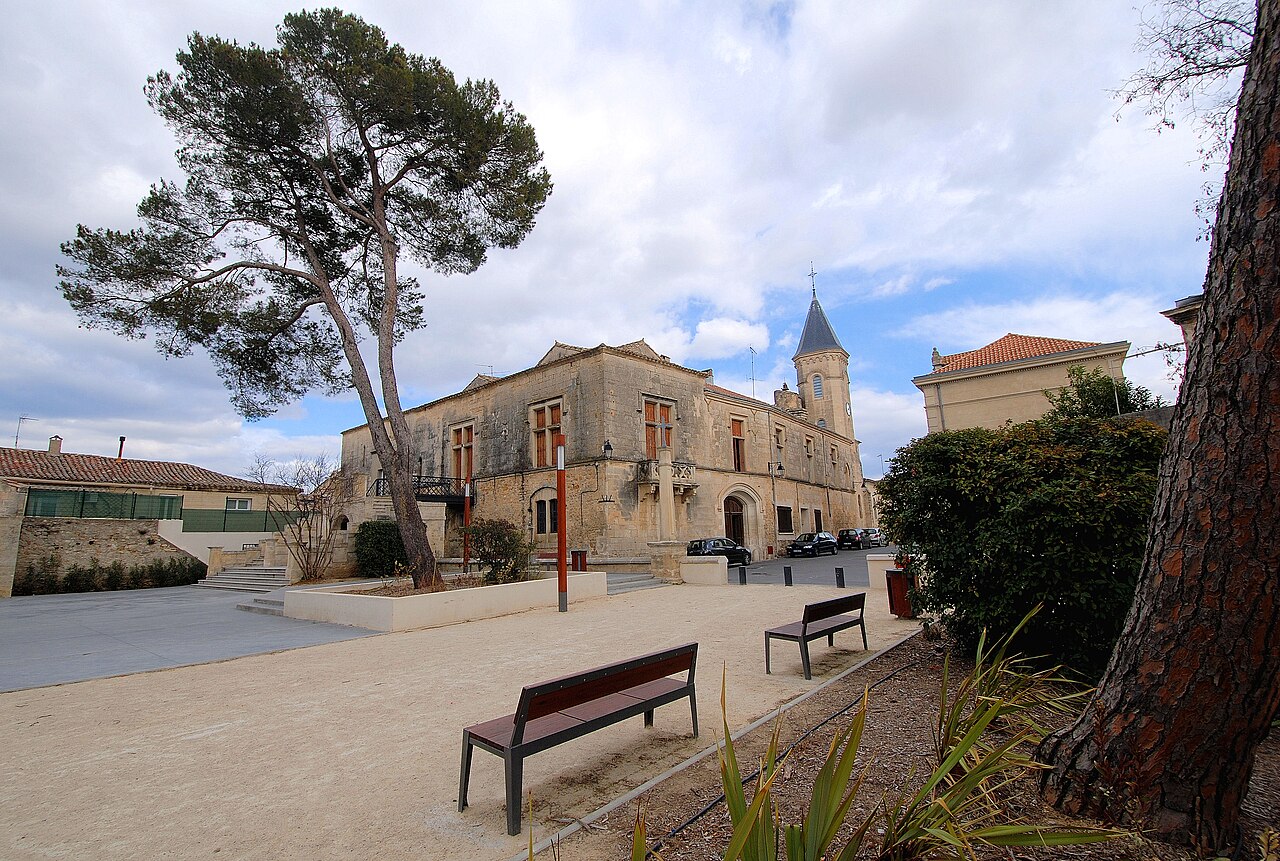
East of Montpellier, the Grammont estate owes its name to the religious of the Order of Grandmont, who settled here in 1174 on lands belonging to the chapter of Maguelone. They built the priory of Notre-Dame-de-Montaubérou, whose chapel received a new chevet around 1225, and a medieval chapter house survives. Battered during the Wars of Religion, the priory passed in the 18th century to an ecclesiastical institution in Montpellier, before being sold as national property in 1790.
The 19th century turned it into a residence: the western wing was rebuilt in the first quarter of the century, then the estate was bought in 1867 by Étienne Bouisson, professor at the faculty of medicine. His widow, Amélie Bertrand, bequeathed it to the faculty in 1893; it was then that a new Neo-Gothic chapel (1895–1897) was built, the work of the architect Pierre Arribat, decorated with sculptures by Auguste Baussan and stained-glass windows by Champigneulle. The site then housed child refugees in 1918, and then a preventorium from 1921 to 1979.
Today owned by the city, Grammont covers nearly 90 hectares: the château serves as the wedding room, and the estate brings together cultural and sports facilities around a park where a cedar of Lebanon planted around 1810 stands.