En un regard
Le château en bref
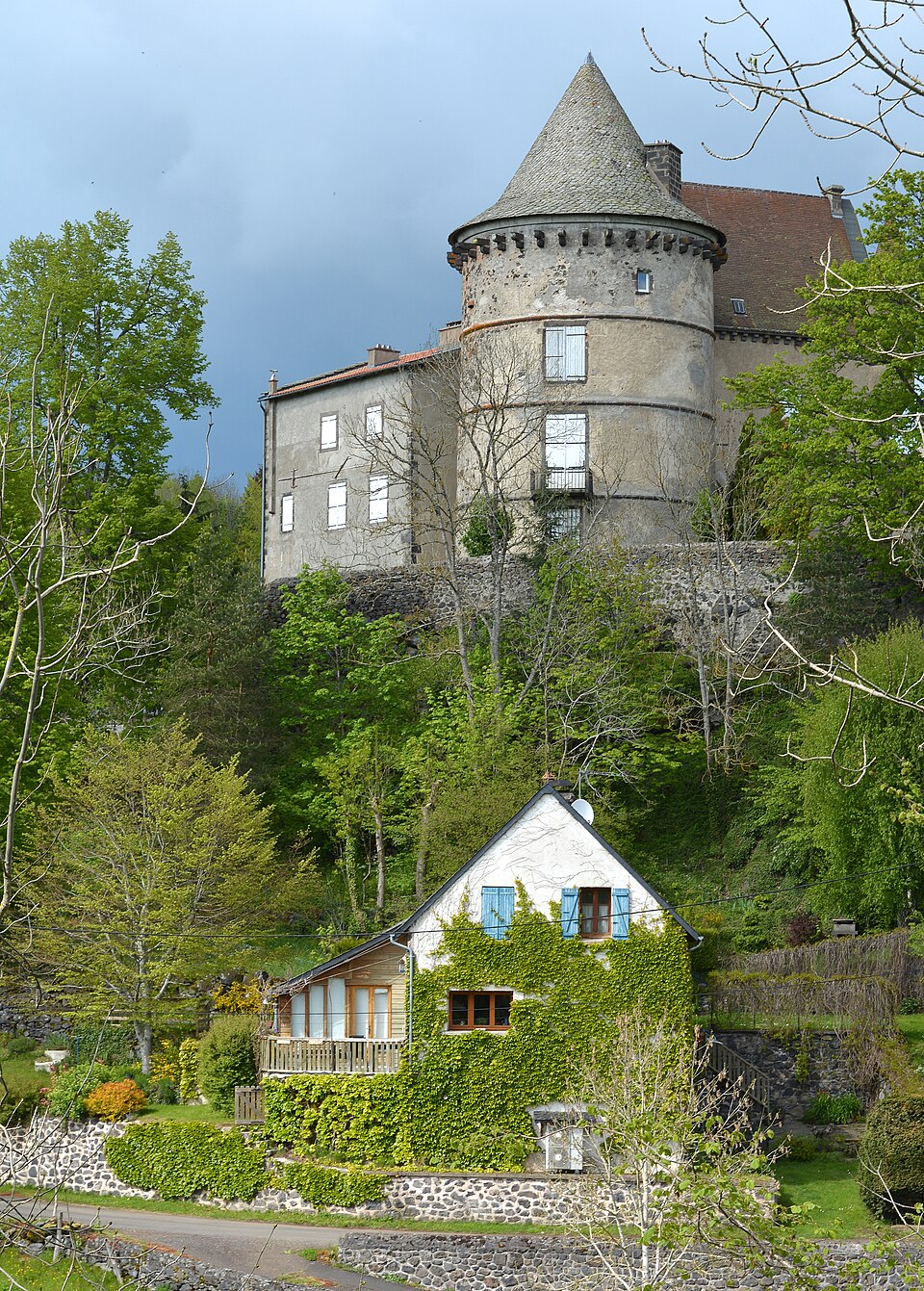
The Château de la Canière, a late nineteenth-century residence, is located in the commune of Thuret, Puy-de-Dôme.
The present Château de la Canière was built in 1889 by the Bérard de Chazelles family to house the collections of the French chemist Antoine Lavoisier. A member of the Académie des sciences, Antoine Laurent Lavoisier (1743–1794) is considered the father of modern chemistry. He was guillotined in Paris during the Terror, on 8 May 1794, and all his possessions were recovered and preserved by his widow, Marie-Anne Pierrette Paulze (1758-1836).
Madame Lavoisier's brother, Joseph Paulze d'Ivoy (1755–guillotined in 1793), had two children: Jean, who became a Councillor of State and prefect, and Hélène, who married Marie Gabriel Vital Ramey de Sugny. One of their daughters, Gabrielle, married Pierre-Léon Bérard de Chazelles (1804-1876), deputy for Puy-de-Dôme and mayor of Clermont-Ferrand, in 1834, and brought the Lavoisier memorabilia into this family.
Before the present château was built by the architect Émile Camut, who was among other things the designer of the Établissement hydrothermal du Mont-Dore, at the request of Étienne Bérard de Chazelles (1838-1923), prefect and general councillor of Puy-de-Dôme, there stood a three-storey residence, rectangular in shape, with two projecting wings surmounted by pediments. This building, dating from 1808, was designed by the architect Pierre Rousseau, who produced many buildings in Clermont-Ferrand (notably the right wing of the Hôtel-Dieu, the Halle aux blés, the Ursulines chapel, etc.). Traces of other structures dating back to the fifteenth century also indicate the presence of an earlier château.
The property changed hands several times, including with the banker John Law de Lauriston, inventor of the banknote, who stayed there for ten months in 1720. The Chazelles family, originally from Aigueperse, remained owners of the estate for two centuries. The last of the name, Magdeleine Bérard de Chazelles (1884–1944), served as a nurse at the front during the First World War. During the Second World War she joined a Resistance network and sheltered English airmen. Denounced, she was arrested by the Gestapo in 1943 and deported to the Ravensbrück camp, where she died in 1944.
In 1925, the Lavoisier works kept at the château were dispersed among various museums, including the Musée Lecoq in Clermont-Ferrand and the Conservatoire national des arts et métiers in Paris. David's famous painting of the Lavoisiers is now held at the Metropolitan Museum of Art in New York.
During the 1980s and 1990s, the château was a centre for the association Le Patriarche.
After being completely renovated to become the first 5-star luxury hotel in Auvergne in 2011, the château once again became a private residence.
The new owners have opened the château for rental.