En un regard
Le château en bref
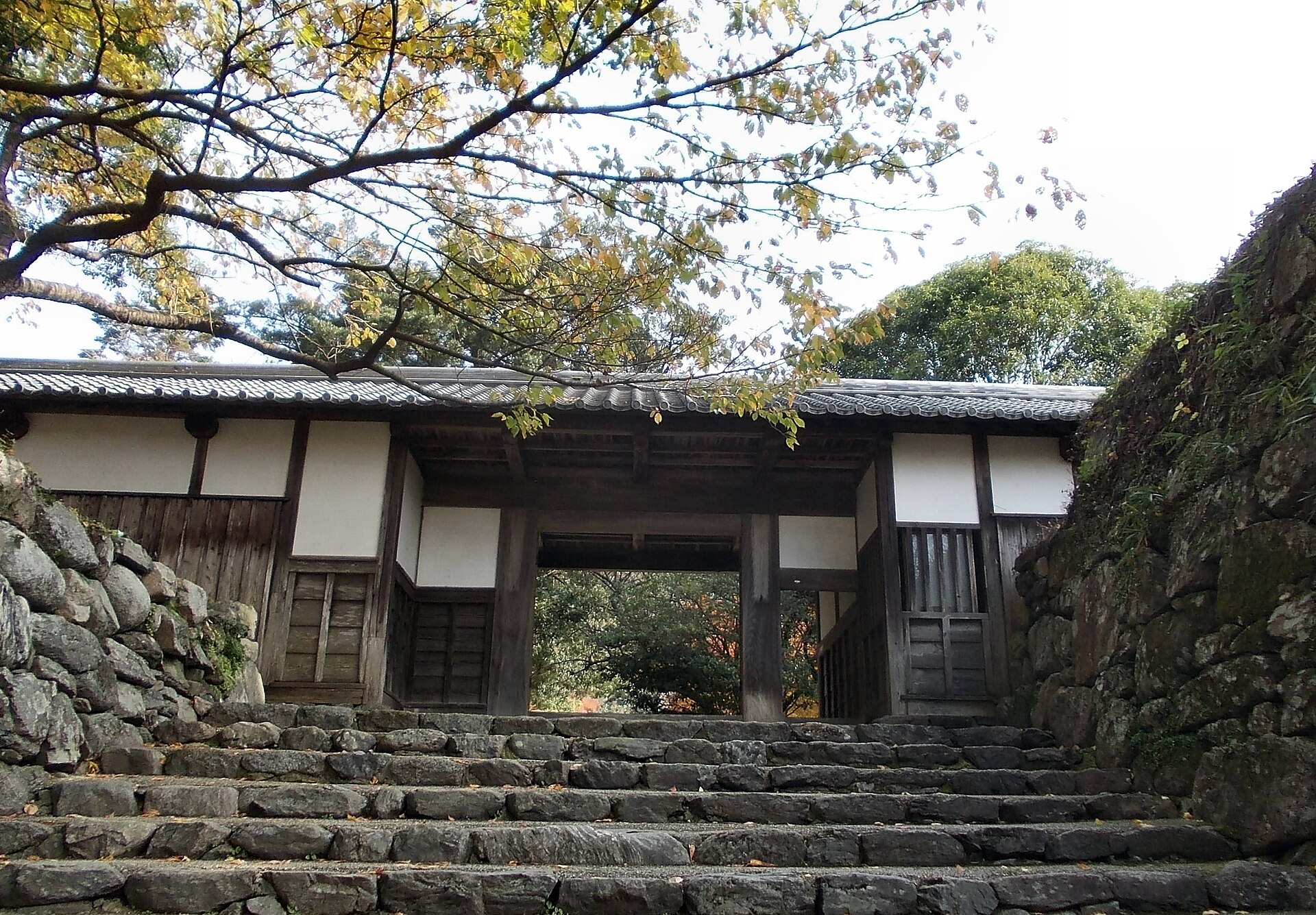
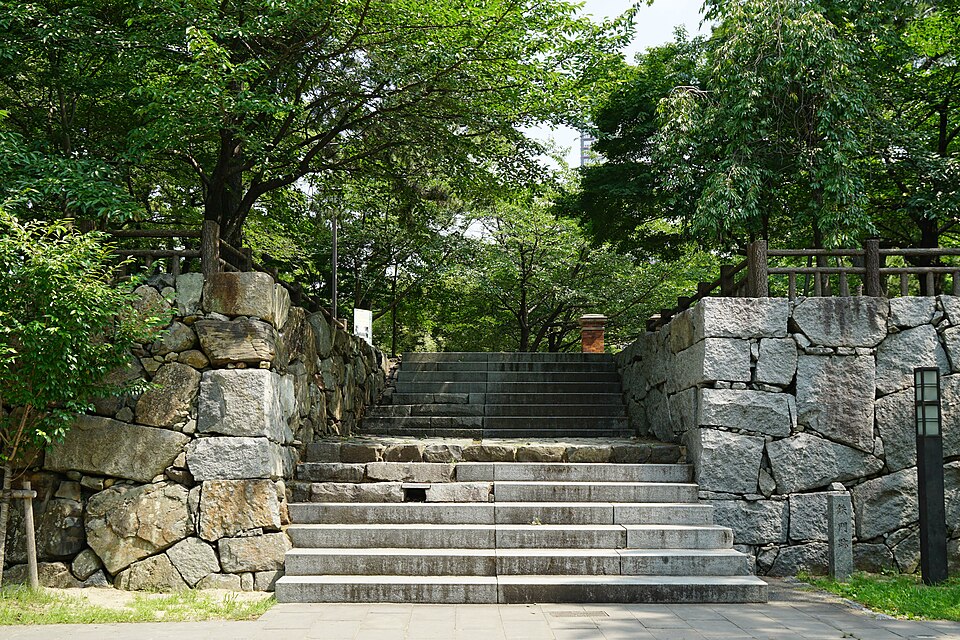
Akizuki Castle is not a ridge-top fortress but the seat of a small domain, set at the foot of the mountains in the valley that had already been the power base of the Akizuki clan. The clan dominated the region from the mountain castle of Kosho until Hideyoshi, in 1587, transferred Akizuki Tanezane to Takanabe. In 1623 Kuroda Nagamasa left by will a domain of 50,000 koku to his third son Nagaoki, who arrived the following year. Rather than building from scratch, Nagaoki, according to the City of Asakura, took over the former residence of Kuroda Naoyuki, which had stood empty for more than ten years. The complex is organised in two sectors: the ceremonial and administrative palace, known as the omote-goten, whose site is occupied by a municipal junior high school, and the private palace, the oku-goten, today the preserved part of the site. The front is defended by moats, stone walls and turrets, with only two entrances. Two wooden gates have survived. The Kuromon, a gate with two rear posts and a tiled roof, dates by its type from the early Edo period and is reputed to reuse the rear gate of Kosho Castle; in 1880 it was moved to the approach of the Suiyū shrine dedicated to Nagaoki. The Nagaya-mon, which remains in place, was dated to 1850 during its restoration. Around it, the castle town of Akizuki forms a district protected as a group of traditional buildings, where the Kuroda domain lasted until the Meiji era.
- Époque de construction
- XVIIᵉ siècle (1624)
- Localisation
- Asakura, Préfecture de Fukuoka
- Protection
- Site historique préfectoral (県指定史跡) (1980)
- Accès au public
- Ouvert au public
- État
- Vestiges
- Usage actuel
- sanctuaire, établissement scolaire, site de promenade