En un regard
Le château en bref
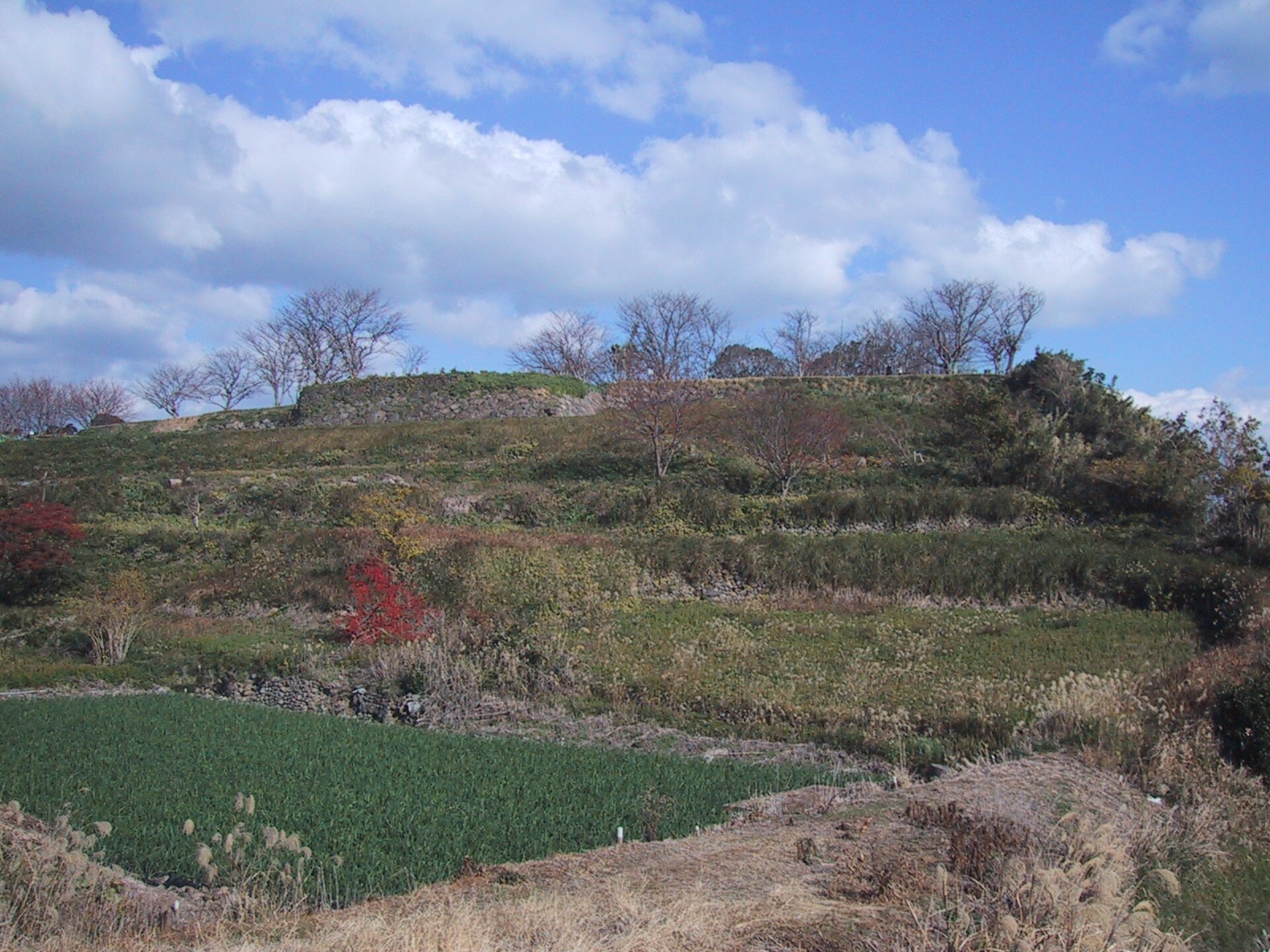
The site of Hara Castle occupies, in the south of the Shimabara Peninsula, high ground surrounded by the sea on three sides, with a marsh to the west, over a perimeter of about four kilometers. Its chronology remains debated: the national heritage notice mentions a foundation by the Arima in the Meiō era, at the end of the fifteenth century, while the official World Heritage site reports construction from 1598 to 1604, based on Jesuit reports. It was abandoned in 1616 or 1618, depending on the publication, following the arrival of the Matsukura and the move of the domain's center to Shimabara. The site's fame rests above all on the Shimabara-Amakusa Rebellion: toward the end of 1637, Christian insurgents from Shimabara and Amakusa, under Masuda Tokisada, better known as Amakusa Shirō, entrenched themselves here and held out for about four months against an army of some 120,000 men. Itakura Shigemasa lost his life there; Matsudaira Nobutsuna then took the stronghold. The number of those besieged ranges from more than 20,000 to nearly 30,000, and almost all were killed. The shogunate had the buildings and stone walls destroyed. Excavations have unearthed semi-underground shelters, human remains and devotional objects, including 36 crosses recorded as of March 2014, as well as a vast fortified entrance. These remains, which document the origins of Christian clandestinity, justify its place in the property inscribed on the World Heritage List in 2018.
- Époque de construction
- 1598–1604
- Localisation
- Minamishimabara, Préfecture de Nagasaki
- Protection
- Site historique national (史跡) (1938)
- Accès au public
- Ouvert au public
- État
- En ruine
- Usage actuel
- site archéologique, patrimoine mondial, parc paysager