En un regard
Le château en bref
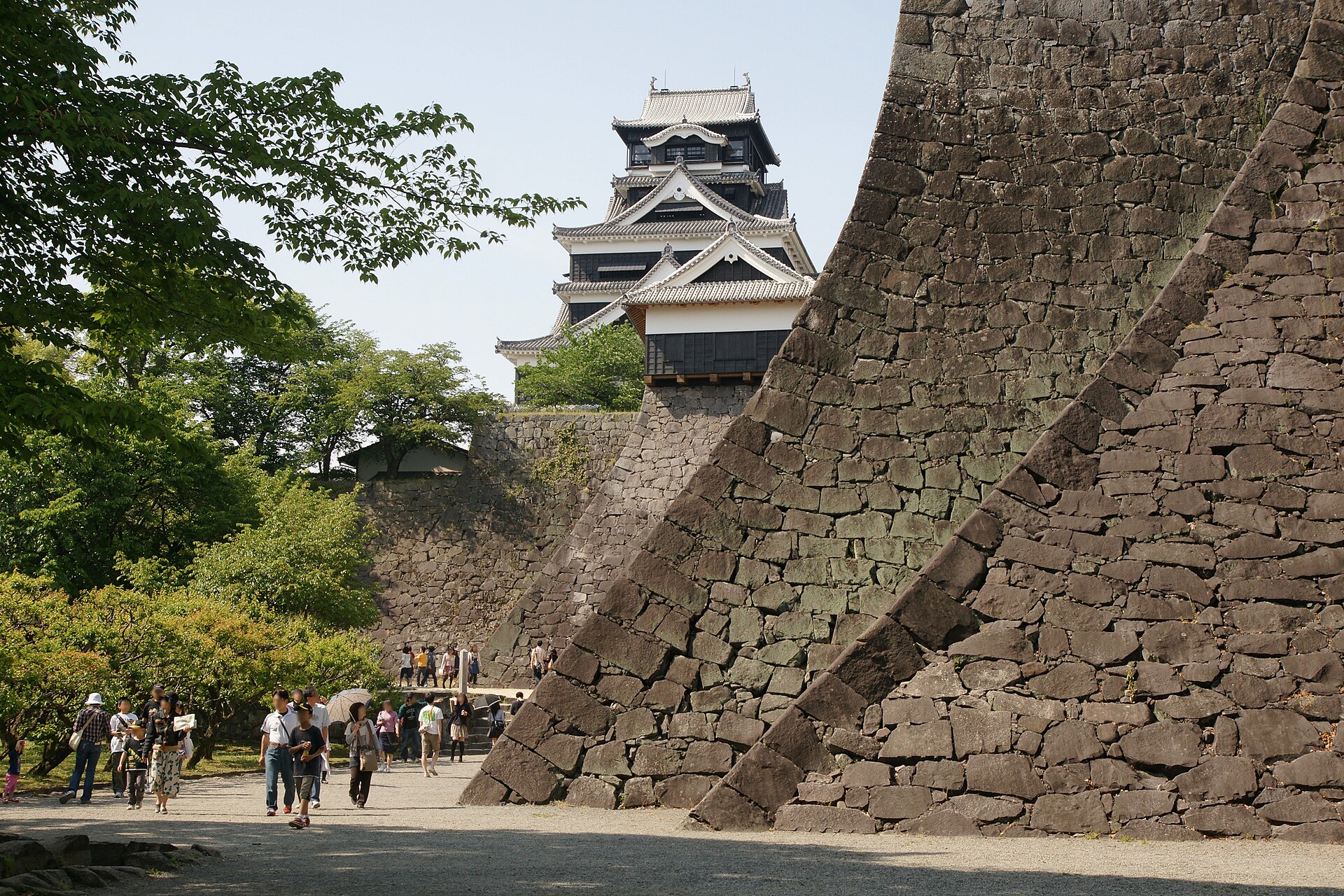
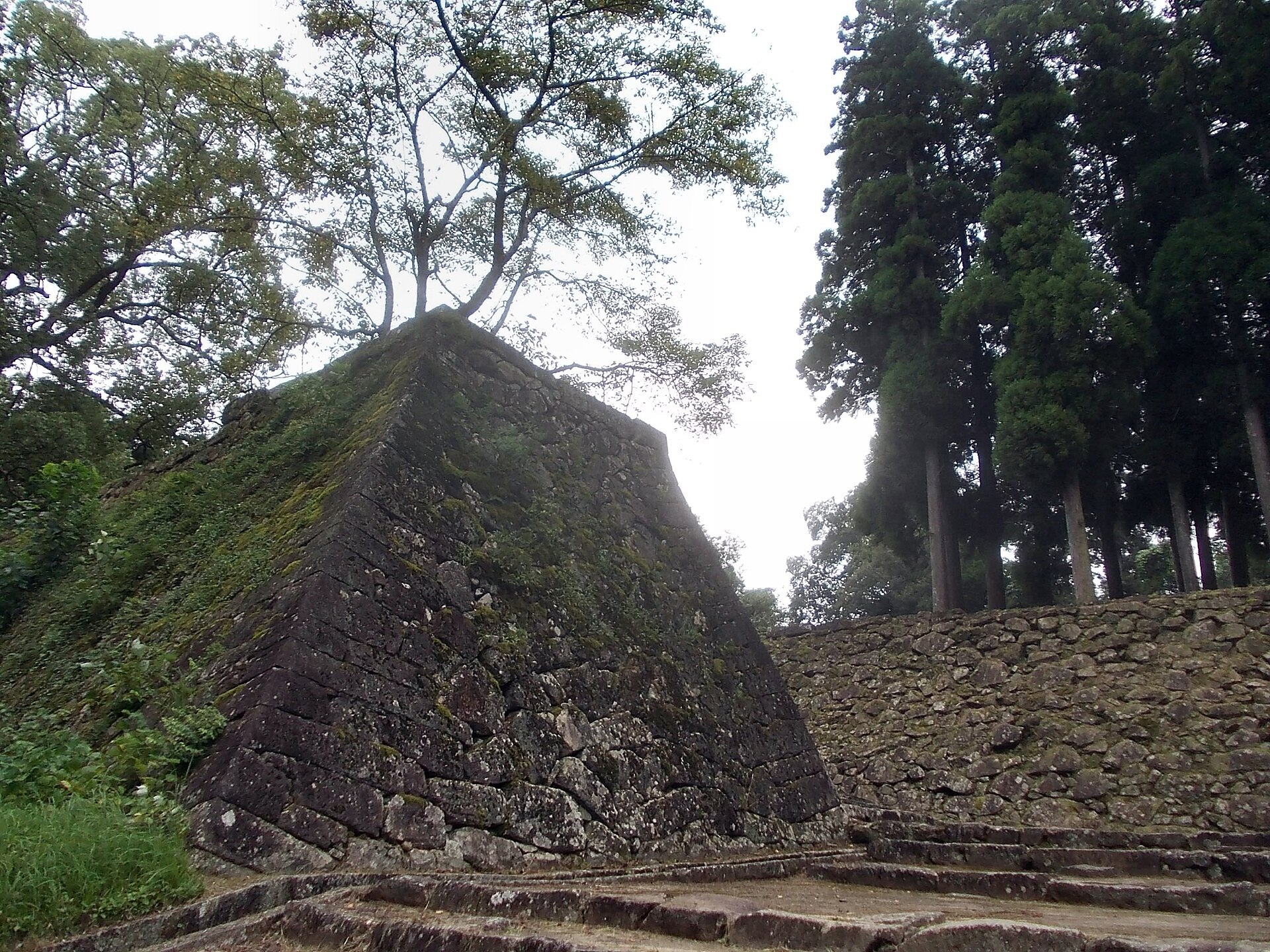
Kumamoto Castle occupies the end of a hill running southwards, on Mount Chausu, and bears witness to the expertise of Katō Kiyomasa, who settled in the province in 1588 in succession to Sasa Narimasa. Its construction, concluded in 1607, also gave the city its present name, with the change of spelling from 隈本 to 熊本. The date when work began varies between sources: 1601 for the Agency for Cultural Affairs, 1599 in a document from the city. The Hosokawa, masters of the site from 1632 to the Meiji era, established there in particular the Jishūkan domain school in 1755, in the ni-no-maru. The castle faced its only military trial in 1877: besieged for some fifty days by the Satsuma forces, it held out under the command of Tani Tateki, but the keep and the honmaru palace burned. Its stone walls, moats and some of its buildings escaped the flames and received national protection as early as 1933. The keeps were rebuilt in concrete in 1960, then the earthquakes of April 2016 struck the site: thirteen cultural properties were damaged and nearly 30% of the stone walls collapsed. The keep reopened in 2021, while the Uto turret and many walls remain under repair on a schedule extended to 2052.
- Époque de construction
- 1601–1607
- Localisation
- Kumamoto, Préfecture de Kumamoto
- Protection
- Site historique spécial national (特別史跡), site historique depuis le 1933-02-28 (1955)
- Accès au public
- Visite sous conditions
- État
- Restauré
- Usage actuel
- parc public, monument touristique, chantier de restauration