En un regard
Le château en bref
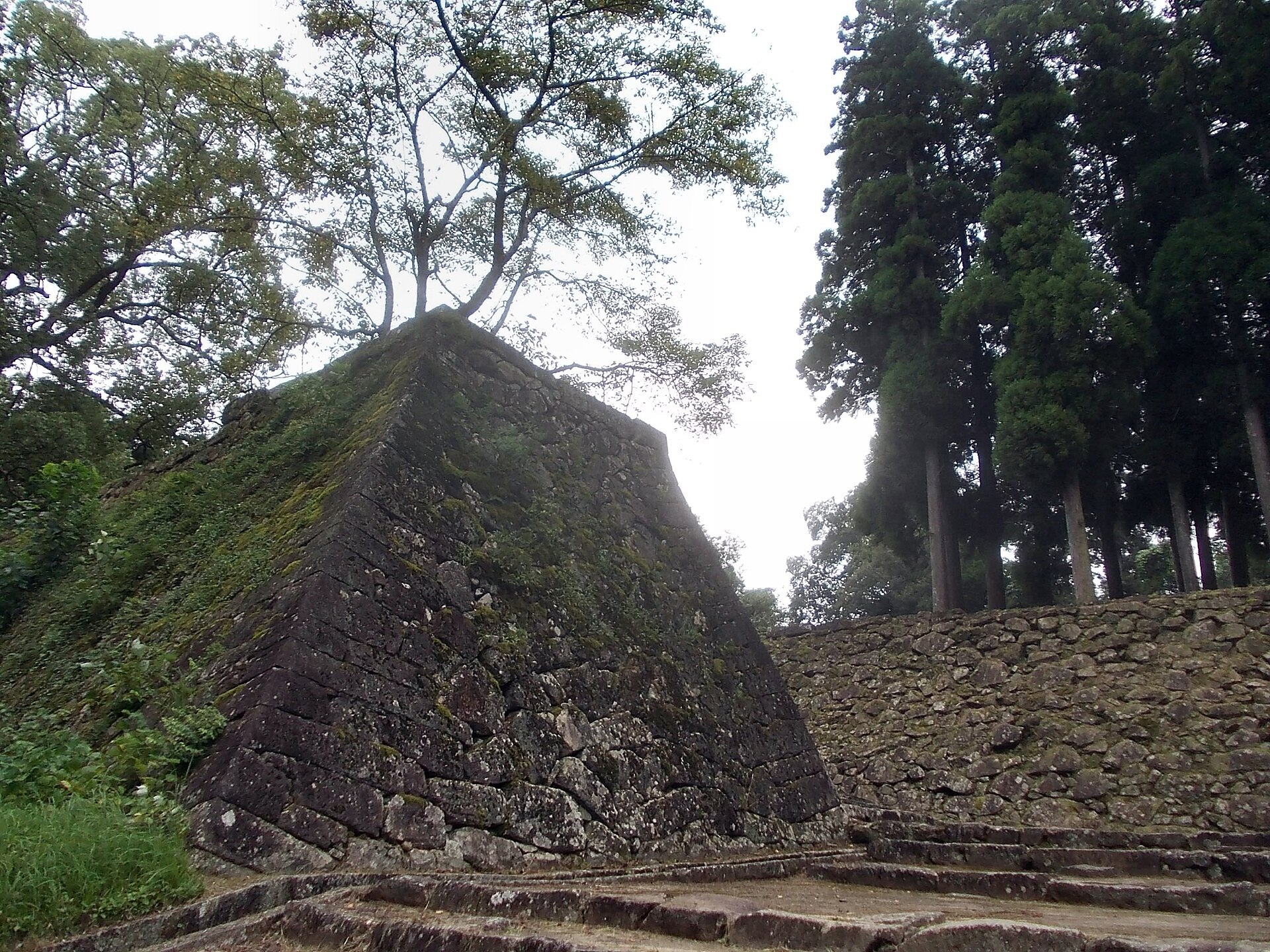
Yatsushiro Castle, also known as Matsue-jō, should not be confused with Matsue Castle in Shimane Prefecture. It was born of a catastrophe: in 1619 an earthquake brought down Mugishima Castle, built in 1588 by Konishi Yukinaga near the mouth of the Kuma. Despite the one-castle-per-province rule issued in 1615, Higo domain obtained permission to replace it, and the new work was completed in 1622 by the retainer Katō Masakata, north of the old site. Stones salvaged from Mugishima stand alongside a local limestone whose pale tone inspired the nickname "White Heron Castle". After 1632 the domain passed to the Hosokawa: Hosokawa Tadaoki, known as Sansai, ended his days here, and the Matsui family then guarded the castle for more than two centuries. The keeps, struck by lightning in 1672 according to Tabi-mag, were never rebuilt. What remains today is a honmaru about 180 metres square, surrounded by moats on all four sides, with the bases of the main and small keeps. Since the Meiji era, Yatsushiro-gū shrine, dedicated to Prince Kaneyoshi, has occupied the main enclosure. Together with Furufumoto and Mugishima, the site forms a national ensemble tracing the evolution of regional fortresses from the Middle Ages to the early modern period.
- Époque de construction
- XVIIᵉ siècle (1622)
- Localisation
- Yatsushiro, Préfecture de Kumamoto
- Protection
- Site historique national (国指定史跡), au sein de l'ensemble 八代城跡群 (2014)
- Accès au public
- Ouvert au public
- État
- Vestiges
- Usage actuel
- parc public, sanctuaire shintō