En un regard
Le château en bref
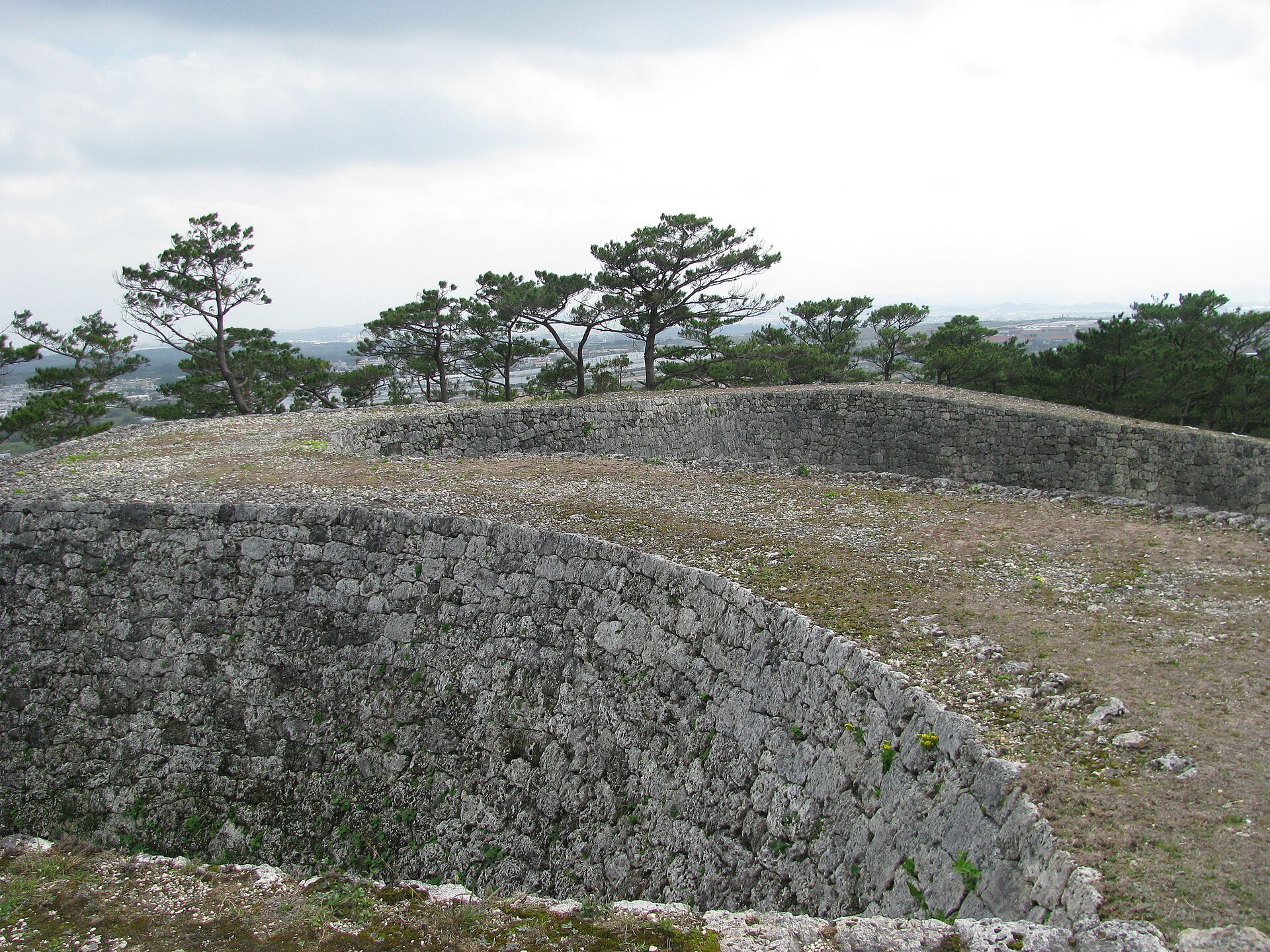
At the end of a rise in Yomitan, on the west coast of Okinawa, this early 15th-century gusuku was placed to command a wide territory by sight. The World Heritage nomination file notes that the location offered a clear view towards Shuri and served to watch over survivors of the Hokuzan kingdom who had withdrawn along the coast. Its design is attributed to Gosamaru, lord of Yomitan, who had previously lived at Yamada Castle, about 4 km to the north-east. He is said to have started work shortly after the capture of Nakijin, dated to 1416 or 1422 depending on the source, while the Agency for Cultural Affairs suggests around 1420. The plan, of medium size for the period, has only two connected enclosures, with a perimeter of 365 m and an interior area of 7,385 m². The higher main body overlooks the southern enclosure, and sinuous coral limestone walls follow the terrain. The arched gates of the second enclosure are its most remarkable feature: the prefecture presents one of them as the oldest gate of this type still standing on the main island. Gosamaru later left for Nakagusuku and the site lost its residential function. During the war the Japanese army installed an artillery position here, followed by a US Army communications station. Excavation and repairs took place between 1973 and 1985. The sacred place of Soitsugi-no-utaki, dedicated to the castle's guardian deity, remains in use according to the UNESCO file.
- Époque de construction
- XVᵉ siècle (1420)
- Localisation
- Yomitan, Préfecture d'Okinawa
- Protection
- Site historique national (国指定史跡) (1972)
- Accès au public
- Ouvert au public
- État
- Restauré
- Usage actuel
- site archéologique visitable, lieu de culte