En un regard
Le château en bref
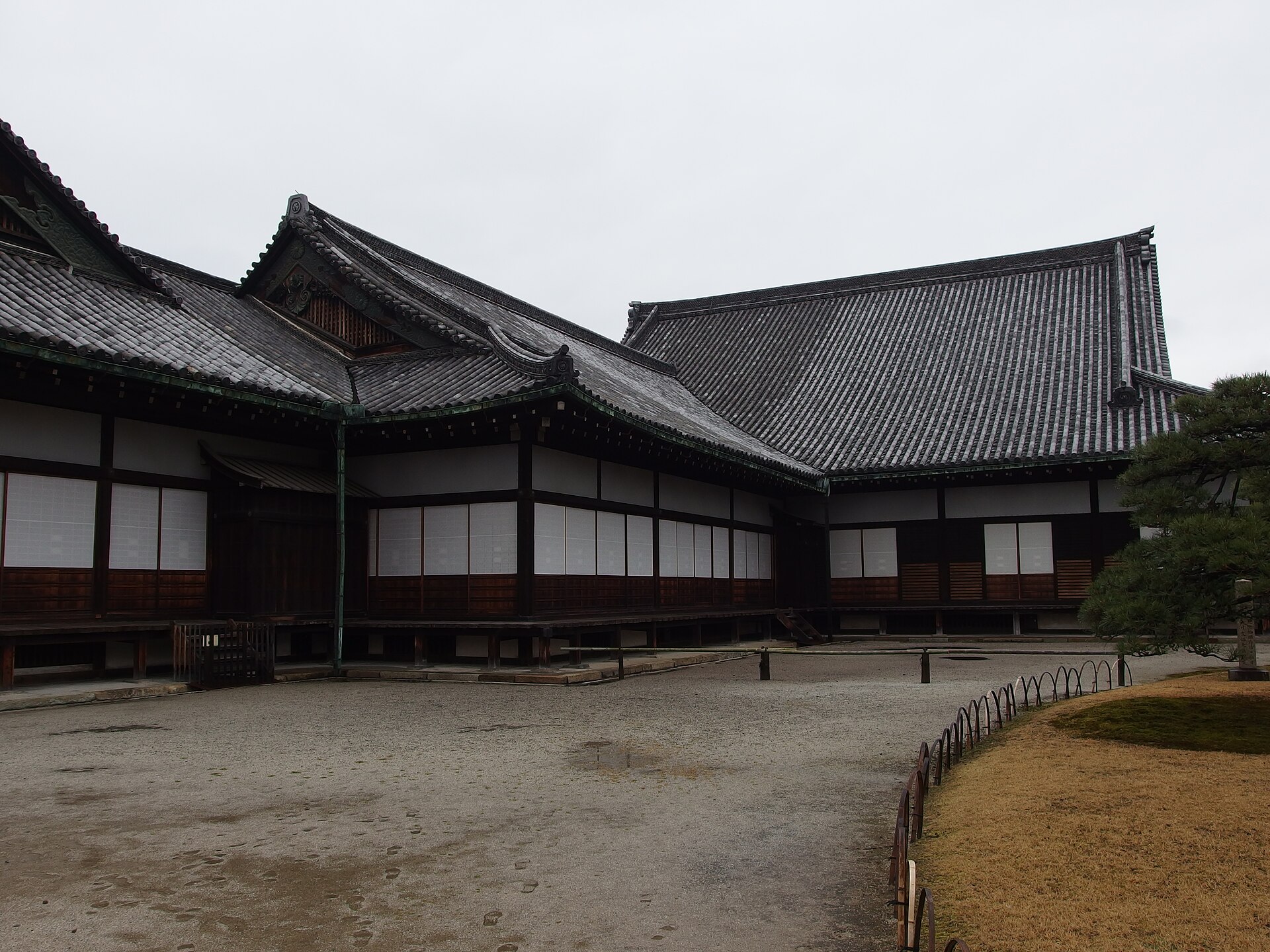
In the centre of Kyoto, this 275,000 m² lowland complex is less a fortress for combat than a residence of authority. Tokugawa Ieyasu commissioned it from the western daimyō, in 1601 according to the official chronology and in 1602 according to a city notice, and it was completed in 1603 on what is now the ninomaru area. The complex was extended westwards for Emperor Go-Mizunoo's visit in 1626: this is when the honmaru came into being and Kobori Enshū reworked the garden. The ninomaru palace, with its six buildings listed as National Treasures and 1,016 wall paintings, retains the layout of a power that received and ranked its visitors; in its great hall, Tokugawa Yoshinobu announced in 1867 his intention to return power to the emperor. The defensive side, by contrast, has shrunk: the five-storey tenshu was destroyed by lightning in 1750, and a city fire in 1788 destroyed the honmaru palace and two corner towers, leaving only two of the original towers. Having become an imperial residence, Nijō received in 1893-1894 buildings from the Katsura-no-miya palace, moved and rearranged to form the present honmaru palace. The Imperial Household ceded the site to the city of Kyoto in 1939, and the city opened it the following year. A major restoration begun in 2011 made it possible, among other things, to reopen this palace on 1 September 2024 for the first time in 18 years.
- Époque de construction
- 1601–1603
- Localisation
- Kyoto, Préfecture de Kyoto
- Protection
- Site historique national (国指定史跡) (1939)
- Accès au public
- Ouvert au public
- État
- Restauré
- Usage actuel
- monument historique ouvert au public, musée