En un regard
Le château en bref
In 1609, Tokugawa Ieyasu sought to close the noose around Osaka, where the Toyotomi remained, and to hold the San'in road. He abandoned the old Yakami and chose an isolated hill in the Sasayama basin. Some twenty daimyō, among them former allies of Hideyoshi, were obliged to take part in this tenka-bushin project, entrusted to Ikeda Terumasa, while the layout was assigned to Tōdō Takatora. The masonry and earthworks were completed within a few months on rocky ground, and Matsudaira Yasushige entered the fortress before the end of the year.
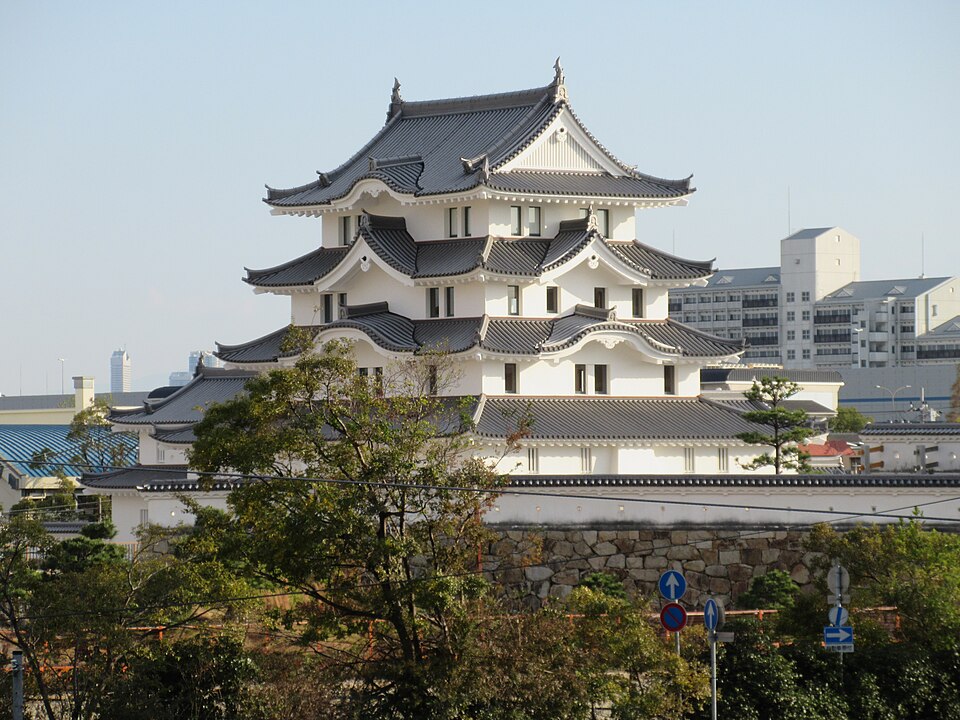
The result combines, around a honmaru and a ninomaru with high walls, concentric enclosures, wide moats and, at each of the three entrances, a square-plan kado-umadashi, a type more common in eastern Japan. Despite its tenshudai, no keep was ever built there. Four fudai families succeeded one another there, the Aoyama last, until the Meiji period. The great ceremonial hall, the Ōshoin, had survived the fall of the regime; it burned in 1944 and was rebuilt in wood in 2000, the only building restored on the site, in the midst of remains excavated between 1981 and 1999.
- Époque de construction
- XVIIᵉ siècle (1609)
- Localisation
- Tamba-Sasayama, Préfecture de Hyōgo
- Protection
- Site historique national (国史跡) (1956)
- Accès au public
- Ouvert au public
- État
- Vestiges
- Usage actuel
- Parc public, Musée, Événements culturels