En un regard
Le château en bref
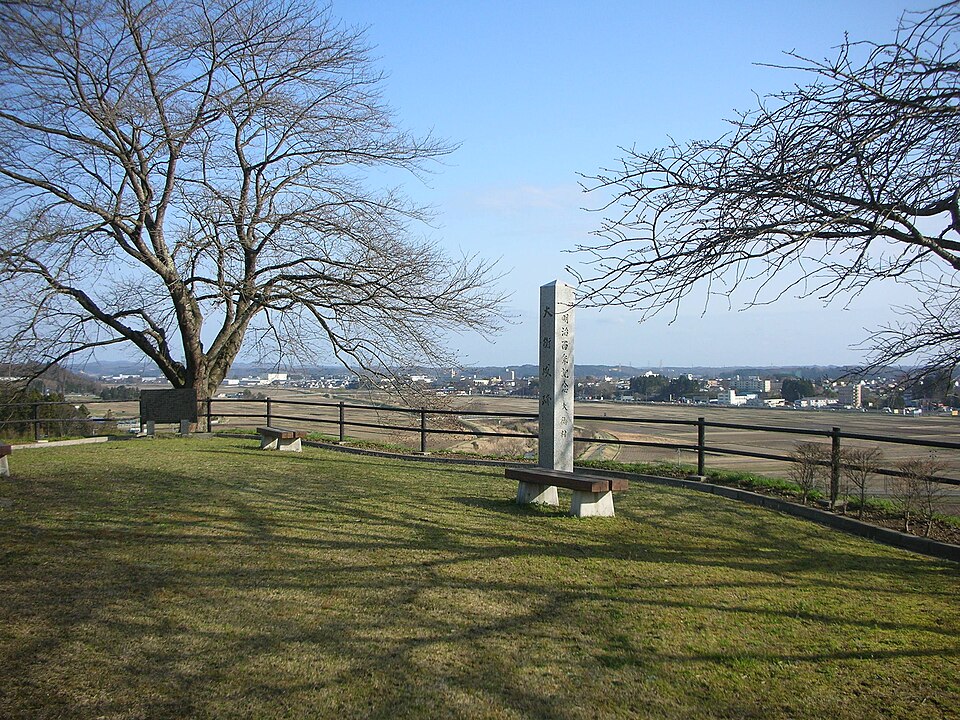
Established in 724 under the authority of Ōno no Azumabito, Taga was built to assert the power of the Nara government over the Emishi. It combined several functions: capital of Mutsu Province, military command (chinjufu), and political and cultural centre for the whole region. Its history can be read through four states of the administrative headquarters. In 762, Fujiwara no Asakari carried out a major renovation. In 780, Azamaro's revolt set the whole complex ablaze; traces of fire recorded in the Jōmae offices are linked to it by the authors of the site guide. The earthquake of 869 forced another rebuilding, and the establishment was still operating until around the middle of the 11th century. Around the ceremonial core stretched offices, workshops and barracks, while a planned town occupied the south and a temple stood about one kilometre to the south-east. Modern rediscovery of the site drew on the Taga Stele, now an Important Cultural Property. Designated a historic site in 1922 and a special historic site in 1966, Taga has been excavated since 1960 and has had a prefectural research institute since 1969. Together with Heijō and Dazaifu, it ranks among Japan's three great historic sites.
- Époque de construction
- VIIIᵉ siècle (724)
- Localisation
- Tagajō, Préfecture de Miyagi
- Protection
- Site historique spécial (特別史跡) ; site historique le 12 octobre 1922, spécial le 11 avril 1966
- Accès au public
- Ouvert au public
- État
- En ruine
- Usage actuel
- Site archéologique