En un regard
Le château en bref
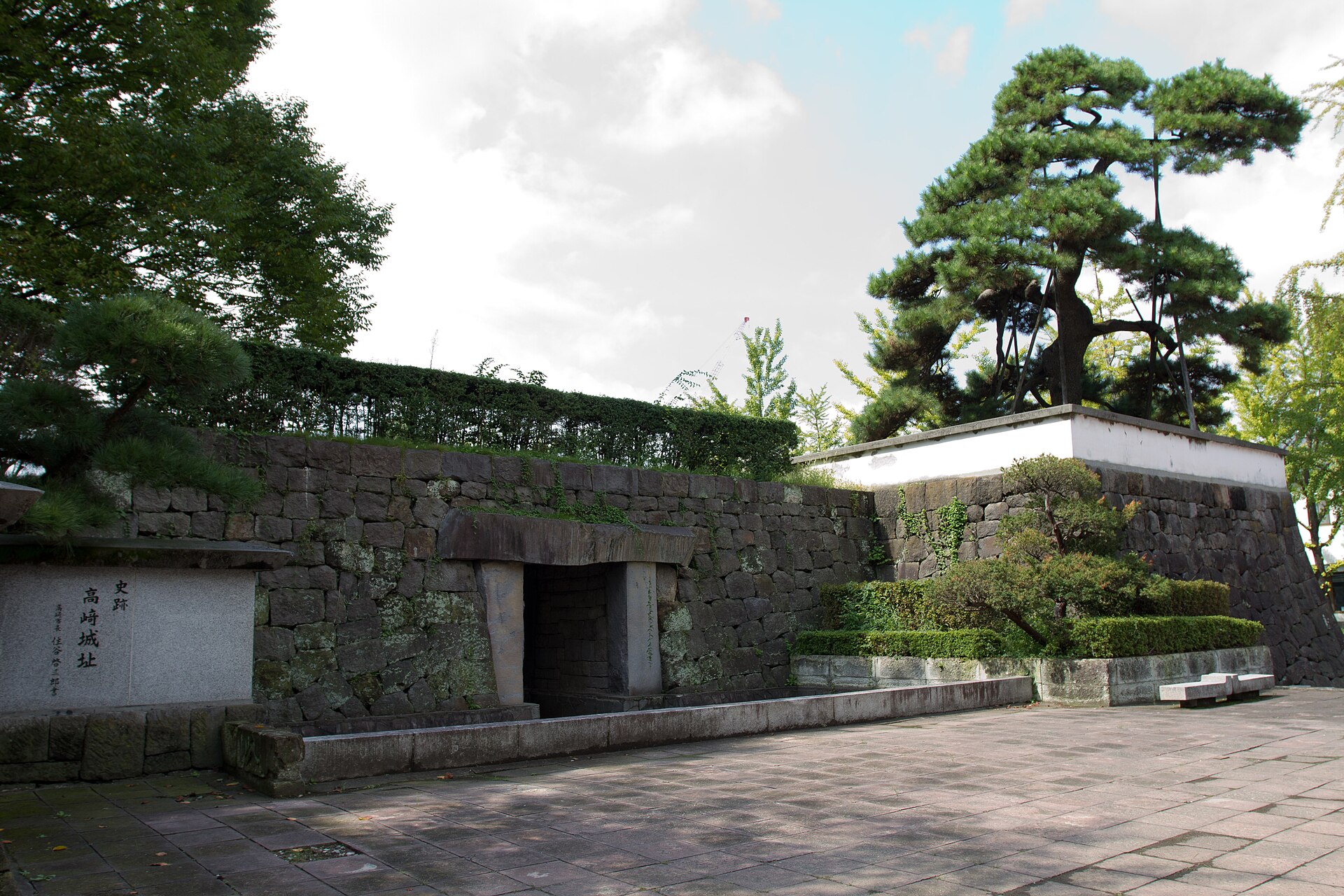
At the junction of the Nakasendō and the Mikuni road, Takasaki was born of a strategic decision: in 1598, Ii Naomasa left Minowa on the orders of Tokugawa Ieyasu to settle on the site of the former castle of the Wada, beside the Karasu River. A chronicle cited by the city has the layout begin as early as 1597. According to the city, the very name Takasaki is said to have been proposed by the abbot of Ryūkō-ji, in preference to the one Naomasa had in mind. The lord did not stay long: he left in 1600, and temples and merchant quarters moved from Minowa shaped the town through which the Nakasendō passed. The succession of masters is dense, from the Andō, to whom the city credits the completion of the castle, to the Matsudaira-Ōkōchi who arrived in 1695, ousted for a time by Manabe Akifusa between 1710 and 1717. The Matsudaira-Ōkōchi held Takasaki until the end of the regime. The present landscape owes much to the army: from 1873, the installation of barracks went hand in hand with the demolition of the buildings and the filling of the inner moats. The Inui turret, presented by the city as the only surviving castle building in the prefecture, survived by serving as a barn before being re-erected near the third enclosure in 1977, joined in 1980 by the Higashi-mon gate, the only one of the sixteen gates to have survived. The ramparts and moats of the third enclosure, amid cultural facilities, are today the best guide to the former stronghold.